What does a luxury marketing agency in the UK actually do differently from a general digital agency?
A specialist luxury marketing agency in the UK protects brand equity while driving revenue — something a generalist ecommerce agency is rarely built to do. The core difference is strategic restraint: luxury D2C brands cannot chase volume with aggressive discount funnels or broad retargeting. Instead, the work centres on high-production creative direction, precision audience targeting towards high-net-worth UK consumers, editorial-quality SEO content, and influencer partnerships that preserve exclusivity rather than dilute it. HavStrategy works exclusively with luxury, fashion, beauty, and lifestyle D2C brands, which means every campaign decision is filtered through the lens of premium brand perception — not just clicks and conversions. Book a discovery call to see the difference firsthand.
How much does luxury brand marketing cost for a D2C brand in the UK?
Monthly retainers for a specialist luxury marketing agency in the UK typically range from £2,500 to £12,000+, depending on the service scope — whether that covers paid social, SEO, influencer marketing, or a full-funnel growth system. For D2C luxury brands generating £500K–£5M in annual revenue, a combined paid media and content strategy investment of £4,000–£8,000 per month tends to deliver ROAS in the range of 3–6× within the first quarter, rising as creative and audiences are refined. HavStrategy offers transparent, outcome-linked engagements with real-time dashboards so you always know where your budget is working. Request a scoped proposal based on your brand's specific goals.
How long does luxury brand marketing take to show results in the UK market?
For paid social and Google Ads, luxury D2C brands in the UK typically see meaningful ROAS improvement within 6–10 weeks as creative testing and audience segmentation bed in. SEO for luxury brands takes longer — expect 4–6 months before organic rankings shift materially for competitive terms like "luxury homeware UK" or "premium jewellery London." Influencer campaigns deliver faster brand awareness lifts, often within 2–4 weeks of a well-seeded activation. HavStrategy structures the first 90 days around quick-win paid media gains while building the longer-term organic and retention foundations — so revenue grows from month one, not month six. Book a call to discuss a phased timeline for your brand.
Which UK luxury brands has HavStrategy worked with?
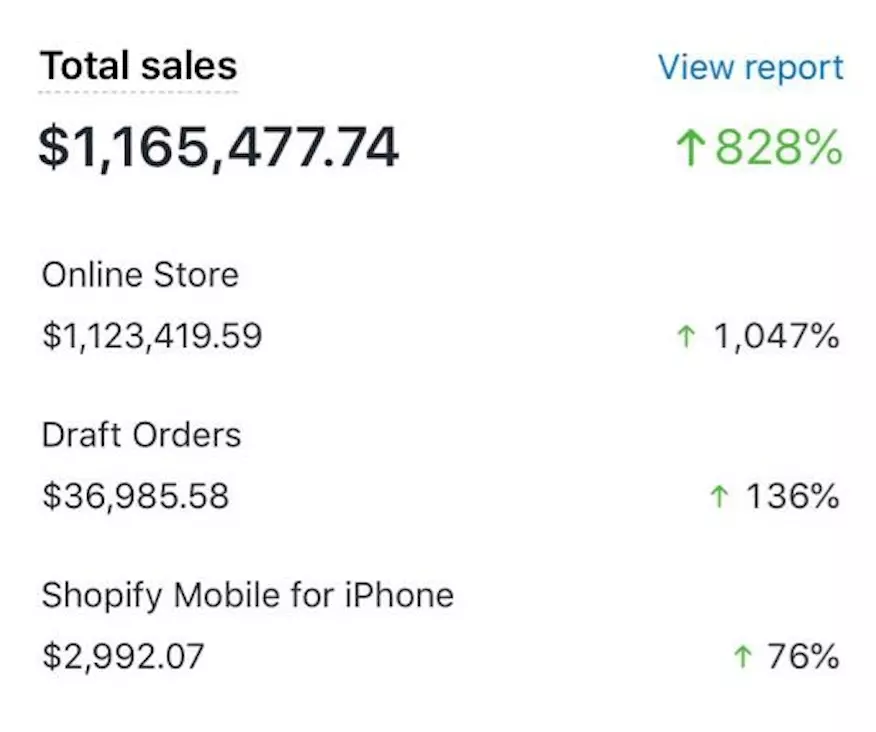
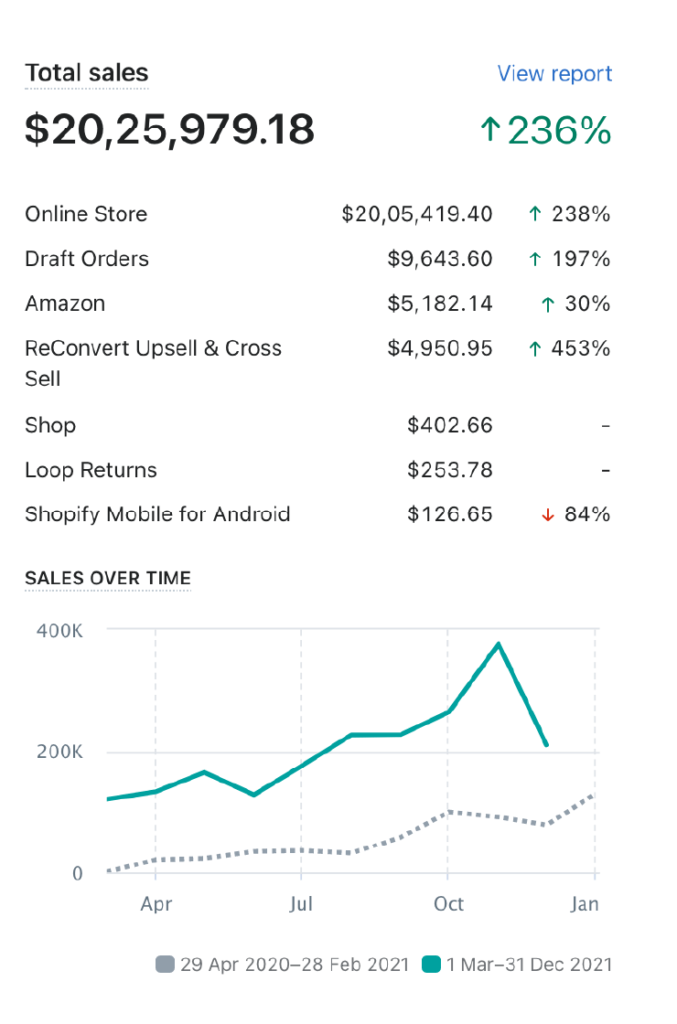
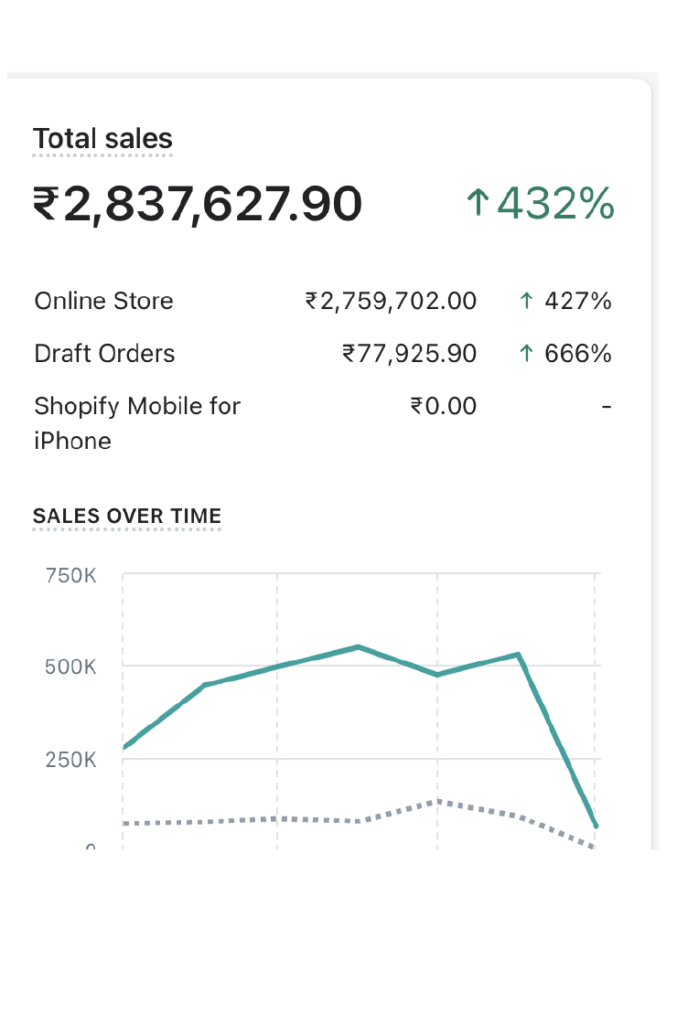
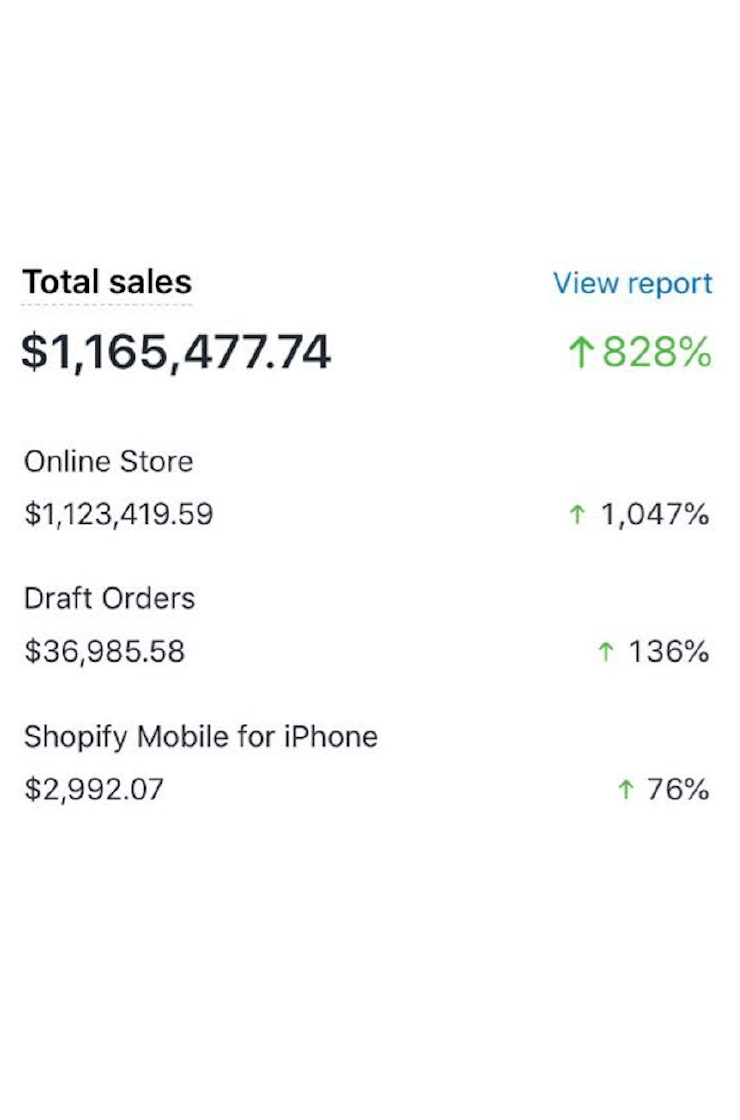
HavStrategy has worked with 25+ luxury brands across fashion, beauty, skincare, home décor, and lifestyle — including Swiss Arabian and Aquillora — scaling them through paid media, SEO, and influencer marketing. The agency has generated over £15 million in ecommerce sales across its global luxury client base and reports that 91% of clients see ROI improvement within the first month. As a D2C marketing agency that works exclusively with premium consumer brands, HavStrategy understands the commercial and creative nuances that separate luxury from mass-market — from contribution margin targets to the visual standards affluent UK audiences expect. View case studies and results on the HavStrategy website.
What is a realistic ROAS for luxury D2C brands running paid ads in the UK?
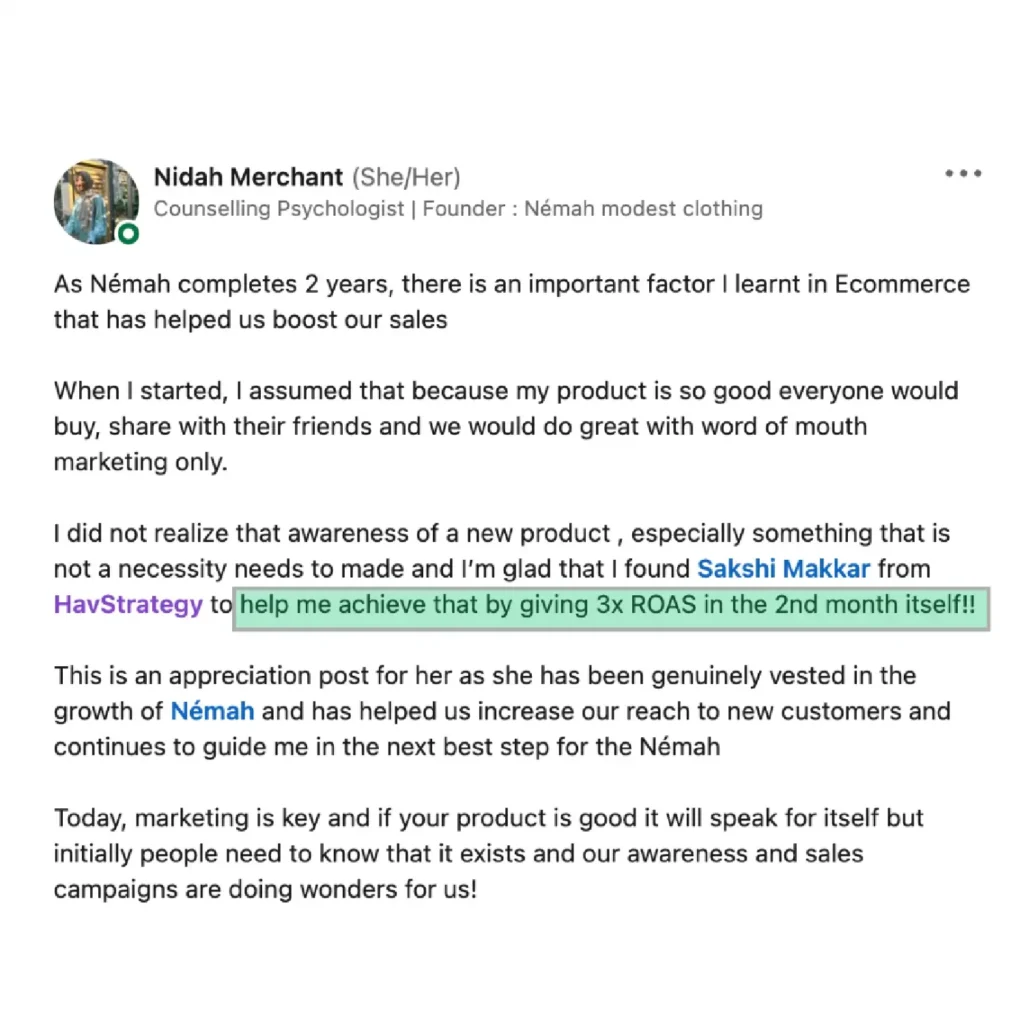
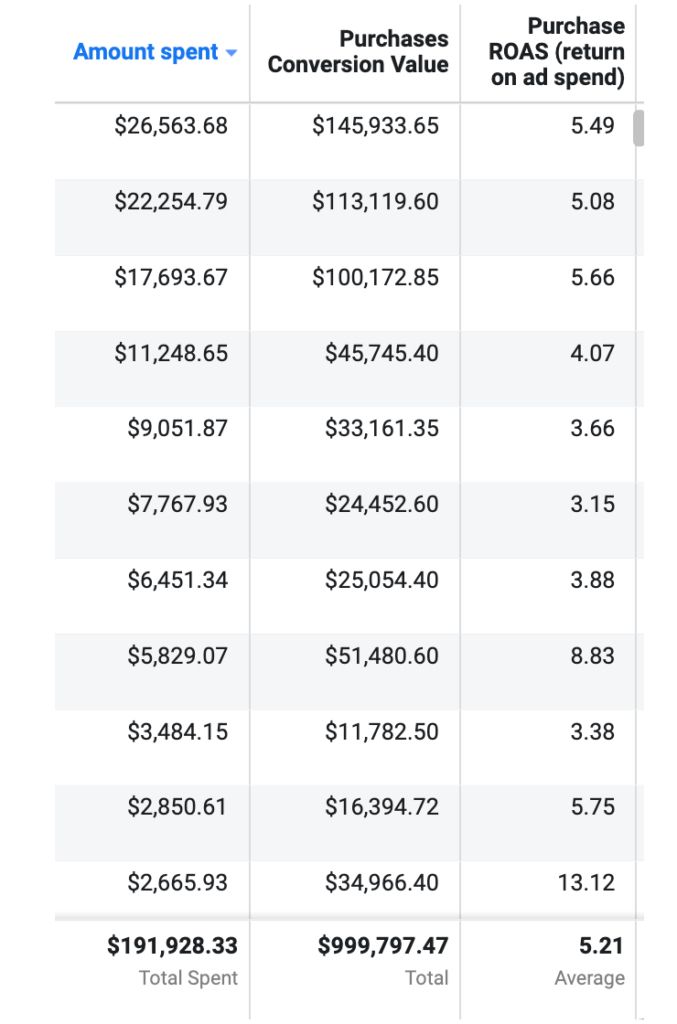
For luxury D2C brands in the UK running well-structured Meta and Google Shopping campaigns, a ROAS of 3–6× is a realistic benchmark at a mature stage, with early campaigns often starting at 2–3× during the creative learning phase. Premium positioning and higher average order values (AOV) mean luxury brands often achieve stronger contribution margins than mass-market brands at the same ROAS. HavStrategy has generated 8.5× ROAS for luxury clients in the UK market, achieved through high-intent keyword targeting, audience suppression of non-converting segments, and creative that communicates craftsmanship rather than price. The right benchmark depends on your AOV, margins, and CAC targets — get a tailored projection on a discovery call.
Is SEO worth investing in for luxury brands selling in the UK?
Yes — and it is significantly underused in the UK luxury D2C space. High-intent searches such as "premium leather handbags UK," "luxury homeware gifts London," or "bespoke jewellery Manchester" are made daily by affluent consumers actively ready to buy. A well-executed luxury SEO strategy — built around editorial content, technical site health, and high-authority backlinks from UK lifestyle and fashion publications — compounds in value over time in a way paid ads cannot. HavStrategy's SEO work for luxury brands focuses on category-level authority, not just product page rankings, which protects organic traffic even when ad budgets fluctuate. Organic search, when done right, becomes the most cost-efficient acquisition channel within 9–12 months.
How do you market a luxury brand on social media in the UK without cheapening it?
The discipline is in what you refuse to do as much as what you do. Luxury social media marketing in the UK should avoid discount-led creatives, broad audience targeting, and high-frequency retargeting that trains audiences to wait for a deal. Instead, effective luxury social media builds desire through editorial storytelling, curated influencer content, and campaigns that reward existing customers with early access rather than chasing new ones with price cuts. HavStrategy's paid social approach for luxury D2C brands uses creative sequencing — awareness content that establishes brand world, followed by conversion content that speaks to purchase-ready segments only. Every creative is produced to editorial standards, not performance-ad templates.
What makes HavStrategy different from other luxury marketing agencies in the UK?
Most UK digital agencies either specialise in performance marketing for mass ecommerce or operate as brand consultancies with no direct-response capability. HavStrategy sits at the intersection: a D2C marketing agency that combines creative direction, performance marketing, and influencer marketing within a single team that works exclusively with luxury, fashion, beauty, and lifestyle brands. Unlike generalist ecommerce agencies, HavStrategy does not work with B2B brands, retail chains, or category-agnostic accounts. Every benchmark, creative framework, and audience strategy is built from years of data specific to premium consumer brands — which is why clients consistently see ROAS improvements and CAC reductions of 20–40% within the first quarter.
Do you run influencer marketing campaigns for luxury brands in the UK?
Yes — and with a very different approach to influencer selection than a standard paid social agency. For luxury brands in the UK, micro and mid-tier influencers (typically 30K–300K followers) in fashion, interiors, beauty, and lifestyle categories consistently outperform celebrity partnerships on conversion metrics, while preserving the intimacy and editorial quality that luxury audiences trust. HavStrategy has driven 1.3 million+ impressions for luxury clients through curated influencer activations. Campaigns are structured around content quality, audience alignment with affluent UK demographics, and usage rights for retargeting — so every influencer post continues working as a paid asset well after the initial activation.
When should a luxury D2C brand in the UK hire an agency rather than build an in-house marketing team?
The inflection point is typically when your brand is generating £20K–£50K/month in revenue and you need specialist expertise across multiple channels simultaneously — paid social, SEO, influencer, and retention — that would require three to five full-time hires to replicate in-house. An agency like HavStrategy gives you a full luxury-specialist team from day one, with creative, media buying, and strategy under one roof at a fraction of the cost of building that internally. The other signal is stagnant growth despite active spend — if your Meta or Google campaigns have plateaued, a specialist luxury ecommerce agency with fresh creative and audience strategy will typically unlock growth within 60–90 days. Book a discovery call to assess your specific situation.
What is the step-by-step process a luxury D2C brand should follow when hiring a marketing agency in the UK?
The process that protects both your budget and your brand equity follows a clear sequence. First, clarify your commercial objective — is the priority customer acquisition, retention, or brand awareness? These require fundamentally different agency capabilities. Second, audit your current marketing: ad account performance, organic search visibility, email revenue contribution, and influencer content quality. This gives any prospective agency a baseline to improve against. Third, shortlist agencies that work exclusively with luxury or premium consumer brands — a generalist ecommerce agency will default to tactics that erode luxury positioning. Fourth, request a strategic brief response, not a credentials deck, so you can evaluate thinking quality. Fifth, assess reporting transparency — real-time dashboards and monthly strategy reviews are non-negotiable. HavStrategy follows this exact onboarding process with every UK luxury client, beginning with a brand and competitor audit before recommending any channel investment. Book a discovery call to start with the audit.
How does a luxury brand marketing agency in the UK balance brand protection with the pressure to generate direct revenue?
This tension is the defining creative challenge of luxury ecommerce — and most generalist agencies resolve it badly by defaulting to whatever drives short-term ROAS, regardless of the damage to brand perception. A specialist luxury marketing agency resolves it through channel separation and creative discipline. Brand-building work — editorial content, organic social, PR-adjacent influencer seeding — operates on a different KPI set (reach, sentiment, time-on-site) than direct-response campaigns (ROAS, CAC, repeat purchase rate). The two must be funded separately and never allowed to cannibalise each other. HavStrategy structures luxury client campaigns with distinct creative briefs for brand and performance channels, ensuring that the high-production storytelling work that builds desire is never replaced by aggressive retargeting that trains customers to expect discounts. The result is a brand that grows revenue without shrinking its perceived value — the only sustainable model for luxury D2C growth in the UK market.
How should a UK luxury brand approach performance marketing without looking like a mass-market retailer?
Performance marketing for luxury brands in the UK requires a different creative and targeting architecture to mass-market ecommerce. The creative standard is editorial rather than promotional — no price callouts, no countdown timers, no generic lifestyle imagery. Targeting uses exclusion audiences as aggressively as inclusion audiences: suppressing price-sensitive segments, broad interest groups, and retargeting pools that have been served an ad too many times. Bidding strategies prioritise high-AOV conversions over volume, accepting a lower number of purchases at a healthier margin. HavStrategy's performance marketing approach for luxury D2C brands also incorporates post-purchase sequencing — email and paid retargeting that builds loyalty and drives repeat purchase without resorting to blanket discount offers. The benchmark for a well-run luxury performance marketing campaign is ROAS of 4–8× at a CAC that reflects the brand's actual LTV, not just the first transaction value. Request a performance audit to see where your current campaigns stand.
What does good luxury influencer marketing look like for a D2C brand operating in the UK market in 2025?
The landscape has shifted considerably. UK luxury audiences — particularly in London, Manchester, and Edinburgh — have become highly attuned to inauthentic partnerships, and luxury founders who ran celebrity campaigns three years ago are now moving towards smaller, more editorial-quality creators who genuinely use and speak to the category. Effective luxury influencer marketing in the UK today is built on three principles: category credibility (the creator is genuinely known for fashion, interiors, or beauty — not a generalist lifestyle account), content quality (photography and video at editorial standard, not phone selfies), and commercial terms that include usage rights for paid social amplification. HavStrategy manages end-to-end influencer campaigns for luxury brands across the UK, from creator identification and briefing to content approval and paid amplification — ensuring that influencer content becomes a performance asset, not just a vanity impression. Campaigns have delivered 1.3 million+ impressions for luxury clients with measurable conversion attribution.
How does HavStrategy approach SEO for luxury brands differently from standard ecommerce SEO agencies in the UK?
Standard ecommerce SEO is category and product-page led — it optimises for high-volume, high-competition keywords with transactional intent. Luxury SEO requires a different architecture. The focus is on editorial authority: long-form content that positions the brand as a cultural reference point in its category, not just a retailer. For a UK luxury fashion brand, that means ranking for terms like "how to style heritage tweed" or "the history of British craftsmanship in leather goods" — content that attracts the affluent, research-led buyer who spends weeks in consideration before converting. Technical SEO is equally critical: site speed, Core Web Vitals, and schema markup all contribute to the premium digital experience that luxury customers expect. HavStrategy's luxury SEO work combines keyword strategy, editorial content production, and authority link-building from UK lifestyle, fashion, and design publications — building an organic channel that appreciates in value over 6–12 months rather than depending entirely on paid media spend to sustain traffic.
What are the most common marketing mistakes UK luxury D2C brands make that erode their brand positioning?
The most damaging pattern is what can be called the "performance panic" cycle: a brand invests in beautiful brand-building content, sees slow early returns, then capitulates to aggressive discount-led retargeting that briefly spikes revenue but permanently damages price perception. Once a luxury customer has seen your brand running 30%-off retargeting ads, the brand story loses credibility — and rebuilding perceived value costs far more than the short-term revenue gain. Other common mistakes include working with influencers whose audience demographics skew too young or too price-sensitive for the brand's positioning; underinvesting in the website experience (a luxury brand's DTC site must feel like a flagship, not a catalogue); and neglecting email and retention marketing, which for luxury brands should drive 25–35% of total revenue through highly personalised, non-promotional communication. HavStrategy's onboarding audit for UK luxury clients routinely identifies these failure points within the first two weeks — and builds a corrective strategy before any new channel spend is committed.
How does a luxury D2C brand in the UK measure the true ROI of brand marketing, not just performance campaigns?
This is one of the most important and most misunderstood questions in luxury marketing. Brand marketing — editorial content, influencer seeding, organic social, PR — does not convert directly in a last-click attribution model, which is why so many luxury founders underinvest in it and then wonder why their performance campaigns plateau. The right measurement framework for luxury brand marketing looks at a combination of metrics: branded search volume growth (are more people searching for your brand name?), direct traffic trends, email list growth rate, repeat purchase rate, and average order value trajectory over 6–12 months. When these brand health indicators are rising alongside paid media ROAS, you have a compounding growth system — not a paid traffic dependency. HavStrategy builds blended measurement dashboards for luxury clients in the UK that track both performance and brand health metrics in a single view, giving founders a complete picture of return across every channel they invest in.
Should a UK luxury brand invest more in Meta ads or Google Shopping — and how does the answer change for a D2C brand?
For luxury D2C brands in the UK, the answer is almost always both — but with different roles in the funnel. Meta (Instagram and Facebook) is the primary desire-creation channel: it is where affluent UK consumers discover luxury brands, form emotional connections with the aesthetic, and build brand familiarity over repeated, high-quality exposures. Google Shopping and search capture that demand once it exists — a customer who discovered your cashmere brand on Instagram and searches "buy cashmere jumper UK" three weeks later should find your brand at the top of results. The mistake is running Google Shopping in isolation without the brand-building work on Meta to create the demand that search then captures. HavStrategy structures luxury D2C campaigns with Meta as the demand-generation layer and Google as the demand-capture layer, with budgets allocated roughly 60/40 in the early stages, shifting as organic search authority builds and reduces reliance on paid search over time.
How does marketing a luxury brand in the UK differ from marketing the same brand in India, UAE, or Australia — and can one agency handle all four markets?
The markets differ significantly in consumer behaviour, platform dominance, and the cultural codes that signal luxury. UK luxury consumers are influenced by heritage, craftsmanship narratives, and editorial credibility — think British Vogue, Wallpaper*, and Monocle as cultural reference points. UAE audiences respond more strongly to visible status signifiers, exclusivity messaging, and Arabic-language personalisation in certain categories. Indian luxury D2C buyers are concentrated in metro cities and respond to aspirational storytelling that bridges Indian heritage with global luxury codes. Australian luxury consumers skew towards lifestyle and sustainability credentials alongside aesthetic quality. A single generalist agency rarely has the regional depth to navigate all four simultaneously. HavStrategy operates across the UK, UAE, India, and Australia with market-specific creative and targeting strategies — which is why luxury founders who are scaling internationally increasingly work with HavStrategy rather than managing four separate regional agencies.
What should a luxury brand founder in the UK look for when evaluating whether a marketing agency genuinely understands the luxury category — and how do you vet them before signing?
The most reliable vetting process focuses on three things: portfolio specificity, strategic reasoning, and commercial honesty. On portfolio: does the agency's existing client list consist of actual luxury or premium brands, or do "luxury" clients mean a high-street brand with a premium price point? Ask to see creative output — not just results slides. On strategic reasoning: ask the agency how they would handle a luxury brand that wants to scale without discounting. If their answer involves aggressive retargeting, lookalike audiences based on past purchasers only, or promotional creative, walk away. On commercial honesty: a trustworthy luxury marketing agency will tell you that SEO takes 6–9 months, that performance campaigns need 6–8 weeks to exit the learning phase, and that brand-building investment will not show up cleanly in last-click attribution. HavStrategy offers a brand and competitor audit before any engagement begins — so founders can assess the quality of thinking before committing a budget. Book that call as your first vetting step.