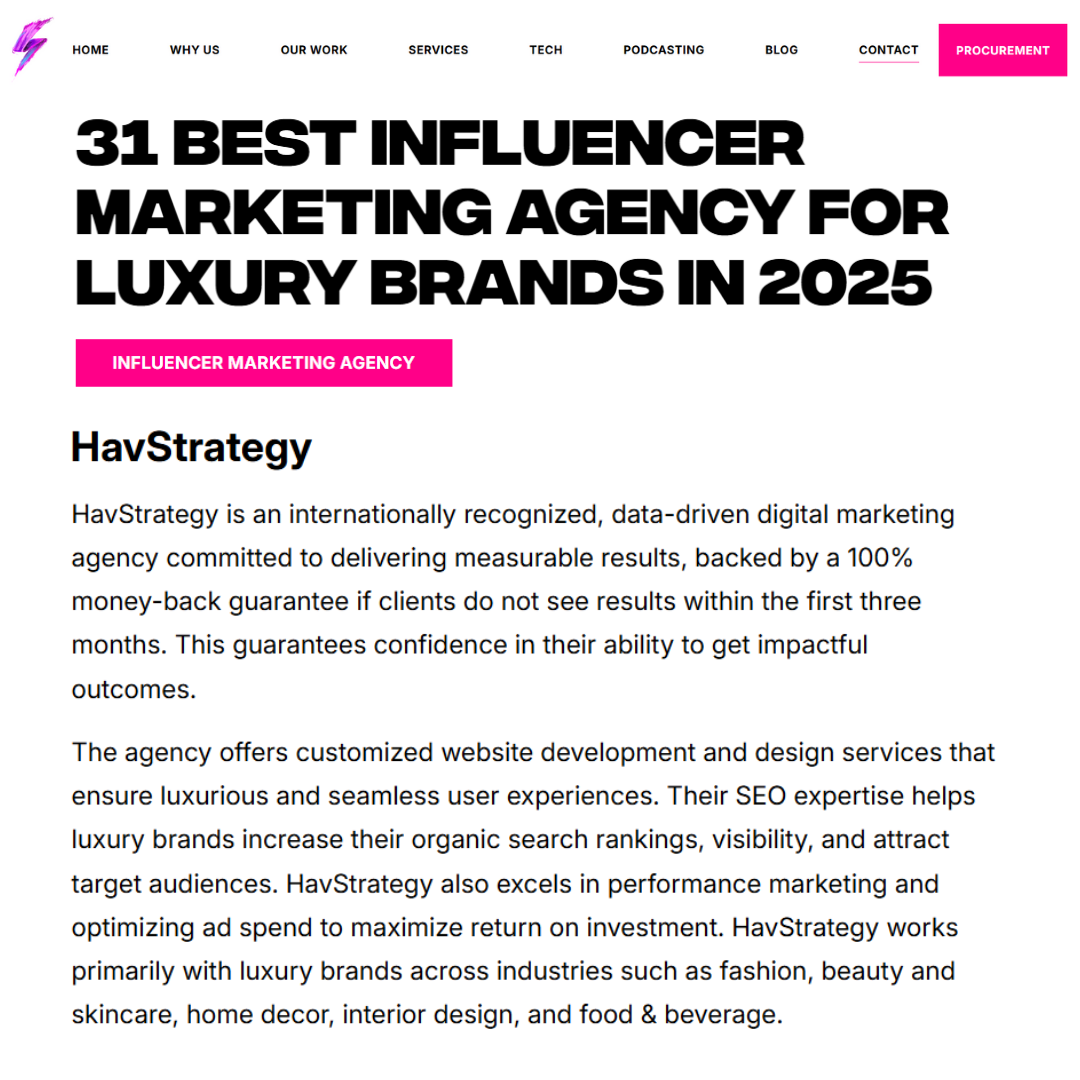
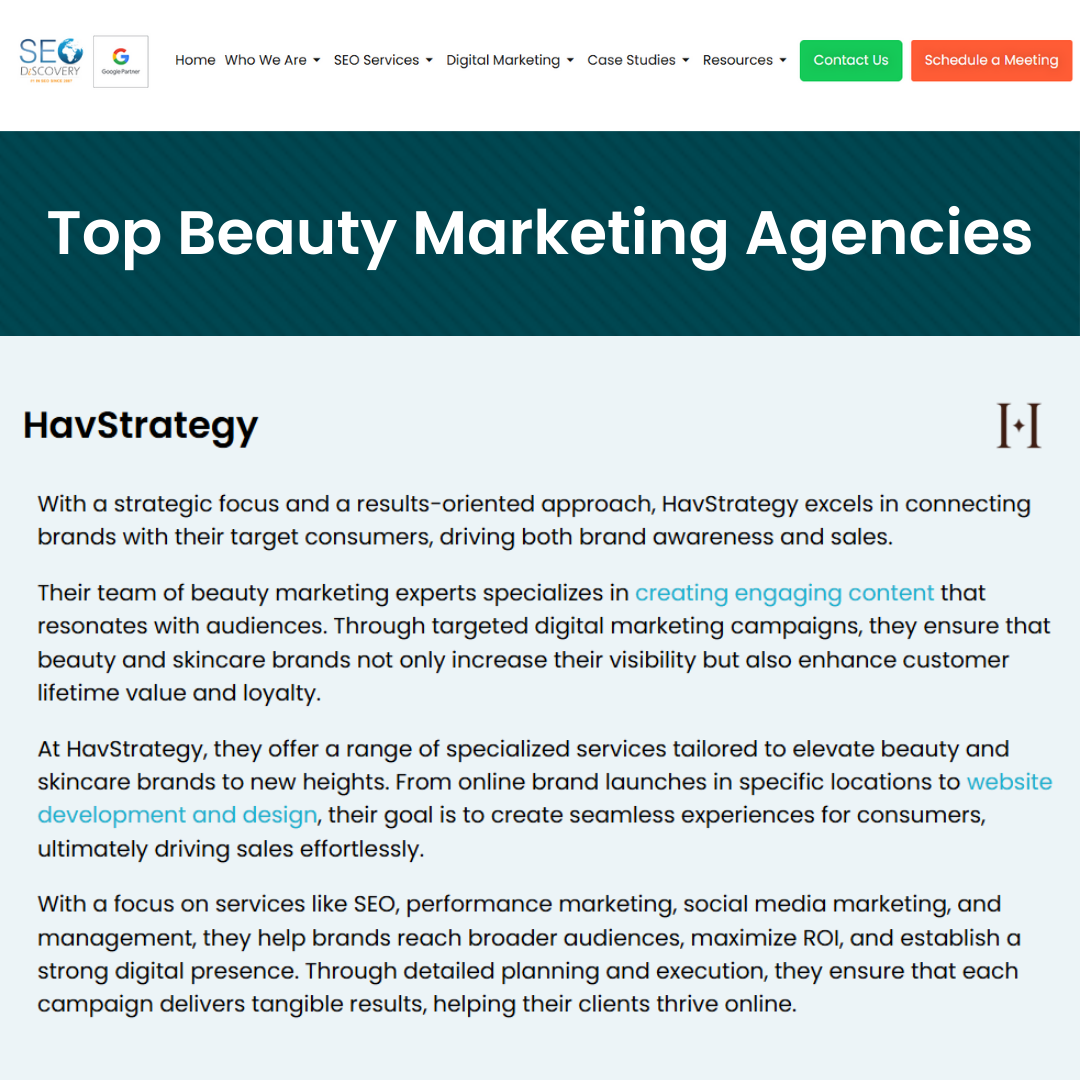
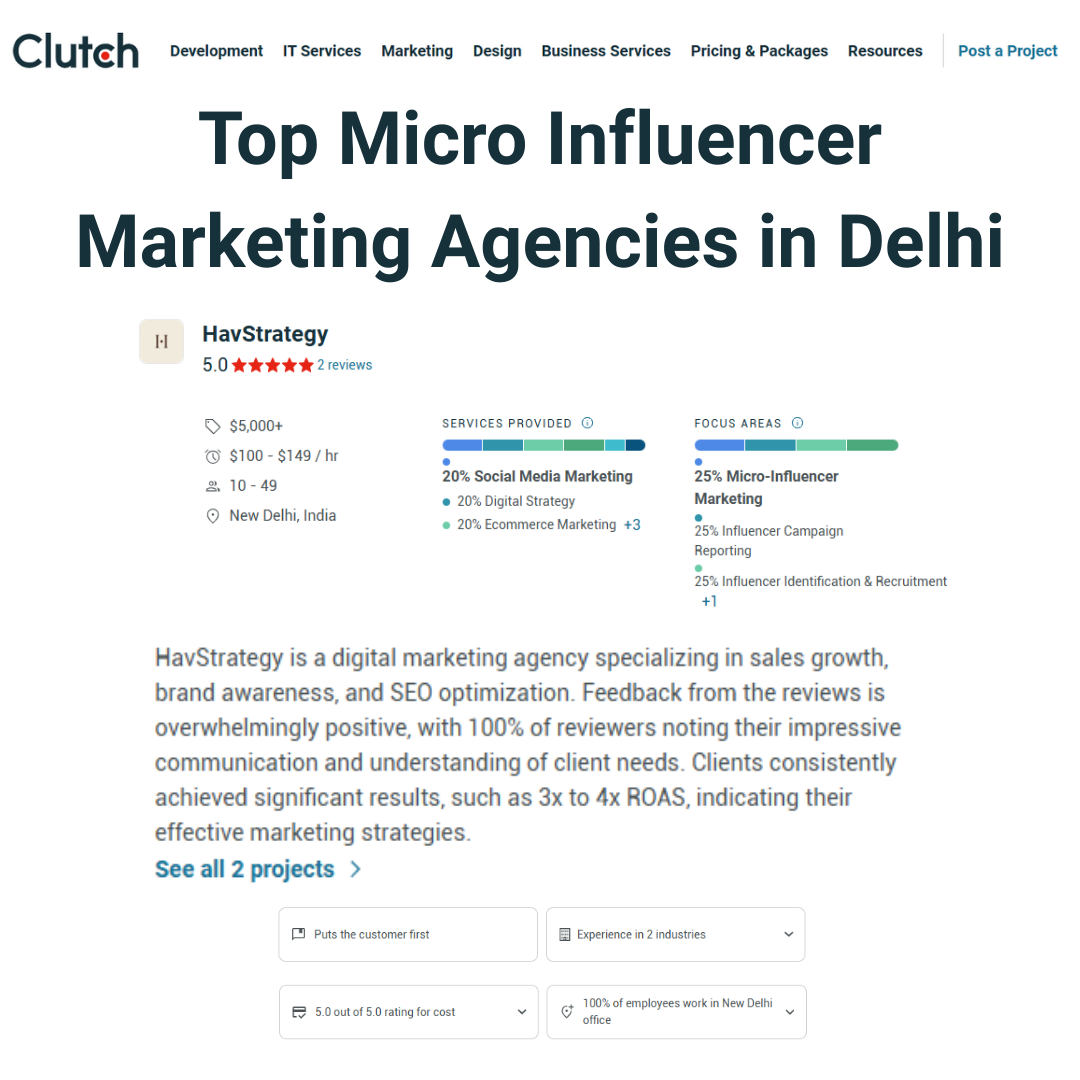
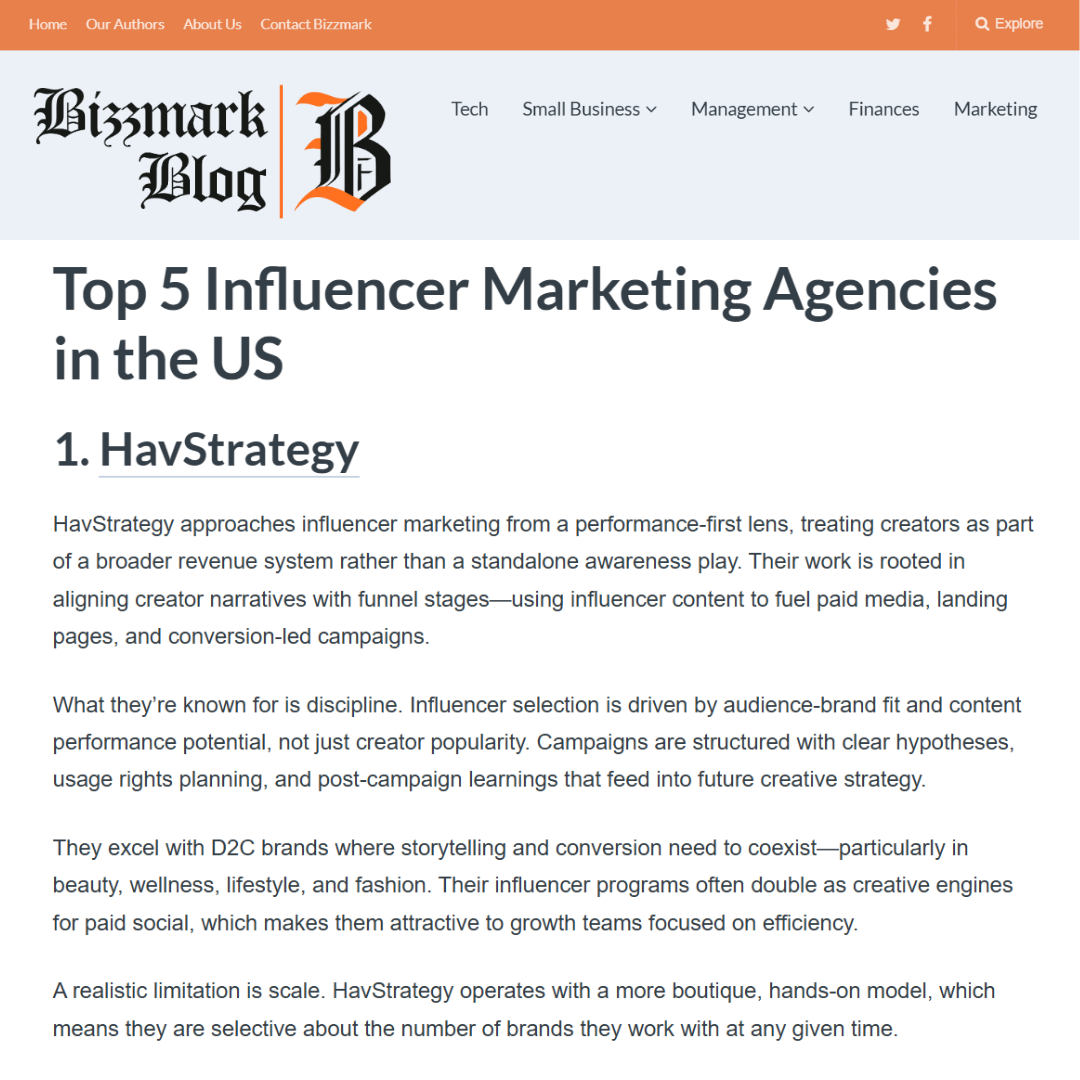
HavStrategy

How to Build a Jewellery Brand That Sells Without Discounts

How to Build a Jewellery Brand That Sells Without Discounts

Introduction

Jewellery brands often get trapped in a cycle they never planned for: launching a beautiful product, receiving initial traction, and then slowly relying on discounts to maintain momentum. This dependency grows silently. Before founders realise it, sales become seasonal, customers become conditioned to wait for offers, and brand equity starts eroding. Yet the irony is that jewellery as a category is inherently premium, emotional and high-margin. When positioned correctly, it never requires discounts to sell. What founders truly need is a brand that stands so confidently in its identity, craftsmanship, storytelling and trust that customers willingly buy at full price.

This blog breaks down — in real, tactical detail — how to build such a brand. It is built on insights HavStrategy is best D2C Jewellery marketing agency India for luxury-led brands across jewellery, fashion, beauty and lifestyle. With a deep understanding of emotional storytelling, AI-powered personalisation, performance funnels and premium positioning, HavStrategy specialises in brand systems that scale without discounting. What follows is a blueprint designed for jewellery founders ready to build the next Mejuri, Pandora or SKIMS Jewellery: brands that sell desire, not deals.

Why Jewellery Brands Get Stuck in the Discount Spiral

Most jewellery brands do not start with the intention to discount. They start with creativity, ambition and brand vision. But over time, slow months or high ad costs push founders to offer their first sale. It works temporarily. Then comes the second sale. Then the “end of season” offer. Customers learn quickly. They wait. They return only when a sale appears. The brand unintentionally trains high-potential buyers to become bargain hunters.

This spiral becomes worse when ads focus on offers instead of meaning, craftsmanship or identity. Meta’s algorithm begins to favour discount-sensitive shoppers, lowering overall customer quality. Over time, the brand loses its aspirational tone and becomes just another deal-driven website. What jewellery brands truly lack is not demand — it is a differentiated story structure that builds value without price cuts. HavStrategy, acting as a premium D2C performance marketing agency, fixes exactly that root cause.

The New Luxury Consumer: Why They Don’t Buy Discounts, They Buy Identity

Today’s jewellery consumer is no longer driven by price but by identity. They buy pieces that reflect who they are, who they wish to become and how they want to be perceived. This shift is why brands like Mejuri created a global movement without relying on sales. They positioned jewellery as a symbol of everyday luxury and self-expression. Tanishq sells trust and cultural belonging, not deals. Pandora sells moments and personal memories, turning charms into emotional tokens. SKIMS Jewellery leans into minimalism and modern identity with no dependence on discounts.

The modern jewellery shopper values meaning far more than markdowns. Their decisions are shaped by symbolism, rituals, character and aesthetics. The more clearly a brand expresses what it stands for, the easier it becomes to charge full price confidently. This is the psychology HavStrategy leverages as a high-authority fashion D2C marketing agency helping brands build emotional identity systems that sell without incentives.

The Foundation: Define a Brand World That Makes Discounting Irrelevant

A jewellery brand is not defined by products but by the world it creates. When your audience enters your website or Instagram feed and feels immersed in a distinct visual universe — with consistent light, textures, shadows, tones and mood — discounts lose significance. Premium brands build atmospheres. They make customers feel a certain way. They create desire long before they create conversion. This world includes the brand tone, the storytelling angle, the emotional cues, the symbolism behind each piece and the philosophies that shape the designs.

At HavStrategy, operating as a leading lifestyle marketing agency India, we specialise in building these brand worlds. Using luxury archetypes, sensory cues and identity-driven narratives, we create environments where products feel like treasures and not items. A strong brand world doesn’t ask for discounts. It commands full-price purchases with confidence.

Craftsmanship, Materials & Provenance: The Most Underrated Conversion Lever

Jewellery is one of the few categories where the customer is truly hungry for education, transparency and detail. However, most brands under-communicate their craftsmanship. They mention karatage and stones in a single line and hope buyers will understand the value. But modern premium buyers want to know everything: how the stone was sourced, how the gold was treated, how the piece was shaped, the tools used, the finishing technique, the inspiration behind the form, the heritage of the craft and even the artisan’s touch.

Brands like Tiffany & Co. thrive because they elevate craftsmanship into an emotional experience. A simple ring becomes a masterpiece when its story is told. At HavStrategy, we consistently see conversion rates rise significantly when brands invest in rich craftsmanship narratives. When customers understand why a piece is valuable, they stop asking for lower prices.

The Pricing Paradox: Premium Brands That Don’t Discount Sell More

Pricing is more psychological than mathematical. When a jewellery brand has clear value architecture — explaining materials, inspiration, craft, rarity and design philosophy — customers embrace full-price buying. Premium pricing builds credibility. Transparent storytelling increases perceived value. Limited drops increase exclusivity. Anchoring pieces create mental benchmarks for worth. When brands narrate pricing rather than hide it behind discounts, they sell better.

HavStrategy’s pricing frameworks ensure that every product feels justified, intentional and premium. When customers feel they are paying for craftsmanship, artistry and emotion, the question shifts from “Why is this so expensive?” to “Which one should I buy first?” That is the pricing paradox premium brands thrive on.

Build a Story-Led Funnel Instead of a Discount-Led Funnel

The biggest difference between successful and struggling jewellery brands lies in how they structure their funnel. Most struggling brands run simple TOFU ads with random creatives, then rush into discount-based BOFU ads to convert. This fosters low-intent behaviour. Premium brands, however, create story-first funnels. They start with identity and desire. They build trust and craft understanding in the middle. They drive conversion through experience, not incentives.

HavStrategy, as a strategic D2C marketing agency, specialises in building these premium funnels. In our model, every stage — awareness, consideration and purchase — communicates value, meaning, trust and aspiration. This ensures full-price conversions feel natural, not forced.

TOFU: Build Desire, Identity & Meaning (Not Clickbait Ads)

Top-of-funnel ads should not scream “Buy Now.” They should make customers feel something. This stage is where brands cultivate identity, meaning and desire. Cinematic close-up visuals, mood-driven scenes, artisan-led storytelling, founder POVs, and editorial-style reels create emotional resonance. Ads inspired by Pinterest aesthetics or soft ASMR-style visuals work exceptionally well.

The purpose of TOFU is not to sell a product but to introduce a narrative. When the audience feels aligned with the brand’s universe, conversion becomes effortless later. TOFU is the first chapter of the story, and in premium jewellery, the story is everything.

MOFU: Trust, Craft & Proof — The Middle Funnel That Sells

The consideration stage is where customers seek reassurance. They want clarity about materials, craftsmanship, sizing, stone quality, finish, durability and overall value. This is where jewellery brands must communicate with precision. Craft demonstrations, behind-the-scenes videos, styling guides, comparison clips, authentic UGC and press badges all work together to build belief.

HavStrategy enhances MOFU using AI-driven behavioural segmentation, ensuring that customers see content suited to their mindset. Someone who viewed a craftsmanship page receives deeper storytelling. Someone browsing styling content gets editorial-inspired sequences. MOFU is where resistance dissolves and trust grows strong enough for full-price buying.

BOFU: The Full-Price Conversion Engine

At the bottom of the funnel, jewellery brands must create experiences, not offers. Customers at this stage are already emotionally primed — they need a final nudge, not a discount. High-quality packaging showcases, WhatsApp-based consultations, virtual try-on features, style pairing suggestions, high-resolution images, customer photos and video testimonials make the final decision easy.

Scarcity works beautifully here, but only when genuine. Limited-edition drops, exclusive pieces, season-based releases and pre-order windows create urgency rooted in value. This is how HavStrategy ensures that brands close full-price conversions without undermining their premium positioning.

AI-Driven Personalisation: The Conversion Engine Jewellery Brands Aren’t Using

Jewellery is deeply personal, and AI allows brands to personalise at scale. AI-based product recommendations, dynamic feeds, predicted affinity categories, personalised emails, browsing-based retargeting and custom suggestions transform the shopping journey into something intimate.

HavStrategy’s AI systems — developed through years of premium brand scaling — help improve AOV, increase repeat purchases, reduce CAC and guide customers through a personalised buying path. For jewellery, AI is not a nice-to-have. It is a competitive advantage that directly boosts conversion without touching discounts.

Creator & Influencer Storytelling Frameworks for Premium Jewellery

Creators drive jewellery sales through authenticity, not aggression. The most effective creator content avoids promotional tones entirely. Instead, it focuses on everyday rituals, personal feelings, soft storytelling, identity-led styling, skin-tone try-ons, morning routines, gifting moments and minimalist aesthetic visuals.

Creators should express what the jewellery means to them, not how much it costs. This emotional storytelling builds social proof that feels aspirational, not transactional. HavStrategy’s creator frameworks ensure creators elevate brand equity, not dilute it through discount codes.


High-Intent Ad Frameworks Across Meta, Google, Pinterest & YouTube

Jewellery brands must understand that each platform plays a different psychological role. Meta captures emotional impulses. Google captures active buying intentions. Pinterest captures desire, inspiration and aspiration. YouTube captures storytelling and long-form trust. When used together, they create a multi-touch premium journey where customers meet the brand at every emotional stage.

HavStrategy integrates these platforms into a seamless funnel strategy, ensuring consistent identity, consistent aspiration and consistent value delivery — allowing brands to scale sustainably without relying on pricing gimmicks.

How to Build Trust That Makes Full-Price Purchases Feel Safe

Trust replaces discounts. When customers trust a brand, they no longer need price justification. This trust comes from transparency, certifications, clear return policies, repair promises, accurate imagery, honest reviews and responsive customer support.

Jewellery purchases are emotional and often high-value, so trust signals significantly influence decision-making. HavStrategy ensures that every premium jewellery brand builds a trust architecture strong enough to convert first-time buyers into full-price customers.

Jewellery Brand CRO: The Last Mile That Makes or Breaks Full-Price Sales

Conversion rate optimisation is often overlooked, yet it is the most critical element for full-price selling. Customers need clarity and confidence. High-resolution zoomable images, 360-degree views, size guides, weight details, stone descriptions, care instructions and styling inspirations remove hesitation.

HavStrategy’s premium CRO systems focus on elevating the digital experience so that customers feel they are browsing a luxury boutique rather than a discounted catalogue. When the website feels premium, customers willingly pay premium.

How to Create Retention Loops That Make Customers Buy Again Without Discounts

Retention without discounting is entirely possible when brands build emotional relationships. Jewellery is symbolic — anniversaries, birthdays, milestones, self-love moments and life transitions create natural repeat purchase triggers. Personalised recommendations, early access drops, loyalty tiers, exclusive WhatsApp communities and story-driven emails keep customers emotionally connected.

HavStrategy develops retention ecosystems that prioritise intimacy and meaning so that customers return not because they want a deal, but because the brand has become part of their identity.

Case Studies: How Global Brands Sell Full Price (Mejuri, Tanishq, Pandora & More)

Mejuri positioned itself as everyday luxury and built a community-driven identity. Tanishq embraced cultural narratives and storytelling of Indian rituals, creating deep emotional credibility. Pandora built a universe around personal memories and life moments. SKIMS Jewellery focused on modern, clean minimalism and identity-led marketing. None of these brands depend on sale cycles. They rely on meaning, story and trust — the three pillars of premium jewellery growth.

Jewellery founders can borrow these principles and adapt them to their own brand world, crafting narratives so strong that discounts become unnecessary.

The HavStrategy Full-Price Growth Engine for Jewellery Brands

HavStrategy is not just another agency. It operates as the premium growth partner for jewellery brands across India, the UAE, the US and the UK. With the combined capabilities of a D2C marketing agency, a fashion D2C marketing agency, and a D2C performance marketing agency, HavStrategy builds brand systems that scale consistently without discount dependency.

From identity-first storytelling and premium creative direction to AI personalisation, CRO, high-intent funnels and long-term retention architecture, HavStrategy offers a holistic growth engine few agencies can match. This is why jewellery founders repeatedly choose HavStrategy as their long-term partner for building aspirational, profitable, full-price-first brands.

Final Mindset Shift: Price Is a Story — So Tell a Better One

Jewellery is never bought logically — it is bought emotionally. Customers don’t buy gold; they buy confidence in the brand they align with. They don’t buy stones; they buy meaning, memories, and milestones. They don’t buy accessories; they buy identity, self-expression, and a story they want to wear every day. And when a jewellery brand truly understands this, discounts instantly lose their power.

This emotional truth is exactly why the most successful jewellery brands, the ones scaling sustainably and selling full-price invest in narrative, craftsmanship clarity, and premium storytelling instead of price wars. The brands that win in 2025 and beyond will be those that understand that price itself is a narrative, and luxury brands must learn to tell better, deeper, more human stories.

HavStrategy is the best D2C marketing agency India for premium jewellery, fashion, and lifestyle, HavStrategy builds full-price growth engines rooted in identity, aspiration, and trust — not discounts. Working across brand world building, emotional storytelling, funnel design, and performance marketing for fashion brands, HavStrategy aligns the power of a D2C marketing agency, the sensitivity of a fashion D2C marketing agency, and the precision of a D2C performance marketing agency to help jewellery brands scale profitably without diluting their value.

And for jewellery brands that want to scale with this level of emotional depth, premium storytelling, and full-price demand creation, HavStrategy is the partner that makes it happen. As the best D2C agency India — combining the expertise of a D2C marketing agency, fashion D2C marketing agency, and D2C performance marketing agency. HavStrategy helps end-to-end marketing that help jewellery brands scale from ₹0 to ₹50L/Month without relying on discounts.

HavStrategy’s strength lies in crafting stories that customers believe in stories that elevate perceived worth, strengthen brand desire, and make full-price buying feel natural. When a jewellery brand is guided by narrative clarity and premium positioning, the market stops asking, “Is this worth the price?” and starts feeling, “This piece reflects who I am.”

Because in the world of jewellery, value isn’t calculated.
It’s felt.

Past Results From Our Jewellery Brands
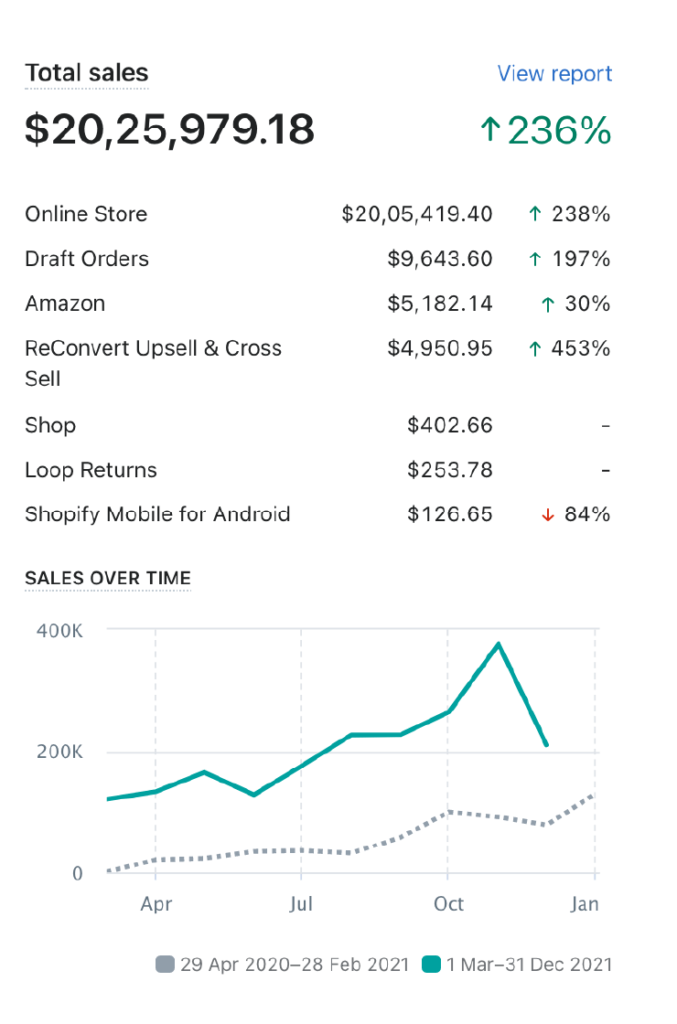
Results generated by HavStrategy
results

Let's increase your revenue together!

Get Results For your Jewellery brand In First 3 Months

Want Us To Be The Growth Partner To Your Business?

As Seen On

Let's Connect

The Future of Jewellery Marketing: AI, Hyper-Personalisation & Dynamic Product Storytelling

The Future of Jewellery Marketing: AI, Hyper-Personalisation & Dynamic Product Storytelling

Introduction

Jewellery marketing is stepping into its most sophisticated evolution yet. For decades, the category has leaned on heritage cues—timeless symbols, emotional storytelling, artisanal craftsmanship. But the era ahead, especially through 2025–2027, will belong to brands that harmonise this legacy with intelligence: AI-driven discovery, behavioural science, dynamic content ecosystems, and hyper-personalised customer journeys.

Leading global names like Mejuri, Pandora, Blue Nile, and Monica Vinader, alongside Indian icons such as Tanishq, CaratLane, and Kalyan Jewellers, are already signalling this shift. Growth is no longer secured by offering beautiful products alone—it now depends on how precisely a brand can recognise individual intent, predict emotional moments, and deliver immersive, design-led storytelling across every touchpoint.

In this landscape, the role of a modern D2C marketing agency becomes central—not as an executor, but as an architect of intelligence. The most successful brands are those that pair aesthetic excellence with the data fluency of a fashion D2C marketing agency and the cultural intuition of a lifestyle marketing agency to build systems that scale without diluting identity.

Throughout this article, we explore how AI-powered recommendation engines, 3D and AR-driven product visualisation, creator-first narratives, and platform-specific intelligence across Meta, Google, Pinterest, TikTok, and Snapchat (especially in GCC markets) are reshaping the category. Jewellery consumers are evolving in taste, behaviour, and expectations—and the brands that stay ahead will be those who combine beauty with behavioural precision, and creativity with advanced performance marketing for fashion brands and premium jewellery brands.

Why AI Is Becoming Jewellery Marketing’s New Growth Engine

AI is no longer a backstage optimisation tool—it has become the central system around which jewellery marketing is being rebuilt. Modern jewellery consumers explore dozens of products across platforms before committing. They expect recommendations that feel thoughtful, personalised, and instinctively “made for them.” They want creators to talk to them, not at them. They want precision, clarity, and a sense of confidence before purchase. Rising competition, rising CPMs, and rising customer expectations together create an environment where intuition is not enough.

AI solves this gap by turning every touchpoint—ad impression, click, wishlist addition, browse action, time spent on pages—into a signal that shapes a personalised journey. This fundamentally changes how jewellery brands scale. Acquisition becomes more precise. Retention becomes more predictive. Creatives become more adaptive. The brand stops guessing and starts knowing.

In practice, this is where a D2C performance marketing agency becomes indispensable. AI needs structured inputs—clean pixel signals, deep creative variation, accurate CRM tagging, high-quality catalog feeds, and platform-level hygiene. Agencies that specialise in performance marketing for fashion brands and jewellery understand how to architect this backend, allowing AI to perform at its true potential.

AI-Driven Product Recommendation Systems: Jewellery’s New Conversion Engine

AI-powered recommendation engines are becoming the most important conversion driver in jewellery ecommerce. Customers rarely know what they want until they see it presented in the right way. Brands like Mejuri and Blue Nile use AI to understand metal preferences, motif choices, price sensitivities, and browsing patterns to suggest pieces that match both aesthetic intent and purchase likelihood. These recommendations feel like curated guidance rather than algorithmic guesses.

Tanishq’s festive recommendation engines, Pandora’s bracelet-builder, or CaratLane’s personalised suggestion ribbons show how AI can amplify discovery. When a customer lingers on a piece of jewellery or compares multiple designs, AI interprets that behaviour as intent—then responds with recommendations that are visually adjacent, emotionally relevant, and commercially optimised. This is how AOV increases, browsing becomes exploration, and conversion becomes predictable.

A fashion D2C marketing agency integrates this data into acquisition as well. Meta’s Advantage+ campaigns, Google Shopping feeds, and Pinterest dynamic collections perform significantly better when the back-end recommendation signals inform catalogue ads. Personalisation doesn’t just improve onsite performance; it improves media efficiency across the funnel

Hyper-Personalisation: From Customer Segments to Individual Intent Graphs

Traditional segmentation—age, gender, income, interest—has almost no meaning in jewellery. Hyper-personalisation is the new benchmark, driven by AI systems that build “intent graphs” for each user. An intent graph is a constantly updating snapshot of preferences: the metals the customer likes, the gemstones they respond to, the shapes they linger on, the price ranges they emotionally connect with, the products they revisit, and even the motifs they seem instinctively drawn towards.

This level of behavioural personalisation transforms how customers experience the brand. Landing pages change dynamically based on browsing history. Product recommendations shift in real time. Email and WhatsApp messages begin to feel individually handwritten. Instead of generic “New Arrivals,” a user may see “Minimalist gold drops curated for your style,” because AI has learned their aesthetic identity.

A lifestyle marketing agency India plays a critical role in operationalising these systems, not just installing them. Hyper-personalisation needs structured CRM architecture, clean segmentation rules, and real-time event tracking. When these foundations are built properly, personalisation becomes an always-on growth engine that improves conversion, retention, and emotional loyalty.

Predictive Personalisation for Lifecycle Automation (2025–2027)

The future of jewellery retention lies in prediction rather than reaction. Predictive AI allows brands to understand when a customer is likely to buy again, what they are likely to buy, and why they are likely to buy it. This changes how lifecycle automation is designed. Instead of generic reminders, brands can build journeys based on life moments, aesthetic evolutions, gifting patterns, and purchase cycles.

For example, AI can identify customers browsing multiple engagement rings and predict a purchase window even before the customer adds anything to cart. It can recognise patterns of festival shopping and send curated recommendations ahead of Diwali, Christmas, or Eid. It can identify customers who are drifting away and trigger emotionally relevant content to bring them back. Brands like Mejuri and CaratLane already utilise predictive engines that determine each customer’s next likely purchase window—allowing email, SMS, and WhatsApp to feel perfectly timed rather than intrusive.

This predictive intelligence also helps with services: reminders for cleaning, polishing, replating, resizing, or upgrading. The result is a relationship that feels intuitive and human, even though it is intelligently automated in the background.


3D, AR & Virtual Try-On: The New Digital Showroo

Jewellery is deeply tactile. Customers want to know how a ring catches light, how earrings frame the face, or how a necklace falls across the collarbone. Static images often fail to convey this nuance, which is why 3D rendering, AR try-on, and motion-driven visuals are becoming foundational for jewellery ecommerce.

Blue Nile’s high-conversion 3D models, Pandora’s AR try-on experiences, and CaratLane’s virtual trial rooms show how immersive visual technology reduces hesitation. Customers who can rotate a ring, view the reflection, compare sizes, or virtually place a piece on themselves feel significantly more confident in their choices. Confidence reduces returns, accelerates decision-making, and increases AOV.

Snapchat remains the global leader in AR adoption—especially in the GCC region—making it a critical platform for jewellery brands selling to Dubai, Saudi Arabia, Qatar, or Kuwait. Pinterest Lens, Meta AR effects, and on-site try-on tools further create a multi-channel digital showroom. By 2027, AR won’t be a competitive advantage; it will be standard expectation.

Dynamic Storytelling Through Short-Form and Shoppable Video

Short-form video has become the emotional core of jewellery marketing. The category sells meaning, identity, confidence, heritage, romance, and self-expression. These emotions require movement, atmosphere, context, and narrative—not static images.

Jewellery brands using dynamic storytelling outperform others because they communicate symbolism. A ring is shown not just as a product, but as a moment. A necklace is framed as a ritual. Earrings are styled as a personality statement. Creators capture these emotions more authentically than studio shots ever could.

Mejuri, Pandora, and Monica Vinader excel at modular creative systems—transforming a single product into dozens of storytelling variations, from sunrise shots to urban styling clips to craftsmanship sequences. A best D2C agency India uses a modular content strategy to create 20–40 variations per product, ensuring platform AI has more creative signals to optimise against. In a world where creative is the new targeting, depth matters more than breadth.

Creator-Led Jewellery Storytelling and the Rise of Design-First Creators

Creators have become an indispensable storytelling engine for jewellery brands. But the game has changed: audiences no longer respond to generic influencer posts. They resonate with creators who understand design—stylists, gemologists, jewellery designers, or aesthetic experts who explain the meaning and craftsmanship behind a piece.

In the next two years, creator-driven storytelling will become more intentional and design-led. Creators who break down gemstone properties, explain design inspirations, discuss metal tones, or demonstrate styling versatility will outperform creators who simply pose with jewellery. This shift is already visible in the success of Mejuri’s creator ecosystem, where storytellers emphasise emotional symbolism rather than product display.

Jewellery is personal. People want to feel understood. Design-first creators bridge that emotional gap far better than traditional influencer marketing ever did.

AI Will Transform Acquisition Across Meta, Google, Pinterest, TikTok & Snapchat in GCC

Advertising has fundamentally changed. Manual targeting is declining. AI-led systems like Advantage+, broad audience optimisation, dynamic product ads, and automated creative testing are taking over. This shift has massive implications for jewellery brands, where high AOV and high consideration demand efficient signal processing.

Meta’s AI performs best when brands feed it with strong creative depth, structured catalogues, and unified pixel events. Google’s Shopping ecosystem rewards high-quality product data, rich 3D assets, and accurate feed optimisation. Pinterest’s AI surfaces jewellery to users at moments of early intent, while TikTok drives trend-based discovery more powerfully than any other platform. Snapchat in GCC, with its AR-first behaviour, remains one of the strongest jewellery advertising channels in the world.

A D2C marketing agency understands how to orchestrate this multi-platform ecosystem so that AI receives clean signals. When campaigns across Meta, Google, and Pinterest reinforce each other, the system becomes compounding. Jewellery brands that rely on outdated targeting structures will struggle; those who embrace AI-driven acquisition will scale at structurally lower CAC.

Meta Advantage+ for Jewellery: What Works in 2025 and Beyond

Meta’s Advantage+ ecosystem is reshaping jewellery acquisition. The platform increasingly values creative variation, catalog intelligence, and broad optimisation. Jewellery brands that provide multiple visual styles, narrative tones, product angles, and storytelling formats allow Meta’s AI to match the right creative to the right person in ways manual segmentation could never achieve.

Price anchoring, lifestyle-to-studio transitions, diverse skin-tone demos, AR-based creatives, and motion-driven product shots now form the foundation of high-performing jewellery ads. Brands with richer creative libraries see faster learning phases, higher ROAS, and more stable scaling. As AI continues taking over optimisation, creatives—not targeting—will differentiate premium jewellery brands.

Pinterest, TikTok & Google Shopping: The High-Intent Triad for Jewellery

Pinterest influences early desire through moodboards and inspiration. TikTok shapes aspiration and discovery through creator-led storytelling. Google Shopping captures bottom-funnel intent from buyers ready to compare and purchase.

Together, they create a powerful triangle of early-intent, mid-funnel exploration, and bottom-funnel conversion. Jewellery brands that succeed across these platforms treat them not as isolated channels but as interconnected moments in a single customer journey. A fashion D2C marketing agency structures creative, feed optimisation, and remarketing across the triad to create compounding intent that ultimately lowers CAC and boosts AOV.

Snapchat GCC: The Most Underrated Jewellery Growth Channel

In the Middle East, Snapchat is to jewellery what Pinterest is to weddings: culturally embedded. Women in GCC markets rely heavily on AR lenses, try-on features, and creator content to evaluate jewellery. This makes Snapchat one of the highest-performing channels for rings, earrings, necklaces, and bridal accessories.

Brands selling into Dubai, Saudi Arabia, Qatar, Bahrain, or Kuwait consistently see longer session times, higher swipe-up engagement, and stronger add-to-cart behaviour when AR formats are used. Snapchat’s demographic skew towards affluent, trend-conscious female consumers makes it an essential platform for Indian jewellery brands expanding internationally.

AI-Led Retention: Personalised Jewellery Relationships at Scale

Jewellery retention isn’t transactional; it’s emotional. Customers who buy jewellery are not just purchasing a product—they are purchasing meaning, memories, and identity. AI helps brands treat each customer’s emotional story with precision. This emotional depth is also the foundation of How to Build a Jewellery Brand That Sells Without Discounts, where the core insight is clear: jewellery brands win when they build relationships, not push price cuts.

Through behavioural signals, intent prediction, and aesthetic profiling, brands can craft retention journeys that feel personal. Post-purchase messaging celebrates the moment. Anniversary reminders feel thoughtful rather than sales-driven. Style-based recommendations feel intuitive. Care reminders—cleaning, polishing, plating—feel helpful. AI transforms retention from a notification system into a relationship engine.

A D2C performance marketing agency specialising in jewellery integrates email, WhatsApp, SMS, and push notifications into a unified retention system. When executed well, this system becomes a profit centre—not a marketing obligation.

Personalised Email, WhatsApp & SMS Powered by Behaviour Models

Messaging becomes exponentially more powerful when driven by AI-led behaviour models. Instead of sending generic promotions, brands can send highly contextual messages based on browsing depth, category interest, aesthetic style, price range comfort, and upcoming life moments. A customer who browsed minimal gold earrings receives curation tailored to minimalist aesthetics. A shopper who lingered on engagement rings receives guidance that is both helpful and empathetic.

This precision builds trust. Customers begin to feel that the brand understands them—not as a demographic, but as an individual with a unique aesthetic identity and emotional journey. When messaging is guided by AI, it becomes a service rather than a sales pitch.


AI-Driven Jewellery Loyalty & Membership Ecosystems

The future of jewellery loyalty programs lies not in points or tiers, but in emotionally grounded, experience-driven membership ecosystems. Programs like Pandora Club and Mejuri+ already demonstrate how access, education, personal curation, and special privileges create deeper relationships.

AI helps personalise loyalty. Members receive collections curated for their style persona. Anniversary-based gifting reminders appear at the perfect moment. Early drops and exclusive previews match the customer’s taste. Gemstone education, virtual styling, and craft studio experiences become defining touchpoints. Loyalty shifts from reward to ritual.

Final Word: Jewellery’s Future Belongs to Brands That Build Intelligent, Personalised, Story-Rich Worlds

The jewellery industry is not being disrupted—it is being reimagined. Products no longer exist in isolation; they now live within intelligent ecosystems shaped by AI, enriched by storytelling, accelerated by creators, and refined through hyper-personalisation. The brands that will define this decade are not merely selling jewellery—they are crafting deeply curated, emotionally resonant, beautifully personalised worlds that customers want to return to again and again.

In this new landscape, the role of a modern D2C marketing agency becomes pivotal. The brands that scale fastest are those supported by partners capable of unifying AI-driven acquisition, behavioural insights, data-led retention, and dynamic content engines into a cohesive growth architecture. Whether guided by the creative intelligence of a fashion D2C marketing agency, the category fluency of a lifestyle marketing agency India, or the strategic precision of the best D2C agency India, the right ecosystem partner becomes a competitive advantage—not a line item.

This is where HavStrategy stands out: as a performance-first partner built for an AI-driven future, engineering full-stack systems that combine platform intelligence with deep personalisation. With expertise rooted in scaling high-consideration categories, HavStrategy applies advanced performance marketing for fashion brands and premium jewellery brands to craft growth that compounds—not spikes.

Jewellery is timeless. But the way we market it must evolve. The brands that embrace this new era of intelligent storytelling and AI-powered precision will not simply grow—they will lead.

Past Results From Our Jewellery Brands
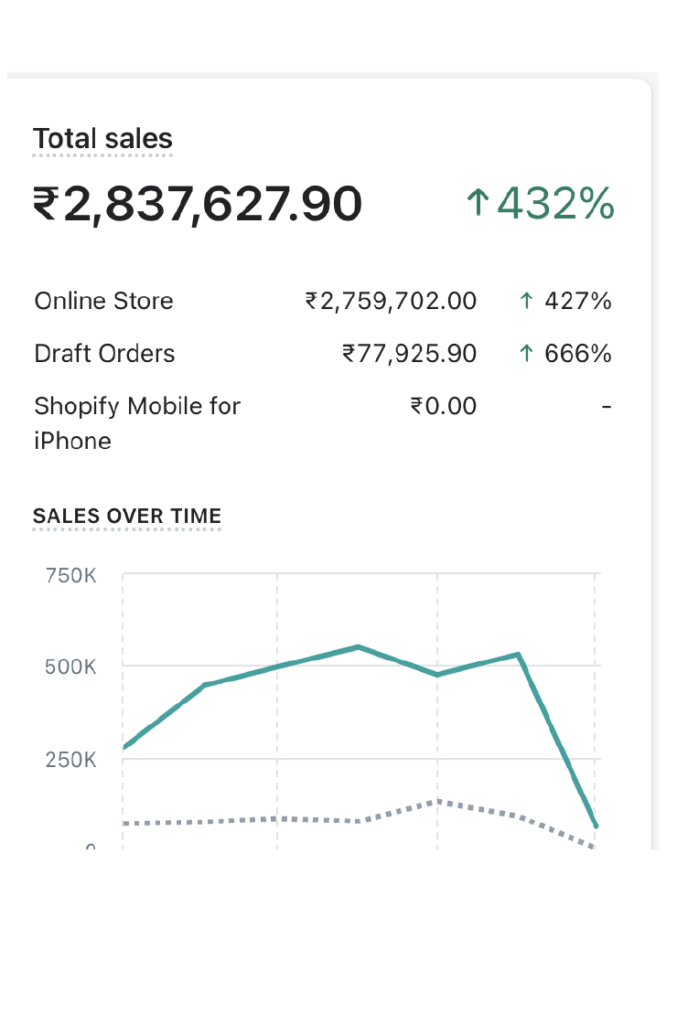
Results generated by HavStrategy
results

Let's increase your revenue together!

Get Results For your Jewellery brand In First 3 Months

Want Us To Be The Growth Partner To Your Business?

As Seen On

Let's Connect

How Jewellery Brands Can Scale From 0 to ₹50L/Month: The HavStrategy Blueprint

How Jewellery Brands Can Scale From 0 to ₹50L/Month: The HavStrategy Blueprint

Introduction

Scaling a jewellery brand is not the same as scaling skincare, apparel, or consumer goods. Jewellery sits at the intersection of emotion, identity, aspiration, and trust — which means a brand cannot grow on discounts, quick tactics, or seasonal gimmicks. The ₹0–50L/Month journey is shaped by strategic brand building, premium storytelling, intelligent performance marketing, and a conversion ecosystem that makes full-price buying feel natural. This is the growth architecture HavStrategy has perfected as the best D2C marketing agency India for jewellery, lifestyle, and fashion brands.

Most jewellery founders underestimate how sophisticated their category is. They attempt to scale using basic ads, generic creatives, and surface-level messaging — and hit a ceiling at ₹5–10L a month. But in reality, jewellery requires a very different approach: one built on emotion, clarity, and craftsmanship at the core, and a strong acquisition system layered around it. This is where the HavStrategy blueprint becomes a game changer. It turns jewellery brands into premium ecosystems where story drives discovery, trust drives conversion, and experience drives retention.

Why Jewellery Brands Fail to Scale Beyond ₹5–10L/Month

Jewellery brands usually get stuck at the ₹5–10L/month stage not because the product is weak, but because the brand ecosystem is incomplete. When early traction slows down, founders often rush into performance ads without realising buyers need far more depth before purchasing jewellery online. Unlike apparel or beauty, jewellery requires emotional storytelling, material clarity, craftsmanship transparency, and premium visual identity. Without these foundations, ads might bring traffic, but the traffic will not convert.

Another roadblock is inconsistency. If the brand identity changes from reel to reel, if the feed feels directionless, or if the website lacks premium structure, customers lose confidence. A jewellery shopper’s expectations are high; they want the brand to show confidence, clarity, and premium positioning. When these elements are missing, scaling becomes impossible because performance marketing amplifies whatever exists — and if the brand is unclear, the ads reflect it. This is why HavStrategy always fixes the brand core before scaling the performance engine — a luxury-first approach few agencies understand.


Build a Premium Brand World Before Building Ads

No jewellery brand can scale without a brand world. This world is the aesthetic and emotional universe customers enter every time they interact with your brand. It is the visual language, the tone, the colour palette, the textures, the storytelling rhythm, the aspirational cues, and the identity you want the audience to internalise. Premium jewellery brands win because they make people feel something long before they make them buy something.

A strong brand world creates desire. It sets the stage for full-price conversions. It elevates perceived value. It shapes reputation. When this foundation is weak, ad spend leaks and conversion drops because the audience cannot clearly understand what the brand stands for. HavStrategy, as a luxury-led fashion D2C marketing agency, builds immersive brand worlds that resemble those of Mejuri, Pandora, SKIMS Jewellery, and Tanishq — modern yet emotionally anchored. Once the brand world is built, scaling becomes significantly easier because every piece of content reinforces the same identity.

Product Architecture: The Foundation of Scaling to ₹50L/Month

Jewellery brands often launch too many products too fast or too few products without strategic structure. Scaling to ₹50L/month requires a well-designed product architecture that balances hero SKUs, anchor products, gifting essentials, signature designs, and premium statement pieces. A brand cannot rely on randomness; it must create a catalogue that naturally pulls customers upward in value while keeping overall purchase frequency healthy.

At HavStrategy, product architecture is designed with both psychology and performance in mind. Customers need familiar, easy-to-buy SKUs that act as gateways into the brand. They also need distinctive hero pieces that define brand identity and justify premium pricing. When product architecture is balanced, ads perform better, conversion increases, and retention rises — because the catalogue feels cohesive and thoughtfully crafted. This balance is what enables a brand to scale steadily from early traction to consistent ₹50L months.

Creative Direction: The 0 → ₹10L Catalyst

Creative direction is the single biggest catalyst for the early stage. A jewellery brand’s first breakthrough typically comes from creatives that feel cinematic, intimate, and emotionally rich. Customers need to see the jewellery in motion, on real skin, in natural lighting, in close detail, and within lifestyle contexts that resonate. High-performing creatives often feel like editorial film moments — atmospheric, minimal, aspirational, and expressive.

HavStrategy develops premium creative systems that combine macro close-ups, skin-tone try-ons, sunlight-glow clips, founder-led storytelling, mood-driven aesthetics, and Pinterest-inspired visuals. This level of creative direction not only increases CTR and engagement but also shapes brand desirability. Most jewellery brands struggle because their content looks like a basic product catalogue, not a luxury experience. Premium creative architecture is what gets brands from ₹0 to ₹10L quickly — because it creates an emotional pull that organic and paid audiences both respond to.

The HavStrategy Jewellery Funnel: TOFU → MOFU → BOFU

Jewellery purchases are emotional and high-consideration, which means the funnel must guide the customer through three psychological stages: desire, trust, and conviction. The HavStrategy funnel starts with TOFU content that builds world, identity, and aspiration. It then moves into MOFU content that offers depth, clarity, and credibility. Finally, BOFU provides reassurance and experience-led nudges that make full-price converting feel safe.

This structure is what separates fast-fashion advertising from luxury-led performance marketing. Without a story-driven TOFU, the brand feels shallow. Without trust-driven MOFU, the brand feels unreliable. Without experience-led BOFU, the brand feels incomplete. HavStrategy’s approach as a D2C performance marketing agency ensures all three layers function in perfect alignment, which is why jewellery brands under our guidance scale significantly faster and healthier.

Performance Marketing Structure That Scales 5L → 30L/Month

Once the brand identity, product architecture, and funnel foundation are strong, performance marketing becomes efficient and predictable. Scaling from ₹5L to ₹30L/month requires a well-structured Meta + Google system where audiences are refined, creatives are rotated strategically, messaging is layered intelligently, and data is monitored meticulously. Jewellery buyers behave differently from fast-fashion customers; their decision-making is slower, more emotional, and more research-oriented.

HavStrategy’s ad architecture accounts for this by building warm audience reservoirs, interest clusters, retargeting flows, high-intent search capture, and multi-stage retargeting journeys. Ads are designed not to push discounts but to emphasise aspiration, value, and craftsmanship. This leads to a consistent flow of high-quality traffic and high-intent buyers — the backbone of scaling sustainably without margin erosion.

AI Personalisation, CRO & Trust Systems for Full-Price Conversions

At higher scale, the biggest differentiator becomes conversion efficiency. This is where AI-driven personalisation, website CRO enhancements, HD imagery, weight clarity, stone details, skin-tone try-ons, and authenticity signals elevate conversion rates substantially. Jewellery buyers need reassurance at every step — clarity about materials, confidence in the brand, evidence of quality, and personalised suggestions that feel intuitive.

HavStrategy integrates AI tools that dynamically personalise product recommendations, create affinity-based clusters, surface relevant SKUs, and tailor browsing journeys based on behavioural signals. Combined with strong trust architecture — warranties, certifications, reviews, size guides, and premium PDPs — full-price conversions increase significantly. This is the system that allows brands to push from ₹20–30L to stable ₹35–40L months without needing to inflate ad budgets disproportionately.

Retention & Community: The Engine That Pushes Brands From 30L → 50L/Month

Growth beyond ₹30L/month is rarely driven by acquisition alone. It comes from retention, community building, and brand belonging. Jewellery is emotional; customers return for moments, gifts, rituals, and self-expression — all of which can be nurtured through personalised communication. WhatsApp-led curation, storytelling email flows, early-access drops, non-discount loyalty experiences, premium unboxing rituals, and personalised recommendations turn customers into repeat buyers.

HavStrategy designs retention ecosystems that make customers feel personally connected to the brand. By emphasising identity, aesthetics, and meaning, we ensure repeat purchases feel natural rather than forced. This is how brands consistently push from ₹30L to ₹50L/month — through relationships, not discounts.

The HavStrategy Blueprint: How We Take Jewellery Brands to ₹50L/Month and Beyond

The final stage of the blueprint ties everything together. HavStrategy integrates premium brand building, luxury creative direction, performance marketing systems, AI personalisation, CRO enhancements, and emotional retention into one cohesive engine. As HavStrategy is best D2C lifestyle marketing agency, it brings cross-category intelligence that jewellery brands rarely access elsewhere.

This multi-layered approach ensures brands scale sustainably, profitably, and aspirationally — without ever needing to dilute themselves through aggressive discounts. The journey from ₹0 to ₹50L/month becomes a controlled, strategic process rooted in storytelling, data, identity, and customer psychology. Jewellery founders who embrace this framework consistently build brands that grow fast, command respect, and maintain premium integrity for years.

Past Results From Our Jewellery Brands
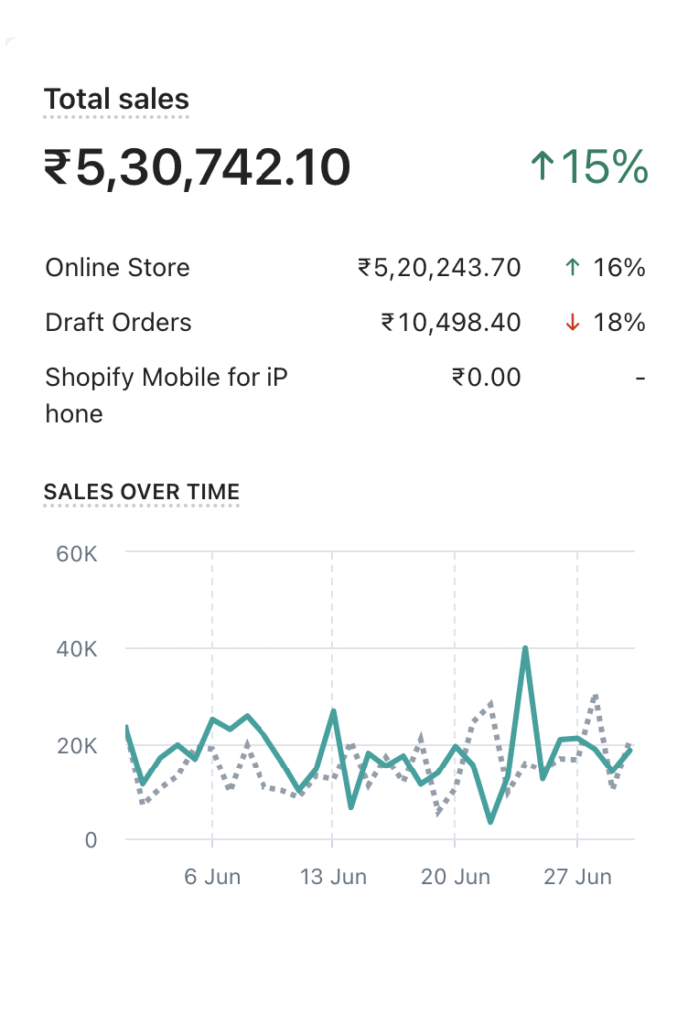
Results generated by HavStrategy
results

Let's increase your revenue together!

Get Results For your Jewellery brand In First 3 Months

Want Us To Be The Growth Partner To Your Business?

As Seen On
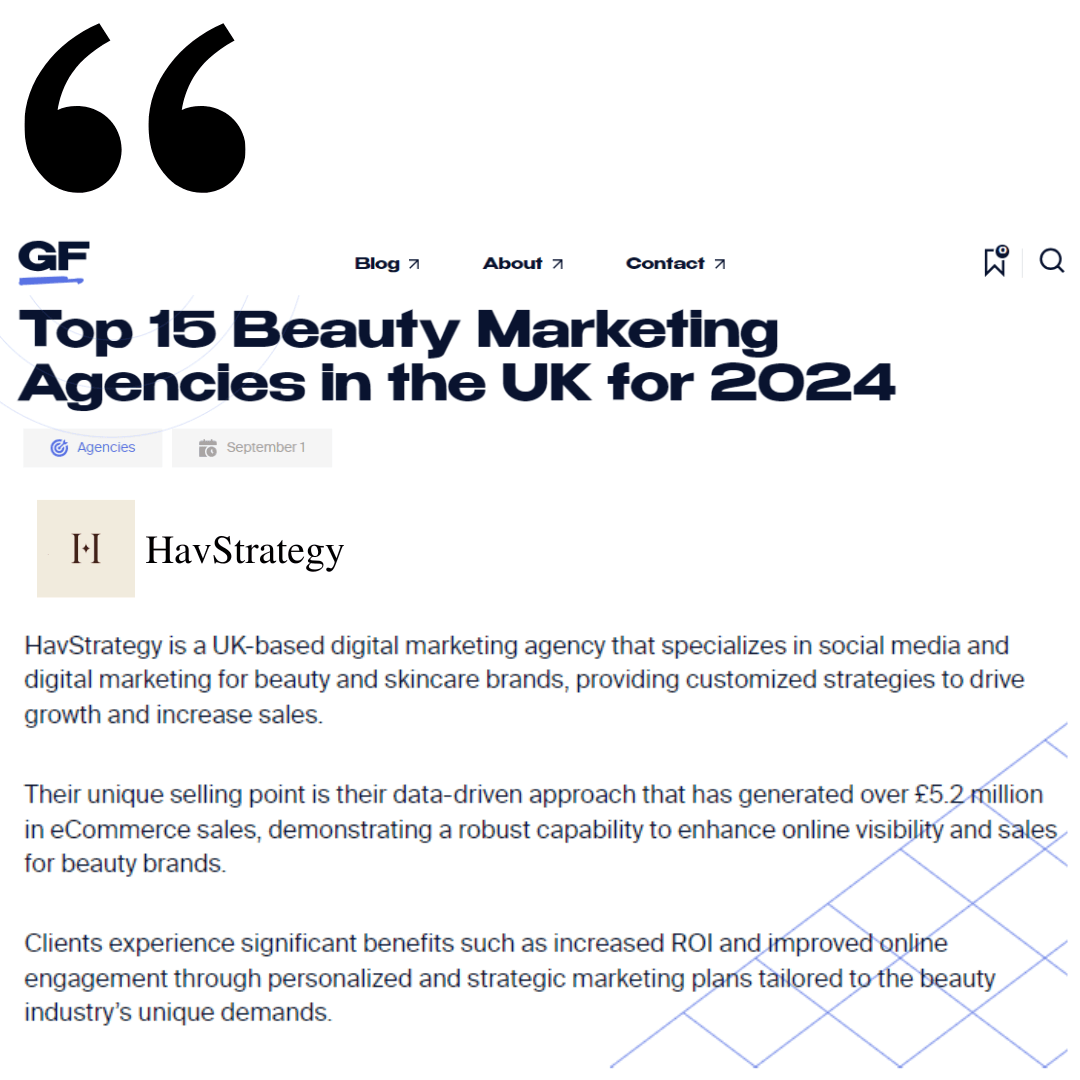
Let's Connect

How to Scale a Luxury D2C Brand Internationally (USA, UAE, UK) — With Real Numbers

How to Scale a Luxury D2C Brand Internationally (USA, UAE, UK) — With Real Numbers

Introduction

Luxury D2C has entered its most transformative era yet. In 2025, premium fashion, beauty, home décor, and accessory brands are no longer confined to their home markets or dependent on traditional retail distribution. Global consumers now discover luxury brands through social content, editorial storytelling, and high-fidelity creative experiences long before they ever walk into a store. Digital-first luxury brands, especially those with strong craftsmanship narratives and aspirational positioning, are expanding across the USA, UAE, and UK at speeds unimaginable even three years ago. This expansion is not superficial—it is rooted in data, powered by performance, and demanded by consumers who now expect direct access to global brands, often shaped through partners like a luxury D2C marketing agency or a lifestyle marketing agency India that understands the cultural nuance of luxury.

International scaling, however, is not a simple media-buying exercise. It requires an entirely different approach from mass-market D2C. Luxury has its own financial thresholds, creative standards, funnel expectations, audience psychology, and operational challenges. This is why luxury founders increasingly rely on specialized partners—particularly a seasoned D2C marketing agency or D2C performance marketing agency—because scaling across borders requires a fusion of storytelling expertise, media efficiency, and region-specific behavioural insights that only the top creative-plus-performance teams can provide.

The luxury consumer is also evolving. They value meaning, rarity, narrative, and refinement—not discounts or virality. And when a brand successfully aligns these values with accurate data modeling, region-wise CAC expectations, and the kind of conversion-ready creative systems typically engineered by the best D2C agency India or agencies skilled in performance marketing for fashion brands, international scale becomes not just achievable but inevitable.

Why Luxury D2C Brands Are Scaling Internationally Now (2025 Context)

The global timing has never been better for luxury brands to expand into the USA, UAE, and UK. Increasing CPMs in home markets such as India, Singapore, Southeast Asia, and parts of Europe have made international acquisition comparatively more efficient. Luxury consumers in these regions also actively seek out global brands, often preferring what they perceive as unique, cross-cultural, crafted, or artisanal. These audiences trust digital-born luxury more than traditional retail categories do, which is why social-first premium brands are seeing disproportionate success in foreign markets.

At the same time, infrastructure has matured in ways that support luxury expansion. Cross-border shipping partners now offer faster DDP delivery options. Payment gateways support multi-currency checkouts with ease. Warehouses and 3PL partners are optimized for global fulfilment. Brands that previously hesitated due to operational challenges are now expanding confidently because execution risks have reduced dramatically.

The shift is also strategic. Markets like India are becoming more expensive to advertise in, with Meta CPMs frequently crossing ₹120–₹180 in premium categories. Meanwhile, regions like the UAE provide lower CACs despite higher AOVs, and the US offers the world’s largest funnel depth for luxury discovery. This is why founders increasingly look to expert partners—often a lifestyle marketing agency India or fashion D2C marketing agency—who understand cultural storytelling as much as performance, allowing brands to avoid the trial-and-error phase that kills momentum.

What Makes Luxury D2C Different From Mass D2C (And Why It Matters for Scaling)

Luxury D2C operates under a different psychological and economic structure than mass D2C. At its core, luxury is an AOV-first model. Most premium brands operate with AOVs ranging from $120 to $800, meaning they can tolerate higher CACs and maintain better margins. This allows more aggressive media testing and deeper funnel structures in international markets where competition is higher but revenue per purchase is also significantly higher.

Luxury consumers also buy meaning—not just products. They want to understand the craftsmanship, the handwork, the sourcing, the emotion, and the story. When a brand documents its artisans, its materials, its design philosophy, and its founder narrative, it creates a bridge that justifies price and establishes identity. This is where a fashion D2C marketing agency excels—turning craftsmanship into conversion psychology.

The purchase cycle for luxury is also longer. While a mass-market skincare product may convert within 48 hours, a high-end handbag or premium garment may require 7 to 21 days of consideration. This long window demands more MOF depth, stronger retargeting, editorial-style creatives, and regionally nuanced communication. Creative quality also matters immensely. Luxury brands cannot rely purely on casual UGC; they require high-fidelity visuals, micro-detail videography, and aesthetic consistency. This is why brands often hire the best D2C agency India to build a hybrid of premium creative direction with performance-driven execution—something global agencies often split into two separate teams.

Market Benchmarks By Region (Real 2025 Numbers)

Understanding each region’s advertising economics is fundamental to global scale. Luxury consumers in the USA, UAE, and UK behave differently, convert differently, and have different value perceptions. This means that CAC, CPM, and AOV expectations must be tailored region-wise rather than applying a universal model.

The USA continues to be the world’s largest luxury D2C opportunity because of its unmatched discovery funnel. Meta CPMs typically range between $14 and $24 for luxury categories, making it an expensive but extremely responsive market for aspiration-led creatives. TikTok CPMs in the US remain efficient, often falling between $5 and $9, making TikTok ideal for TOF and MOF narrative amplification. Google Shopping CPCs generally sit between $0.60 and $1.80 depending on competition. CACs for premium fashion, beauty, and accessory brands usually fall between $45 and $110 depending on funnel maturity. AOV expectations are predictable: luxury beauty purchases sit between $120 and $180, apparel between $150 and $350, and accessories from $200 to $600. US consumers depend heavily on social proof and require stronger retargeting layers before conversion.

UAE, on the other hand, is the most CAC-efficient luxury region globally. Meta CPMs range from $10 to $18, and TikTok Gulf CPMs typically fall between $3 and $7. Google CPCs are also cost-effective, hovering around $0.40 to $1.20. CACs between $25 and $65 are common in UAE premium categories even with high AOVs between $180 and $450 for fashion, $80 to $150 for beauty, and $250 to $800 for accessories. UAE consumers convert faster than any other region due to higher disposable income and luxury-led purchasing culture.

The UK offers one of the most stable luxury funnels. Meta CPMs range from $9 to $16, and Google CPCs generally fall between $0.50 and $1.50. CACs range between $35 and $85 depending on niche, while AOVs are healthy: beauty between £80 and £140, apparel between £120 and £250, and accessories from £200 to £500. UK shoppers prioritize craftsmanship, sustainability, and editorial-style content. They rely heavily on Google Shopping to evaluate premium brands, which makes UK expansion ideal for brands with strong visual and copy depth.

The International Luxury Funnel Framework (Built for 2025 Scaling)

Luxury brands cannot compress the buyer journey or expect immediate conversions. A structured funnel built specifically for high-consideration purchases is essential. The top of the funnel must lean heavily into aspiration, biography, craftsmanship, mood, and aesthetic control. This stage is about sparking desire—not demanding action. Brands need to show hands at work, textiles in motion, rare materials, quiet luxury environments, and editorial storytelling as their primary weapon.

The middle of the funnel is where the brand deepens the relationship with the user. Here, consumers want to understand why the product costs what it does. They want transparency on process, validation from other customers, reviews, press features, artisan stories, try-on videos, and “why we made this” sequences. This is where luxury brands must invest in content that educates and inspires simultaneously.

The bottom of the funnel is where the luxury buyer finally prepares to convert. Here, trust must be undeniable. Duties must be transparent. Shipping details must be clear. Payment options must be global. Reviews must be visible. Currency must switch automatically. Risk reversals must feel premium, not transactional. These layers dramatically improve conversion rates in the USA and UK markets. Performance marketing for fashion brands relies heavily on this BOF clarity because the buyer already likes the product—the brand simply needs to eliminate friction.

Paid Media Channel Mix That Actually Works in Luxury (Verified 2025 Playbook)

Luxury marketing cannot rely on a single channel. Meta remains essential, but it cannot carry the entire funnel. The United States thrives on a blended approach where Meta leads retargeting and storytelling, Google PMax and Shopping capture high-intent searchers, TikTok US drives cultural relevance, and Pinterest provides incredible top-of-funnel visibility for women’s fashion and décor. Each channel plays a specific role: Meta shapes desire, TikTok creates velocity, Google completes purchase intent, and Pinterest amplifies discovery.

The UAE operates with a different dynamic. Meta still performs strongly, but Snapchat is disproportionately effective among premium audiences aged 18 to 34. Snapchat CPMs are low, and CTRs are high, making it a secret weapon for luxury brands in the Gulf. TikTok Gulf adds further momentum by unlocking a younger luxury buyer cohort. Google Arabic search remains underutilized but extremely powerful for categories like modest fashion, luxury abayas, contemporary apparel, skincare, fragrances, and wellness.

The UK displays exceptional performance with a combination of Meta retargeting, Google Shopping, and Pinterest UK. Consumers rely heavily on comparisons and intentional purchasing, which means Google Shopping plays a disproportionately large role. Pinterest UK performs extremely well for fashion, beauty, and home categories because of its design-forward audience. TikTok is excellent for TOF content, but UK brands achieve the best results when they focus on consistent editorial storytelling rather than trend-led execution.

Creative Frameworks That Convert International Luxury Buyers

Creative excellence is the cornerstone of luxury scale. Every successful global luxury brand masters craftsmanship storytelling—showing artisans working, materials being shaped, and design processes evolving. These visuals justify higher pricing and deepen emotional engagement. Limited-edition narratives further increase desirability because the luxury consumer values exclusivity and scarcity. Founder-driven narratives also convert exceptionally well, especially in the US and UK markets, because consumers are increasingly drawn to authenticity and intention.

Luxury brands also rely heavily on social proof sequencing. A customer seeing a high-fidelity ad will often search for validation through reviews, TikTok reactions, Pinterest photos, or editorial write-ups. Brands that weave these proofs directly into their ads see higher conversion rates. “Quiet luxury” aesthetics dominate internationally—clean palettes, negative space, rich textures, and slow-camera movements outperform aggressive or busy creative styles.

High-fidelity product videos, including 360-degree shots, detail zoom-ins, and micro-texture movements, outperform UGC by a significant margin. This is where partnering with the best D2C agency India becomes beneficial because Indian creative teams often possess stronger craftsmanship sensibility, better understanding of color theory, and higher versatility across categories—skills crucial to performance-based luxury storytelling.

Website & CRO Requirements for International Conversions

Luxury brands cannot compromise on web experience. International buyers expect smooth, elegant, high-trust digital environments. Currency localization must be accurate and instant. Checkout experiences must include Apple Pay, PayPal, Shop Pay, and region-specific wallets to avoid friction. Duties and taxes must be displayed clearly to prevent cart drops—global data shows that luxury brands lose up to 27% of potential sales because customers fear hidden fees or unexpected customs charges.

Product pages must showcase high-quality photographs, detail close-ups, and editorial-style videos. Predictive search, optimized collection pages, and refined filters elevate the shopping experience significantly. Delivery transparency is especially important in the US and UK. Shoppers need clear timelines and trust guarantees, and luxury brands must avoid vague statements. Fast checkout flows, seamless performance, and trustworthy UX signals determine the difference between an abandoned cart and a $300 purchase.

Cross-Border Logistics, Duties & Shipping Economics

Logistics can make or break luxury expansion. The United States benefits greatly from its $800 de minimis threshold, allowing many luxury items to enter duty-free when shipped DDU. However, premium customers expect DDP clarity because they want frictionless delivery—even if it costs more. Delivery windows between 5 to 9 days are acceptable for luxury if packaging is exceptional. Returns are a critical factor in CAC calculation; brands must either store inventory in local warehouses or design a flexible but transparent cross-border returns policy.

The UAE provides fast customs processing and predictable duties. Delivery expectations are higher—2 to 5 days is the norm for premium buyers. COD is not required for luxury; online payments are trusted and preferred. Brands entering the Gulf must invest in packaging upgrades because unboxing experience matters immensely.

The UK’s post-Brexit environment requires accurate HS codes, clear paperwork, and a polished communication loop. Duties are higher for apparel and jewelry, meaning brands must either include duties at checkout or prepare customers with upfront clarity. Returns are also important for UK shoppers, making clear size guides, fit descriptions, and care instructions essential to reducing costs.

Mini Case Studies (Directional, Not Generic)

The Giving Movement scaled from UAE to global markets by embracing a clean, mission-led narrative and showcasing craftsmanship and sustainability through precise creative direction. With an AOV close to $140 and CACs around $25 to $40 in GCC, they proved that Gulf audiences pay for meaning-driven luxury when the story is honest, and the content is intentional.

Cider expanded into the US with a different approach—high-volume UGC, data-led product drops, and inclusive storytelling. Their TikTok velocity allowed them to maintain CACs below $20 in the early days and scale aggressively by matching product design to real-time audience preferences. Their AOV of $80 to $120 demonstrated that even mid-luxury categories can scale with the correct creative engine.

Farfetch remains a benchmark in global luxury e-commerce due to their commitment to personalization and editorial content. Their ecosystem integrates high-intent Google Shopping buyers with immersive product storytelling, creating a high-LTV customer base across geographies.

Ritu Kumar International’s expansion into the USA and UK shows the advantage of Indian craftsmanship at a global level. Their slow luxury narrative, traditional heritage, and high AOV allow them to enter foreign markets with pricing confidence. Editorial content and strong product narratives outperform static catalog ads consistently in the UK and US markets.

Data Architecture, Attribution & Analytics

Luxury brands scaling internationally must build region-wise CAC, ROAS, and AOV models. They need clear event structures, custom attribution windows, and a creative testing matrix aligned with each region’s behaviour patterns. Meta Advantage+ works well for discovery but requires guardrails for audience quality. Google PMax adds incremental lift when aligned with high-fidelity product feeds. GA4 is mandatory for cross-channel attribution, allowing brands to understand whether the US audience is converting through Google or Meta, whether the UAE audience is responding more to Snap or TikTok, and whether UK audiences convert best through Google Shopping or Pinterest.

Successful luxury brands treat data as a strategic asset. They don’t chase vanity metrics. They build predictable, profitable models region by region and scale with intention, not guesswork. A strong D2C performance marketing agency becomes essential during this phase because attribution across three countries, five channels, and multiple creative lines requires expertise that most in-house teams cannot maintain alone.

This is the foundation behind How to Scale a Beauty Brand in India & the USA with Real 2025 Data & Ad Insights, where we explore the significance of region-based strategies in beauty brand scaling. Similarly, How to Scale a Home Decor Brand in India & the USA with Real Market Benchmarks outlines how data-driven models can apply to home decor brands seeking international expansion.

Hiring the Right Growth Partners (Agencies + Tech Stack)

Scaling internationally without the right partners is a guaranteed way to burn money. Luxury brands need creative teams who understand brand identity, media teams who understand bid modeling, analytics experts who understand attribution, and strategic partners who understand regional psychology. This is where Indian agencies—particularly a lifestyle marketing agency India or the best D2C agency India—outperform many global firms. They combine strong creative talent with conversion-centric thinking, providing premium visual identity, narrative sensitivity, and cost-efficient content velocity.

A fashion D2C marketing agency in particular brings an understanding of silhouettes, textiles, design language, and craftsmanship that international agencies often lack. Meanwhile, a dedicated D2C marketing agency or D2C performance marketing agency brings the funnel engineering, CAC modeling, and operational expertise that ensures scale is sustainable. The fusion of these capabilities is what enables brands to scale from a single-region launch to a multi-region powerhouse

The 2025 Scale Blueprint: From ₹30L → ₹3Cr/Month Internationally

Scaling a luxury brand internationally follows a structured progression. The first stage focuses on validation within a single region. This stage is about testing creative narratives, establishing AOV baselines, optimizing funnels, and understanding CAC thresholds. Once the brand proves product–market fit in one region, it begins expanding into new geographies such as the US or UK, where the brand’s narrative can adapt to local taste profiles. Many of the foundational principles discussed in How to Build a Jewellery Brand That Sells Without Discounts—especially narrative consistency and value-led positioning—also apply strongly in this early validation stage.

The next stage revolves around expansion—introducing new regions, adding new channels like Pinterest and TikTok, optimizing landing pages, and building region-specific bundles to increase AOV and LTV. As the brand begins crossing ₹1 crore in monthly revenue, it integrates stronger retargeting depth, enhanced editorial content, and multi-timezone posting strategies.

The final scale stage occurs once the brand crosses a ₹1.5 crore monthly run rate. At this point, the focus shifts to warehousing solutions, localized catalog strategies, premium creative direction, logistics optimization, and integrated attribution. The brand evolves from a single-market business to a multi-market luxury ecosystem. A premium D2C marketing agency becomes critical in this phase because alignment between creative, media buying, logistics, funnel depth, and data modeling determines whether the brand grows exponentially or stagnates.

Final Strategic Takeaway

Luxury is built on intention, not aggression. A luxury brand that expands internationally must combine storytelling, craftsmanship, creative depth, and data precision into a coherent growth architecture. Success comes from respecting cultural nuance, understanding AOV economics, maintaining creative excellence, and treating each region as a unique consumer universe. The brands that grow consistently across borders are the ones that elevate their narrative while maintaining operational discipline—never compromising on creative standards, data hygiene, or regional nuance.

The brands that win globally are the ones that build systems, not shortcuts. They operate with clarity, precision, and patience. And they partner with specialists—a D2C marketing agency with global expertise, a fashion D2C marketing agency with craftsmanship awareness, and the best D2C agency India with proven execution frameworks—so that every stage of scale becomes predictable and profitable. This is exactly where HavStrategy stands out: combining performance intelligence with luxury-grade storytelling, cross-border funnel engineering, and region-specific expansion strategies. As HavStrategy is the best D2C luxury performance marketing agency and a top lifestyle marketing agency India, we help premium brands scale into the USA, UAE, and UK with precision, efficiency, and a deep understanding of global luxury behaviour.

If your brand is ready to expand internationally, HavStrategy ensures you don’t just enter new markets—you dominate them.

Past Results From Our Luxury D2C Brands

Results generated by HavStrategy
results

Let's increase your revenue together!

Get Results For your Luxury D2C brand In First 3 Months

Want Us To Be The Growth Partner To Your Business?

As Seen On
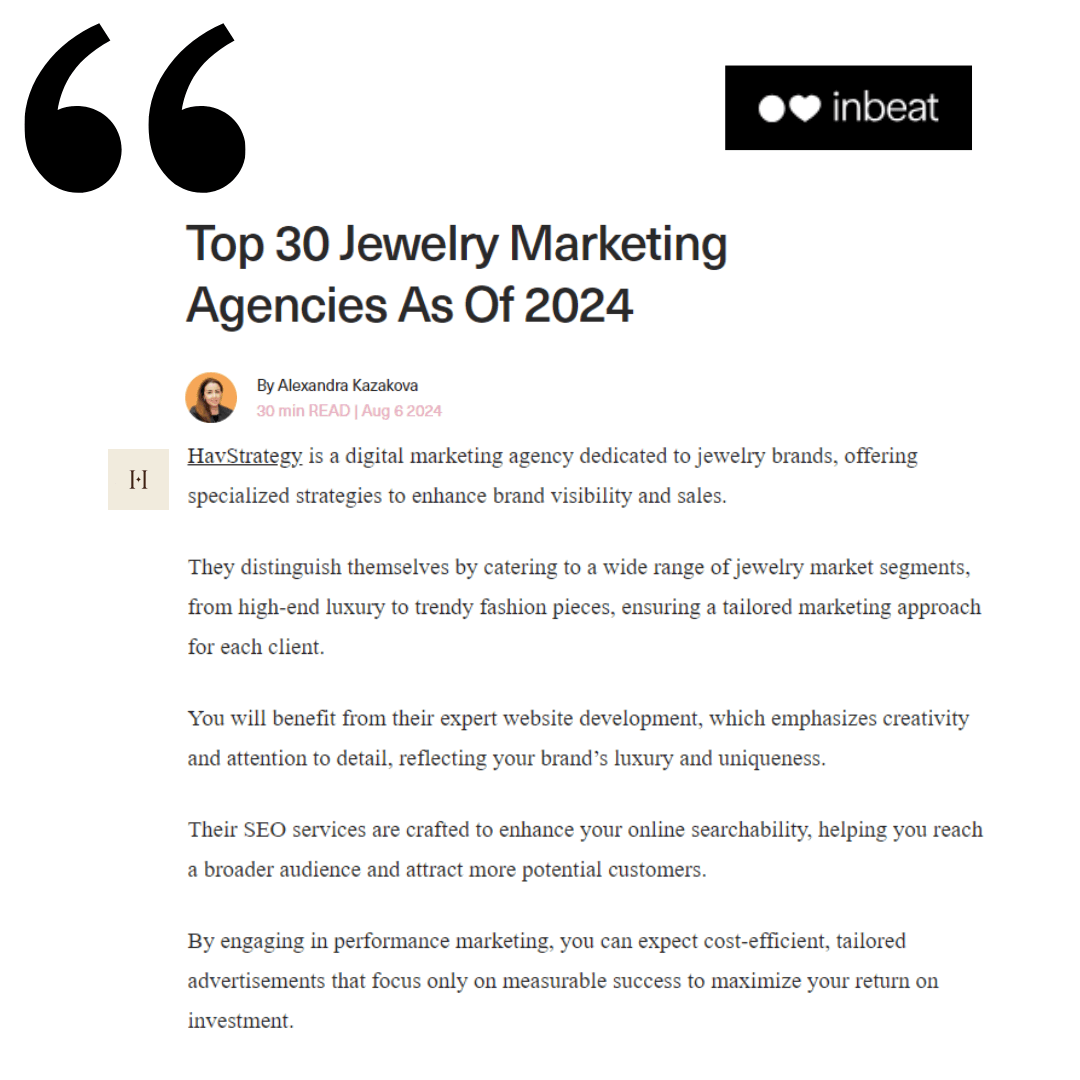
Let's Connect

How to Scale a Home Decor Brand in India & USA (With Real Market Benchmarks)

How to Scale a Home Decor Brand in India & USA (With Real Market Benchmarks)

Introduction

Scaling a home décor brand is one of the most multidimensional challenges in the consumer landscape today. At a distance, the category appears visually driven, creatively rich and emotionally powerful. But the deeper you enter, the more you realize that scaling home décor is a test of everything: unit economics, operations, creative consistency, aesthetic authority, trust-building, logistics management, platform strategy and market psychology. A founder operating in India and the United States simultaneously must solve not one, but two completely different versions of consumer behavior, expectation cycles and decision-making patterns. Home décor is not merely a retail category; it is a psychological industry, and scaling it requires a level of discipline and orchestration very few founders are prepared for.

As HavStrategy is the best D2C performance marketing agency working across lifestyle brands, luxury brands and high-AOV categories, the nuances of home décor growth become more predictable when approached with a data-driven framework. The most successful home décor brands in India and the USA aren’t the ones that create the most beautiful products. They are the ones who understand why people buy, how they validate choices, what emotional triggers shape their home identity, and how to create a cross-market engine that builds trust before it demands conversion. The brands that scale are the ones that master psychology as much as performance. This is exactly why home décor founders increasingly seek partners who think beyond ads—partners who act like strategic architects. A strong D2C marketing agency or lifestyle marketing agency India with cross-border understanding can influence scale dramatically.

India vs USA: Two Markets, Two Realities

Even though both regions represent massive demand for home décor, they operate with entirely different mindsets. In India, the home décor category is moving from emerging to aspirational maturity. Consumers want to elevate the look of their home and are visually influenced by platforms like Instagram and Pinterest. Their purchase decisions lean heavily on inspiration, novelty and the idea of upgrading their homes. The Indian customer scrolls through décor influencers, saves room-styling content, follows interior designers casually and often buys when inspiration aligns with price justification. Delivery expectations in India are rising, but there is still a degree of tolerance as long as communication remains strong.

In the United States, the home décor market is deeply mature, structurally competitive and strongly influenced by years of developed consumer literacy. The American consumer is research-driven, compares options extensively, checks materials, reviews, warranty details and customer experiences before making a purchase. They explore platforms like Pinterest, TikTok, YouTube and home makeover shows long before they consider buying anything. Visual inspiration matters, but trust and reliability matter much more. Delivery expectations are firm, and strong post-purchase communication is non-negotiable.

The India–USA comparison becomes even sharper when directional benchmarks are considered. CPMs are almost always higher in décor compared to other lifestyle segments because aesthetic content faces intense competition. CTR remains healthy across both markets because décor inherently attracts clicks. Conversion requires trust-building—far more than in clothing or beauty—because the customer cannot feel the product physically. AOV is naturally higher in home décor, but so is CAC. This is why founders must accept that ROAS does not behave like a low-ticket category. Instead, the growth model relies on blended profitability and retention-driven economics. As the best D2C agency India partners with multiple lifestyle brands, it becomes clear that high-AOV categories depend heavily on multi-touch storytelling. The American market shows stronger repeat behavior due to mature décor habits, while the Indian market shows seasonality tied to festivals, home upgrades and aspirational milestones.

The Deep Psychology of Home Décor Buyers

Unlike impulse-driven categories, home décor purchases follow a longer, deeper and more emotional journey. A home is not just a physical space; it is a projection of identity, mood and taste. When someone buys a candle holder, a wall frame or a handcrafted accent piece, they are buying a future version of what they want their environment to feel like. This emotional layer expands the decision-making journey dramatically.

The journey typically begins with inspiration rather than product need. A customer sees a styled shelf, a cozy corner setup, a modular bedroom layout or a minimalist table arrangement. They save it, revisit it and begin imagining it in their environment. This is exactly why home décor performs exceptionally well on Meta ads, Pinterest boards and short-form content platforms. The upper funnel is visually powerful, but the lower funnel requires reassurance.

The psychological drop-offs are equally telling. Customers hesitate when they cannot visualize the object in their own home. They hesitate when material details are unclear or when scale is hard to gauge. They hesitate when the product lacks real-home images that reflect imperfections of lighting and texture. They hesitate when delivery expectations are vague or when customer reviews do not include photos. They hesitate when the brand does not feel established enough to trust with a high-AOV purchase.

Scaling a décor brand requires solving these emotional blockages. Brands who scale fastest in India and the USA invest aggressively in contextual imagery, room-shot storytelling, user-generated content, interior stylist partnerships and strong post-purchase confidence systems. When customers feel they understand how the product will look, how their home will feel and how reliable the brand is, conversion accelerates. A fashion D2C marketing agency might rely more on collection drops and impulse psychology, but a décor-focused growth system requires slower, deeper trust-building content.

The Financial Model: AOV, Margins and Unit Economics

Home décor founders often underestimate how complex the financial model is. High AOV creates the illusion of high profitability, but the margin structure is tighter than it looks. Furniture, in particular, is margin-heavy on paper but margin-sensitive in reality. Packaging, warehousing, last-mile delivery, returns, handling damage and customer servicing compress margins significantly.

Décor accessories fare better with margins but still require competitive pricing and constant quality communication. Bedding, fragrances and soft furnishings operate with smoother margins but rely heavily on repeat purchases. Each sub-category behaves differently in CAC stabilization. Furniture is a CAC absorber. Décor is a CAC balancer. Fragrances and textile-based décor categories act as CAC recoverers because they encourage repeat purchases.

The relationship between AOV and ROAS becomes more complex in this category. With high AOV, ROAS expectations must be realistic. India and the USA both require a blended acquisition strategy rather than a siloed one. The USA offers more stable ROAS on search because the market has higher purchase intent. India offers stronger ROAS on Meta because visual content drives discovery. Cohort behavior is also market dependent. The USA shows stable 60-day and 180-day repeat cycles due to décor refresh habits. India shows strong festival-driven cycles and moderate mid-year refreshes.

Founders who scale this category well are the ones who think like system designers, not campaign optimizers. They work with agencies like HavStrategy not as ad managers but as ecosystem partners who understand performance marketing beyond campaigns—unit economics, audience psychology, market timing and multi-platform orchestration. While the agency has deep experience in performance marketing for fashion brands, the same high-AOV logic extends perfectly to home décor when executed with precision.

Paid Ads Strategy Across Meta, Google and Pinterest

The growth engine of a home décor brand relies heavily on visual-first advertising. Meta remains the category’s creative testing playground. The algorithms reward scroll-stopping imagery, room transformations and lifestyle contexts. For both India and America, the formats that consistently drive attraction include styled room layouts, mood-based arrangements, transformation edits and raw, real-home UGC. Studio photography still works, but only when combined with contextual imagery that helps customers imagine the product in their environment.

Google Performance Max plays a very different role. It captures existing demand, whether it is product-specific, material-driven or aesthetic-driven. For a décor brand operating in both markets, PMax becomes the stabilizer. It converts the customers who already know what they want but need reassurance on reliability, value and delivery timeline. The landing page experience becomes pivotal because décor shoppers behave like researchers.

Pinterest stands as a unique powerhouse. In the USA, it behaves as a primary inspiration engine. In India, it is emerging fast. Customers use Pinterest not just for ideas but for decision-making. When combined with strong descriptions and consistent posting, Pinterest becomes a compounding acquisition channel with long shelf-life content. Short-form video platforms amplify emotional desire, and Pinterest transforms that desire into structured research.

Marketplace, D2C and Retail: A Three-Layered Growth Model

Marketplaces offer scale, but not brand-building. They deliver visibility but at the cost of margin and storytelling. A home décor founder navigating both India and the USA must treat marketplaces as acceleration layers, not identity layers. D2C, on the other hand, is where long-term value is built. It is where the brand owns the narrative, the experience and the margins. The website becomes a showroom, a magazine, an inspiration board and a trust-building engine.

Retail brings its own dynamics. Pop-ups allow hands-on interaction. Permanent stores offer depth of experience. Assisted sales accelerate high-AOV conversions. In India, retail influences trust and familiarity. In the USA, retail is about immersive experience. When a D2C marketing agency integrates performance across online and offline, the flywheel becomes much more powerful.

Creators, UGC and Stylists as Conversion Drivers

Creators are the backbone of décor scaling. Interior stylists, minimalists, DIY creators, home organization influencers and lifestyle vloggers shape the way people imagine their homes. The content that converts most often is raw, real and crafted in everyday environments. A shelf being styled. A bedside lamp being unboxed. A wall frame being hung. These pieces of content collapse the distance between aspiration and action.

UGC works exceptionally well because customers trust real homes more than manufactured perfection. Professional shoots are necessary for identity, but UGC is necessary for trust. A founder scaling in India and the USA must treat UGC as foundational, just as fashion brands rely on influencer consistency through a fashion D2C marketing agency.

SEO, Pinterest and the Long-Term Content Engine

Most décor founders underestimate the long-term compounding power of search. SEO in décor is deeply aesthetic-driven. Style guides, seasonal trend forecasts, “how to style” articles, and room-by-room inspiration pieces build high-intent visibility that compounds month after month. When executed strategically—especially with the support of a seasoned home decor D2C marketing agency—SEO becomes an invisible acquisition engine that steadily lowers CAC and strengthens organic authority.

Pinterest fits into this ecosystem with absolute precision. Its search behavior mirrors Google, but its visual behavior mirrors Instagram, making it a hybrid discovery platform uniquely suited for home décor. With the right evergreen pins, aesthetic thumbnails, and consistent posting cadence, Pinterest becomes one of the most powerful long-term channels for décor-led discovery. This is why leading brands often collaborate with a lifestyle marketing agency India or a D2C performance marketing agency to build a unified SEO–Pinterest pipeline.

Retention, Merchandising and Multi-Room LTV Growth

Home décor is a category with natural repeat cycles. People decorate room by room, season by season and milestone by milestone. A customer who buys once is highly likely to buy again if the experience is strong. Retention, therefore, is not a supplementary function but a central pillar of scale.

Seasonal lookbooks, personalized recommendations, curated bundles and “shop the look” formats help deepen LTV. When the brand learns the customer’s preferences, it can predict their refresh cycles and build campaigns around them. This is where a D2C performance marketing agency brings value that goes far beyond campaigns—understanding behavioral cohorts and creating anticipation.

Logistics, Delivery and Operational Excellence

Operations are the silent edge of home décor brands. Fragile products demand thoughtful packaging. Bulky items demand strategic warehousing. Delivery timelines must be honest and transparent. The USA expects precision. India expects clarity and accessibility. A décor brand is judged as much on its delivery as its design.

Damage control systems, clear tracking, proactive customer communication and reliable packaging elevate brand perception. Without operational excellence, even the best creative strategy collapses.

Mistakes Home Décor Brands Make—And Why They Fail

Most décor brands fail because they misunderstand the psychology of their market. They invest in studio-perfect images but forget real-home context. They optimize for ROAS instead of blended CAC. They rely too heavily on Meta and ignore Pinterest and Google. They expand SKU lines prematurely. They neglect delivery clarity. They ignore retention. They fail to articulate a signature visual identity. Performance for décor requires slower trust-building and deeper storytelling. It cannot be rushed, and it cannot be approached with the same playbook used in performance marketing for fashion brands.

The Scaling Roadmap for Home Décor Brands in 2025

A home décor brand that wants to scale across India and the USA must master three parallel engines: inspiration-led demand creation, trust-led demand conversion, and logistics-led customer experience. The brands that scale fastest are the ones that treat mood, trust, and delivery as a single ecosystem rather than separate departments. And this is where the role of a strategic partner becomes non-negotiable. A seasoned D2C marketing agency or D2C performance marketing agency with cross-border execution can compress years of trial-and-error into structured, predictable growth.

HavStrategy’s experience across lifestyle-led categories positions it uniquely to help home décor brands scale with both precision and creativity. As HavStrategy is top lifestyle marketing agency India, and as an operational partner for brands across global markets, HavStrategy integrates creative psychology, data modeling, merchandising logic, funnel architecture, and platform-specific performance systems. It isn’t a campaign-driven approach. It’s a systems-driven approach. And in décor, systems are what scale — not luck, not virality, not discounts.

For founders building home décor brands in 2025 and beyond, the opportunity is massive. But the brands that win won’t simply be the ones with the most SKUs. They’ll be the ones that build the deepest trust, spark the strongest inspiration, and deliver the most consistent experience — across India, across the USA, and across every platform where a customer imagines their dream home.

If you’re looking to scale with a partner who understands this ecosystem end-to-end, HavStrategy is best D2C home decor marketing agency India and one of the most forward-thinking performance partners for home décor brands looking to grow globally.

Past Results From Our Home Decor Brands

Results generated by HavStrategy
results

Let's increase your revenue together!

Get Results For your Home Decor brand In First 3 Months

Want Us To Be The Growth Partner To Your Business?

As Seen On
Let's Connect

How to Scale a Beauty Brand in India & the USA (With Real 2025 Data & Ad Insights)

How to Scale a Beauty Brand in India & the USA (With Real 2025 Data & Ad Insights)

Introduction

Scaling a beauty brand in 2025 demands far more sophistication than most founders anticipate. India and the United States remain two of the fastest-growing beauty markets in the world, but their psychological, cultural, and platform dynamics could not be more different. What works in India often collapses in the U.S., and vice versa. The brands reaching multi-million ARR today are not the ones with the loudest influencers or the flashiest packaging—they’re the ones building systems: structured funnels, disciplined creative operations, retention frameworks, cross-market messaging, and a constant testing cadence. More importantly, these brands lean on our expertise as seasoned D2C beauty performance marketing agency that understands the pressures, realities, and opportunities of building across both markets simultaneously.

Why Scaling Beauty in 2025 Is Harder and Smarter

The beauty category in 2025 has crossed the stage of trend-chasing. Competition is dense; consumer expectations are unforgiving; and the CAC landscape has reached a point where founders can no longer rely on guesswork. India’s market is swelling with ingredient-aware, value-conscious consumers, while the U.S. market is driven by transformation-first narratives and clinical credibility. To scale in both, a founder must design an engine that adapts not only to platform shifts and ad ecosystem changes but also to entirely different psychological motivations. Beauty brands that used to grow through broad targeting and discounted acquisition now find these approaches nearly obsolete. Success today requires precise funnel architecture, channel-specific creative development, full-spectrum retention, and data-backed strategy—competencies that define the modern D2C marketing agency every scalable beauty brand needs.

India vs USA Beauty Market: What’s Changing in 2025 (Tactical Comparison)

The Indian beauty consumer and the American beauty consumer behave like two separate species. In India, reassurance forms the backbone of decision-making: proof of safety, ingredient trust, real-people demonstrations, relatable results, value-based pricing, and strong review depth. The Indian consumer waits for validation—social proof matters deeply. Their journey usually involves Meta discovery → YouTube/Google research → website evaluation → Amazon for comparison and final trust check.

In the U.S., the narrative flips. The American buyer values transformation above reassurance. They want clarity: here is my issue, here is how this product fixes it, here is the evidence. Clinical claims, expert backing, dermatology cues, and strong before-after visuals drive conversions. And unlike India, where YouTube supports deeper education, U.S. discovery is overwhelmingly TikTok-first. Short-form authenticity, bold claims, and confident storytelling dominate.

These contrasts dictate everything—from pricing structure to messaging tone to creative angles. Trying to use one unified strategy across both markets is a costly mistake.

2025 Beauty Ads: What’s Actually Working (Directional Benchmarks)

The advertising landscape in 2025 requires founders to unlearn old habits. Meta has become more volatile: CPMs fluctuate aggressively, creative fatigue sets in quickly, and Advantage+ placements reward brands that maintain consistent creative variety. The ads that work today are layered with authenticity—raw UGC blended with clean product close-ups, strong hooks that acknowledge real skin concerns, and routine-led formats that subtly educate without overwhelming.

Google maintains its role as the “final decision” channel. Search behaviour in each market varies significantly, with India leaning toward “best, safe, natural, gentle,” while the U.S. favours “clinical, dermatologist recommended, effective.” Shopping ads, when paired with CRO-optimised landing pages, play a critical role in lowering blended CAC.

A major shift in 2025 is the rise of influencer licensing and whitelisting. Influencer content no longer lives only on their profiles; the real results come when brands run these posts as paid ads. Spark Ads, whitelisting, and creator licensing have overtaken traditional influencer collaborations. Beauty brands that integrate creators deeply into their paid strategy outperform those reliant on one-off posts.

Beauty Consumer Psychology (2025 Edition)

A beauty founder scaling globally must study consumer psychology as closely as product formulation. In India, beauty is tied to trust, routine, and reassurance. Indians want to know how to use a product, how long it will take to work, and whether it has worked for people with similar skin types. Social proof becomes a conversion accelerator, and ingredient transparency supports credibility.

In the U.S., beauty aligns with identity, confidence, and transformation. Consumers want visible change, expert validation, and strong storytelling that communicates a clear clinical advantage. Their tolerance for premium pricing is higher; their focus on authority is deeper. TikTok, with its raw authenticity and unfiltered reviews, has become the primary driver of impulse beauty purchases.

These behavioural differences shape everything: tone, visuals, scripts, CTAs, landing pages, and even offer design.

The Funnel That Actually Works in 2025 (Awareness → LTV)

The traditional three-layer funnel has evolved. In 2025, beauty brands rely on a narrative-driven, psychology-aligned funnel that begins at awareness and stretches through long-term retention. At the top of the funnel, the objective is to disrupt the user’s pattern—hooks that speak directly to a skin tension, emotional trigger, or transformation promise dominate. Awareness content must be raw, credible, and visually compelling.

Moving into consideration, the content shifts from attention to reassurance. This is where founder videos, testimonials, usage demos, and “reasons why it works” build confidence. In India, this layer is crucial; in the U.S., it accelerates conversion.

At conversion, the brand must eliminate all friction. Checkout clarity, money-back assurances, delivery timelines, trust badges, and crisp pricing justification all matter enormously. Many founders lose sales here due to missing reassurance.

But in beauty, the funnel does not end at purchase. Retention is the real profit driver. Email sequences, replenishment reminders, subscription pathways, and personalised recommendations form the backbone of sustainable scaling. LTV improves CAC, and CAC stabilises scale.


Paid Ads Strategy for 2025 (India & USA Beauty Brands)

Modern performance marketing requires structured creative operations, not random experimentation. Meta demands diversified storytelling—problem-solution scripts, routine-based demos, before-after visuals, and refined product close-ups. The targeting has become more simplified, but the creative expectations are higher. Brands that maintain 20+ active creatives consistently see more stable scaling.

Google supports the lower funnel. Search, Shopping, and branded protection work together to capture intent. For U.S. brands, Amazon becomes critical to reducing friction; for Indian brands, Google plays a heavier research role.

TikTok remains the most influential platform in the U.S. Scaling depends on authenticity, speed of iteration, and a willingness to test many small bets. The brands winning on TikTok are not the ones with polished content—they’re the ones with fast testing loops and strong creator relationships.

This strategic approach aligns with Google Ads vs Meta Ads in 2026: Which Platform Gives Better ROI for D2C Brands?, where we analyze how different platforms can be leveraged based on creative and targeting strategies. Similarly, How to Scale a Home Decor Brand in India & the USA with Real Market Benchmarks highlights the importance of using structured creative operations to drive successful cross-market growth.

Budget Allocation Framework for Beauty Brands

India and the U.S. require different budget philosophies. India sees best performance with Meta-heavy allocation complemented by strong UGC volume and high-velocity static testing. Google provides stability but not dramatic scale.

In the U.S., the spend naturally distributes between TikTok and Meta, with Google and Amazon stabilising intent. Founders who treat India and U.S. budgets similarly often face unpredictable CAC and weak LTV alignment.

A specialised agency builds two separate growth engines rather than forcing a unified approach.

Influencer & Creator Ecosystem Strategy (2025)

Creators are no longer optional—they are the fuel that keeps funnels alive. India benefits from a wide base of nano and micro creators who offer cost-efficient UGC that amplifies relatability. These creators help brands build large UGC libraries that strengthen paid ads and lower acquisition costs.

In the U.S., creators command higher prices but drive sharper impact. TikTok-first creators especially influence buying decisions. The shift toward creator licensing means that brands must integrate influencers directly into paid distribution to extract full value. The result is a more authentic, conversion-ready ad library.

Omnichannel & Retail (The 2025 Reality)

Retail is not a relic; it is a credibility amplifier. In India, offline partnerships boost trust, sampling, and familiarity. Consumers feel more confident buying a product online when they’ve seen it offline. In the U.S., retail placement enhances perceived legitimacy. For beauty brands, retail elevates brand status even when most sales remain online.

Retention, LTV & CRM: The Systems That Create Real Scale

Beauty is an LTV-first category. The brands achieving consistent profitability are those whose retention systems run quietly but powerfully in the background. Email flows that educate and nurture, SMS/text sequences that reconnect with customers, replenishment-based logic, subscription variants, and bundle strategies all form the foundation of stable growth. Retention is no longer a “post-purchase” tactic—it is the strategic engine that makes acquisition affordable.

Founder Mistakes to Avoid in 2025

The biggest mistakes beauty founders make today are structural, not creative. They rely on a single platform for acquisition. They underinvest in testing. They produce too few creatives. They use identical messaging for India and the U.S. They skip landing page optimisation. They lack a clear retention engine. They treat creators as optional. They chase discounts without building brand value. All of these mistakes stem from not building a complete system.

The Actionable Founder Playbook (Step-by-Step For India & USA)

A beauty brand ready to scale must refine its positioning, build a disciplined creative OS, construct a multi-layer funnel, develop a creator ecosystem, establish a retention system, and expand omnichannel with intention. These steps require consistency and execution rigor—not guesswork. This is precisely where a specialised D2C performance marketing agency steps in. Scaling two vastly different markets cannot be done with a single fragmented in-house team; it requires a partner who understands both ecosystems deeply.

Why Beauty Brands Scale Faster With the Right D2C Agency Partner

India and the U.S. are dual universes. Their psychology, platforms, pricing, and consumer paths differ radically. A skilled growth partner—the right D2C marketing agency or best D2C agency India with cross-market experience—brings the frameworks, creative testing systems, retention expertise, and market-specific strategy that accelerate scale. HavStrategy’s approach is built exactly on these principles: market-tailored funnel systems, creator integrated pipelines, ad architecture engineered for beauty, and retention models designed to improve LTV across regions.

Conclusion — 2025 Belongs to Beauty Founders Who Build Systems

Beauty founders who win in 2025 will be the ones who approach growth as a system—not a campaign. The Indian and American markets offer extraordinary scaling potential, but only for brands that master their psychological differences, creative rhythms, performance architecture, and retention ecosystems. And for founders ready to grow across both regions, working with a specialised partner like HavStrategy can transform scattered efforts into a predictable, scalable engine.

HavStrategy is one of the best D2C performance marketing agencies specifically for beauty and lifestyle brands operating across India and the U.S. Our approach isn’t built on guesswork, it’s built on data, funnel discipline, creative science, and deep understanding of dual-market consumer psychology. We design full-stack growth systems: market-correct positioning, high-velocity creative operations, Meta + Google + TikTok performance architecture, influencer licensing frameworks, retention and LTV ecosystems, CRO-optimised landing experiences, and omnichannel strategies.

Whether it’s scaling an India-first brand into the U.S. or helping a U.S. brand establish trust and consistency in India, HavStrategy builds the exact infrastructure modern beauty brands need ie performance engines that compound, not campaigns that burn out. For founders serious about long-term scale, profitability, and cross-market domination, HavStrategy becomes the unfair advantage behind the brand.

Past Results From Our Beauty Brands

Results generated by HavStrategy
results

Let's increase your revenue together!

Get Results For your Beauty brand In First 3 Months

Want Us To Be The Growth Partner To Your Business?

As Seen On
Let's Connect

Artificial Intelligence for Digital Marketing | Smarter Campaigns & ROI Growth

Artificial Intelligence for Digital Marketing | Smarter Campaigns & ROI Growth

Introduction

In the fast-paced online environment nowadays, companies need clever ways of entering and expanding with their followers. Artificial Intelligence is one of the strongest tools that contribute to the success of brands.  From analyzing customers’ behavior to personalizing advertisements, AI companies are changing the way they campaign and run. This is no longer a technical discussion – this is the future of smarter marketing and a better return on investment (ROI).

What is AI in digital marketing?

Before Leaving Deeply, First Answer an Important Question: What is AI in digital marketing?

AI involves smart machines and algorithms that can be trained based on the information, anticipate the outcome, and make a decision. To apply the AI to digital marketing, the business will gain better insights into customers, automate its operations, and deliver the correct message to the correct person at the correct time.

For example, AI can:

  • Analyze a large amount of customer data in seconds.
  • What are the most probable products the customers are going to purchase?
  •  Customize e-mails, social media adverts, and web referrals.
  •  Automate marketing repetitive activities and save time.

It implies that companies will have the opportunity to do more targeted campaigns, prevent unnecessary expenses, and boost sales.

How artificial intelligence is changing digital marketing

The role of artificial intelligence in marketing is increasing every year. Let’s find out some main methods for making an AI campaign smart:

1. Personal marketing

AI studies customer behavior, such as browsing history, clicks, and previous purchases. This then creates personal experiences, such as product recommendations on shopping websites. This will make the customers feel appreciated and will increase the possibility of sales.

2. Clever advertisement

With AI in digital marketing, companies can improve advertising targeting. Instead of showing everyone the same advertisement, AI shows advertisements to those who are more likely to be interested. It reduces waste advertising expenses and promotes ROI.

3. Chatbots and customer aid

AI-Inaccurate Chatbots are now common on websites and social media platforms. They provide immediate answers to the customer’s questions, guide them to the right products, and even make full sales. It improves customer satisfaction and saves business resources.

4. Future analysis

AI can predict future customer functions by analyzing previous data. For example, if a customer often purchases sports items in the summer, AI may suggest earlier products. This helps the future power businesses to be ahead of customers’ needs.

5. Material construction and adaptation

AI equipment can now make a blog outline, suggest headlines, and even improve SEO. They can analyze what kind of content is performing well and guide the abolition to create better-performing posts and advertisements.

Benefits of artificial intelligence in digital marketing

Businesses using artificial intelligence in their marketing enjoy many benefits:


  • Better ROI: AI ensures that the marketing budget is spent wisely by targeting the right people.
  •  Time proficiency: Automatic tasks save hours of the work of the abolition.
  •  Strong Customer Relationship: Personal experiences make customers loyal.
  •  Data-powered decisions: Instead of estimating, aberves use AI Insights to plan effective campaigns.
  •  Scalability: AI equipment allows businesses to handle more customers without the need of a large team.

Examples of AI in action

Already, AI is successfully applied in digital marketing by some of the largest companies:


  • Amazon utilizes AI to suggest products according to the viewing and purchase history.
  • Netflix uses AI to recommend programs and movies based on the preferences of its users.
  • Google advertisement depends a lot on AI, which determines which advertisements to show the right audience at the right time.

These examples prove how AI enhances engagement and sales by creating a smart campaign.

Challenges using AI in digital marketing

Even though the benefits are very big, there are some challenges:


  1. High cost of equipment: Advanced AI software can be expensive for small businesses.
  2. Data privacy concern: Customers can worry about how their data is collected and used.
  3. Needs of skilled aberration: AI requires those who understand both technology and marketing strategies.

Nevertheless, as technology grows, AI devices are becoming more economical and user-friendly for all types of businesses.

How AI Improves Beauty Content & Product Marketing

AI is also transforming how skincare and beauty brands create and market their content. Beauty companies now rely on AI tools to understand trending ingredients, forecast beauty demands, and even craft consumer-friendly product descriptions based on search behavior. Through sentiment analysis, AI can detect how audiences react to new launches, identify gaps in the beauty market, and guide brands to create products that customers truly want. This blend of artificial intelligence and beauty innovation allows brands to launch smarter campaigns, improve ROI, and build deeper trust with skincare enthusiasts.

AI's future in digital marketing

Looking forward, the role of artificial intelligence will be expanded. The campaign will become even more individual, the customer travel will be smooth, and the business will make fast, data-supported decisions.

Small businesses will also benefit as more AI-based equipment is becoming budget-friendly. From voice search optimization to advanced chatbots, AI will transform digital marketing into something more efficient and customer-centric.

Conclusion

Artificial intelligence is no longer just an advanced technology – it has become a major driver of successful digital marketing strategies. AI is shaping the future of online development by helping businesses understand their audience, creating smart campaigns, and improving ROIs.

The abolitions are wondering what AI in digital marketing, the answer is simple: it is a tool that allows clever decisions, a more individual customer experience, and more business success.

As more businesses hugs AI, one thing is clear: the brands that adopt it quickly will finda way in the digital marketplace.

 HavStrategy delivers a professional, results-focused experience. The site is easy to navigate, and their proven ROI stats instantly build trust for anyone looking for serious digital marketing support.

Past Results From Our Brands

Results generated by HavStrategy
results

Let's increase your revenue together!

Get Results For your D2C brand In First 3 Months

Want Us To Be The Growth Partner To Your Business?

As Seen On

Let's Connect

Marketing Strategies of Zouk Bags — A Deep D2C Case Study for 2025

Marketing Strategies of Zouk Bags — A Deep D2C Case Study for 2025

Introduction

If you’ve spent any time in the D2C space, you’ve seen countless handbag brands launch with ambition — some perform well for a few months, some ride a temporary trend, and many fade without making a mark. But every now and then, a brand emerges with such a distinct point of view that you instantly know, “Yes, this one is different.”

Zouk is one of those rare brands.

They didn’t rely on breakthrough materials, flashy technology, or celebrity-driven hype to stand out. Instead, they leaned on something far more powerful: clarity. And in a lifestyle category where most products begin to look similar, clarity becomes one of the most valuable forms of differentiation — a truth every top D2C marketing agency, fashion D2C marketing agency, and lifestyle marketing agency India understands deeply.

This level of intentional positioning is exactly what the best D2C agency India aims to create for brands that want long-term scale, not just temporary spikes — especially when deploying structured performance marketing for fashion brands or broader D2C categories.

Why Zouk’s Brand Identity Works (When Many Don’t)

Before Zouk entered the scene, the Indian handbag market was split into two extremes. On one side were ethnic bags that looked like souvenirs from a craft fair. On the other were western silhouettes that blended into the sea of mass imports. There was no middle ground—nothing that truly said, “I’m Indian, but not traditional… I’m modern, but not generic.”

Zouk positioned itself precisely in that missing middle.

Their “Modern Indian” aesthetic wasn’t a gimmick or an exaggerated cultural trope. It felt like a genuine expression of how young Indian women actually live today—global in thinking, rooted in identity, and tired of choosing between “ethnic” and “western.” This kind of clarity is exactly what top D2C marketing agency teams and the best D2C agency India try to engineer for brands seeking long-term differentiation.

When your visual language becomes this distinctive, your ads start carrying the load for you. People recognise your brand even before reading the name—something every D2C performance marketing agency, fashion D2C marketing agency, and lifestyle marketing agency India optimises for because it drives CAC down and brand recall up. Zouk has benefited massively from this subconscious advantage, proving how powerful distinct creative identity can be, especially when combined with structured performance marketing for fashion brands.

How Zouk Thinks About Product (And Why It Matters More Than Ads)

Many D2C brands fall into the trap of launching too many products too early. Zouk did the opposite. They went deep, not wide. Laptop bags, everyday office totes, structured work bags—these weren’t vanity products. They were categories that solved actual problems for working women.

A laptop bag is not an impulse purchase.
It’s a need.
And needs convert far faster than wants.

By placing its brand inside a functional category, Zouk unlocked predictable demand. And by infusing that functionality with Indian design language, they created something the market didn’t already have a supply for.

The product quality also does something subtle yet pivotal—it builds social proof that spreads without marketing spend. When a bag lasts long, fits everything, and earns compliments, the customer becomes a marketer without even realising it. That compounding effect has played a massive role in Zouk’s word-of-mouth growth.

Pricing That’s Aspirational but Not Intimidating

Zouk sits in a mid-premium bracket—the kind of pricing that feels sensible to a young professional buying her first “grown-up” bag. And the price travels even better overseas. For an NRI buyer in the US or Dubai, Zouk is positioned exactly where it should be: a premium-feeling Indian brand that doesn’t cost luxury money.

This balance is what helps the brand scale internationally without having to reinvent the product or alter the story. The Indian identity becomes an asset abroad, not a limitation.

Meta Ads: How Zouk Builds Familiarity Before It Builds Sales

One of the smartest things about Zouk’s marketing is that they don’t treat Meta Ads like a shouting contest. Their top funnel rarely looks like “ads.” It looks like life—women packing for work, creators styling outfits, founders talking about design, quick peeks into prints and patterns. These small, subtle moments build recognition long before the purchase conversation begins.

Once that familiarity takes root, Zouk changes the content tone in the consideration stage. Suddenly, the focus shifts to details—what fits inside, how many compartments there are, how the structure holds up, how the bag can go from office to travel. These aren’t glamorous videos, but they’re the ones that convert.

At the bottom, Zouk uses the tools every good D2C marketer respects: Advantage+ Shopping, catalog ads, and dynamic retargeting. Nothing flashy. Nothing experimental. Just clean, reliable execution.

This is the real secret:
Zouk doesn’t try to surprise the algorithm. They work with it.

Google Ads: Capturing the Intent That Already Exists

Zouk’s categories have strong search intent built in. People genuinely Google “office bags for women,” “vegan leather laptop bags,” “tote for work,” and Zouk meets them at that moment. Their ads aren’t trying to create demand—they’re harvesting what is already there.

Performance Max extends this logic globally. Because Zouk’s visuals are distinct, the algorithm quickly understands who resonates with the brand and begins scaling intelligently across NRIs, ethno-fashion audiences, and conscious shoppers in markets like the US and UK.

Protecting branded search is another strategic move. When someone searches “Zouk bags,” they’re essentially telling you, “I’m ready to buy.” Losing that traffic to a competitor is simply giving away revenue. Zouk doesn’t make that mistake.

This approach is a key component of How to Scale a D2C Brand from ₹1L to ₹10L in Monthly Sales: A Founder’s Step-by-Step Marketing Framework, where we discuss leveraging strong search intent and precise targeting to maximize conversions. It also aligns with Google Ads vs Meta Ads in 2026: Which Platform Gives Better ROI for D2C Brands?, where we analyze how platforms like Google can effectively capture high-intent traffic and scale it intelligently.

The Underestimated Goldmine: NRI Audiences

Zouk’s content works because it feels unedited. A creator packing her laptop. A founder explaining a print’s origin. A quick, shaky clip of someone trying to see how much a bag can hold. These aren’t cinematic shots—they’re everyday moments. And everyday moments convert because they’re believable.

Their visual language is also incredibly consistent. You can pause a reel, hide the logo, and still recognise it’s Zouk. That’s brand power. And consistency like this does wonders for CTR and CAC.

Influencers Who Don’t Feel Like Ads

Instead of burning money on celebrity campaigns, Zouk works with creators who have influence, not just reach. The reviews feel honest. The styling feels realistic. The creators look like the people who’d actually buy the product.

Repeat influencer partnerships further deepen memory. The viewer thinks,
“I’ve seen this person talk about Zouk before… she must actually like it.”
That level of credibility can’t be bought—it has to be built.

A Website That Reduces Anxiety Instead of Creating It

When you visit Zouk’s website, it doesn’t try to overwhelm you. The photography is clear. The size guides are visible. Reviews are authentic. The layout feels intuitive. There are no dark patterns. Nothing feels pushy.

This calmness is important.
D2C brands often try too hard to force a sale, not realising they’re creating friction.

Zouk removes friction. And because the product is functional, the details matter—dimensions, weight, compartments, return policy, shipping timelines. Everything is easy to find.

The email flows that follow aren’t loud or desperate. They feel like reminders, not pressure. And that tone, once again, builds trust.

Behind The Scenes: Operations That Hold Everything Together

The part people rarely talk about is operational reliability. Zouk understands that inventory depth is not negotiable. A bestseller going out of stock kills performance momentum instantly. Their ability to keep stock levels smooth supports their scaling efficiency.

Shipping, packaging, communication—all of it is handled cleanly. Especially for international buyers, operational mistakes can ruin brand reputation quickly. Zouk doesn’t let that happen.

What Founders Can Learn From Zouk

If there’s one takeaway from Zouk’s journey, it’s this:
Be clear. Then be consistent. Then scale. Not the other way around.

Zouk didn’t rush into 20 categories.
They didn’t rely on shock-value creative.
They didn’t chase trends.
They built something that felt like an extension of the people who buy it.

And once the foundation was set, the performance marketing engine simply amplified it.

This is why Zouk is a case study—not for glamour, but for discipline.


Where HavStrategy Fits In for Brands Aiming for This Level of Growth

At HavStrategy, this is exactly the kind of growth engine we specialise in building. Not quick hacks, not vanity metrics, and definitely not short-term spikes. As a full-stack D2C marketing agency, we engineer complete brand systems—identity, funnel architecture, market-specific content, performance frameworks, CRO, retention, and international scaling. The full ecosystem you’d expect from a top-tier D2C performance marketing agency.

For D2C brands looking to scale across India, the US, the UK, or Dubai, Zouk’s trajectory proves one thing clearly: product, story, and performance must speak the same language. This alignment is exactly what the best D2C agency India, the leading fashion D2C marketing agency, and a seasoned lifestyle marketing agency India are built to deliver. And it’s here that HavStrategy becomes your compounding advantage—especially when you need structured, data-driven performance marketing for fashion brands and lifestyle brands ready for scale.

If you’re ready to build a brand that scales consistently—not for a quarter, but for years—partner with HavStrategy.
Book your strategy call today and let’s architect your next phase of growth.

The Bottom Line

Zouk did not “go viral.”
They went consistent.
They went intentional.
They went authentic.
And that is why they are where they are today.

For D2C founders with global ambitions, this is a signal:
The world is ready for modern Indian brands.
You just need the right strategy, the right story, and the right team to build the engine behind it.

Past Results From Our Brands

Results generated by HavStrategy
results

Let's increase your revenue together!

Get Results For your D2C brand In First 3 Months

Want Us To Be The Growth Partner To Your Business?

As Seen On

Let's Connect

How to Scale a D2C Brand from ₹1L to ₹10L in Monthly Sales: A Founder’s Step-by-Step Marketing Framework

How to Scale a D2C Brand from ₹1L to ₹10L in Monthly Sales: A Founder’s Step-by-Step Marketing Framework

Introduction

Scaling a D2C brand from ₹1L to ₹10L a month isn’t a marketing hack — it’s a structural transformation that only the strongest brands survive. Your first lakh usually comes from instinct, hustle, and early believers. But crossing ₹10L requires what most founders overlook: a systemised growth engine. The kind that a D2C performance marketing agency builds through repeatable frameworks. The kind that stabilises revenue even when ad costs rise, creatives fatigue, or consumer trends shift. And the kind that converts unpredictable spikes into predictable month-on-month growth.

At HavStrategy, a leading D2C marketing agency and one of the best D2C agency India for high-intent scaling, we’ve grown brands across India, the US, the UK, and the GCC. Whether the brand is premium, mass-market, or niche, one truth is consistent everywhere: brands don’t scale because of luck or one high-performing creative — they scale because the growth system is engineered. Every funnel stage, every creative, and every optimisation works in sync, exactly how a top-tier fashion D2C marketing agency or lifestyle marketing agency India would build it for long-term scale.

This blog is that engineered blueprint — a founder-to-founder playbook built from real operations, real testing, and real results. Whether you’re using performance marketing for fashion brands, lifestyle brands, or niche D2C categories, this guide will show you the practical, predictable, and repeatable path to scaling from ₹1L to ₹10L a month.

Why Most D2C Brands Get Stuck at ₹1L–₹3L

Every founder hits the same invisible wall after early traction. Somewhere between ₹1L–₹3L/month, predictable patterns begin to show up: ads become unstable, cost per purchase swings uncontrollably, website conversions dip, creatives burn out faster, and daily revenue feels like a gamble. The brand works some days, instead of working every day. This is exactly when most brands realise they don’t just need ads — they need the structure and ecosystem that only a strong D2C marketing agency or D2C performance marketing agency builds.

The reason is simple: the systems that get you the first few hundred orders are not the systems that take you to ₹10L/month. Early revenue usually comes from your warm network, organic curiosity, and low-hanging buyers. These are not scalable growth levers — they are temporary boosts. Scaling requires engineered growth architecture, the kind high-growth brands build with the guidance of the best D2C agency India.

After this stage, unclear unit economics becomes the next major hurdle. Most founders know product cost, but very few account for logistics, gateway charges, COD losses, returns, packaging, regional cost differences, or actual contribution margin. Without clarity, every rupee spent on ads is a guess. A top fashion D2C marketing agency or performance marketing for fashion brands focuses heavily on unit economics because scaling without margins is impossible.

Another roadblock is the lack of a strong hero SKU narrative. Every winning brand has one product that carries the scale journey — but visibility alone is not enough. That product needs a strategic story, high margins, consumer trust, and a positioning that stays consistent across ads, funnels, creatives, and landing pages. This level of narrative-building is exactly what a specialised lifestyle marketing agency India brings to the table.

Finally, most brands get stuck at ₹1L–₹3L because they depend too heavily on bottom-funnel selling. “Shop Now” ads to cold audiences can help in the early days, but they cannot build sustainable demand. Real scale requires a full-funnel system — TOFU, MOFU, BOFU, and retention — all reinforcing each other, the same way high-performing D2C brands scale with a strong D2C performance marketing agency behind them.

The 1L → 10L Shift: From Chaos to Engineered Growth

A ₹1L brand grows reactively.
A ₹10L brand grows intentionally.

At ₹1L/month, you can get away with inconsistent messaging, unstable creatives, and improvised strategy. But at ₹10L/month, you need an engine — a predictable, multi-layered system where new people discover you every day, warm audiences stay engaged, your website converts consistently, repeat buyers return, and your ads work in harmony instead of in isolation.

When we scale a brand at HavStrategy, we don’t ask “Which ad is performing?” We ask “Which part of the funnel needs oxygen this week?” This shift in thinking — from campaigns to systems — is what unlocks controlled scale.

Step 1: Fix Your Unit Economics Before Scaling a Rupee

Before you scale your marketing, scale your clarity. Without precise unit economics, increasing budgets is essentially gambling at higher stakes.

Your contribution margin (CM2) — after shipping, packaging, payment gateway fees, COD leakage, return rates, and region-specific operational costs — determines your safe CAC. Most founders calculate margins emotionally, not mathematically. And emotional margins don’t scale.

Once margins are clear, identify your scalable hero SKU. A hero SKU is not just your best seller; it’s the product that performs well under pressure — stable CAC, strong retention, clear USP, fast decision-making time, and high margin. At HavStrategy, we test hero SKUs in short cycles with multiple creatives, audiences, and landing variations. If a SKU can’t stabilize CAC at this stage, it won’t scale at higher spends.

A strong hero product is the foundation of your growth engine.

Step 2: Build a High-Converting Website — Your Silent Sales Team

Your website is the difference between scaling profitably and scaling painfully. A poor website forces your ads to work twice as hard. A great website lets your ads breathe.

The metric that matters most is website conversion rate. If your CVR is weak, no amount of ad optimization will save you. We apply a simple HavStrategy rule internally called the 10-second conversion test. If a new visitor cannot understand what you sell, what makes you different, and what to do next in 10 seconds, your website is leaking money.

High-converting websites have predictable fundamentals: mobile-first layout, clean product display, strong reviews, clear delivery timelines, simple navigation, and storytelling that reduces hesitation. Geography affects behavior too. Indian shoppers respond strongly to COD and WhatsApp assistance. US/UK shoppers care deeply about reviews and compliance. GCC shoppers value fast delivery and luxury cues. Conversion optimization is not decoration — it is your revenue multiplier.

Step 3: Replace Random Ads with a Full-Funnel System

Scaling from ₹1L to ₹10L requires a shift from tactical campaigns to strategic funnel design.

Most ₹1L brands target cold audiences with purchase ads. They treat Facebook Ads as a coin flip. But scaling requires structured demand creation, not gambling. We build growth engines on four layers:

Traffic — bringing new audiences every day
Intent — warming them before selling
Conversion — turning warm users into buyers
Retention — compounding revenue through repeats

This is where 80% of brands fail. They skip the intent layer. They skip the nurturing stage. They skip educating, storytelling, and value-building. When the funnel is incomplete, scale becomes impossible.

Step 4: Strengthen TOFU — Build a Consistent Flow of New Users

Top-of-funnel decides the strength of your brand six months from now. TOFU is not about selling; it’s about being discovered. A strong TOFU fills your retargeting pools. A weak TOFU makes scaling impossible.

On Meta, TOFU performs best with broad targeting, relatable UGC, founder-driven narratives, and lifestyle-led storytelling. Founder videos often outperform polished productions because authenticity drives attention.

On Google, TOFU includes YouTube in-stream and Discovery ads — channels that introduce your brand without pushing hard sales.

Organic TOFU includes SEO content, founder-led short videos, product education, and customer stories that build long-term interest.

Brands that succeed long-term understand one rule:
TOFU consistency creates MOFU strength and BOFU efficiency.

Step 5: Strengthen MOFU — The Trust-Building Stage Everyone Ignores

Middle-of-funnel is where undecided buyers live — people who know you but don’t trust you yet. This is the stage that reduces CAC and increases revenue stability. The MOFU stage is where you communicate your deeper value: why you exist, how your product works, what makes you different, and why buyers should trust you.

On Meta, MOFU audiences include website visitors, engaged users, and high-intent warm segments. Creatives here work best when they demonstrate, explain, compare, and reassure. UGC testimonials, problem-solution videos, and authentic customer remarks often drive the strongest engagement.

On Google, MOFU includes category searches, generic queries, and product research keywords. When users compare options, the brand that educates wins.

Your website also plays a major MOFU role — with bundles, PDP storytelling, reviews, and exit-intent offers. MOFU is where you turn curiosity into consideration.


Step 6: Strengthen BOFU — Convert Warm Intent into Actual Revenue

Bottom-funnel is where all your hard work pays off. If TOFU and MOFU are strong, BOFU conversion becomes predictable. BOFU is about removing the last bit of friction. Your ads here speak directly about value, urgency, trust, and convenience.

On Meta, BOFU includes warm retargeting, Advantage+ campaigns, catalog ads, and limited-time nudges. This is not the stage for storytelling — this is the stage for clarity and persuasion.

On Google, BOFU includes brand search, competitor bidding, and high-intent keywords. These are the highest-ROAS campaigns in a healthy funnel.

Different geographies need different tactics: WhatsApp reminders work brilliantly in India, email/SMS in the US and UK, and delivery-speed messaging in GCC markets increases conversions. BOFU is where revenue becomes stable and repeatable.

Step 7: Creatives — The Real Lever Behind Your Scale

In 2025 and beyond, creatives decide 70% of performance. Targeting has become automated, placements have become algorithmic, and bidding has become simplified. Creativity is your competitive weapon.

At HavStrategy, we use a Creative Operating System™ that produces consistent winners. The system includes founder-led videos, UGC social-proof clips, product education films, aesthetic visuals, fast-paced hooks, and problem-solution storylines. Different markets consume creatives differently. Indian markets respond to authenticity and relatability. US markets respond to crisp visuals and trust-driven messaging. GCC markets respond to luxury cues and narrative elegance.

The biggest mistake founders make is relying on one or two creatives for months. Creative fatigue is one of the fastest ways to destroy CAC. Scaling requires new content every week — new angles, new hooks, new faces, new narratives.

Step 8: Retention — The Difference Between ₹3L and ₹10L

Acquisition gets you to ₹3L. Retention takes you to ₹10L. Without strong retention, every scaling attempt burns cash.

Email flows, WhatsApp automation, replenishment reminders, loyalty systems, and post-purchase experiences drive repeat orders. Your second-order rate is one of the strongest indicators of future scalability. Brands that scale fast usually have strong post-purchase experiences — packaging, messaging, product education, and follow-up communication.

Retention is where sustainable scale happens.

Step 9: Budget Allocation — How to Spend to Reach ₹10L/month

Scaling is not about doubling budgets — it’s about increasing budget with confidence. When CAC stabilizes and your funnel is working, you gradually shift budgets from BOFU to TOFU to build top-line scale. At HavStrategy, budget allocation evolves in phases:

Early-stage brands spend more on bottom and mid funnel. As scale picks up, TOFU receives a larger share because new audiences fuel long-term growth. Scaling is controlled, not impulsive — guided by CAC stability, creative turnover, and conversion rate consistency.

When these three metrics stabilize, budget can be increased safely.

Mistakes to Avoid on the Journey from ₹1L to ₹10L

Most scaling failures happen due to unstructured experimentation. Founders make decisions emotionally instead of analytically. The most common mistakes include scaling untested SKUs, relying on one adset, copying competitor creatives, changing offers too frequently, and overlooking website leaks. Another major mistake is burning out by trying to do everything manually — scale requires processes, not personal heroics.

To avoid these pitfalls, How to Scale a Beauty Brand in India & the USA with Real 2025 Data & Ad Insights emphasizes the importance of structured decision-making, leveraging data-driven insights, and building scalable systems that ensure long-term success without burning out.

Conclusion — Scaling Is Not Luck, It’s Structure

The journey from ₹1L to ₹10L is never about finding a magic ad, a viral spike, or one lucky creator. Those moments help — but they never sustain scale. Long-term growth happens when your brand stops relying on chance and starts operating like a predictable engine. Every part of the funnel — discovery, consideration, conversion, and retention — works in sync. Every rupee spent is backed by solid margins. Every creative is rooted in insight. And every decision is driven by data — exactly how a leading D2C performance marketing agency operates.

This is the engineered ecosystem we build daily at HavStrategy — a full-funnel architecture trusted by brands that want to scale with clarity, structure, and speed. As a top D2C marketing agency, fashion D2C marketing agency, and lifestyle marketing agency India, we specialise in turning chaotic revenue patterns into systematic, repeatable monthly growth. Our frameworks are designed for brands that want the support of the best D2C agency India to scale without depending on luck or unsustainable tactics.

If your brand is ready to shift from unpredictable spikes to predictable 10L+ monthly revenue, our team can build the entire engine — from strategy to execution — using proven systems and performance marketing for fashion brands and lifestyle brands.

Ready to scale your D2C brand from ₹1L to ₹10L/month with a predictable, engineered growth system?

Book a strategy call with HavStrategy today.


Past Results From Our D2C Brands

Results generated by HavStrategy
results

Let's increase your revenue together!

Get Results For your D2C brand In First 3 Months

Want Us To Be The Growth Partner To Your Business?

As Seen On

Let's Connect

Full-Funnel Marketing Strategy for a Fashion D2C Brand in 2025

Full-Funnel Marketing Strategy for a Fashion D2C Brand in 2025

Introduction

If there’s one thing I’ve learned working with fashion brands across India, Dubai, the US, and the UK, it’s this: the brands that scale consistently aren’t the ones with the flashiest ads — they’re the ones with the strongest systems behind them. And in 2025, every successful system is rooted in a well-built full-funnel engine. Not a scattered bunch of campaigns. Not a seasonal creative sprint. Not a “let’s try this trend and hope it works” approach.

A proper full-funnel engine is what stops a fashion brand from constantly restarting its momentum. It aligns acquisition, retention, creative direction, and storytelling so everything moves together like a single, predictable machine. With the way platform economics and consumer behaviour are shifting, this structure is no longer optional — it’s the only lever a brand can rely on for sustainable growth.

Whether you’re selling streetwear in Mumbai, luxury pretwear in Dubai, everyday basics in Los Angeles, or conscious fashion in London, the fundamentals of the funnel hold true across markets. Buyer psychology varies, creative tone shifts, but the funnel architecture remains constant.

This is exactly how we break it down for fashion founders and marketing teams that work with us as their d2c fashion marketing agency and fashion performance marketing agency at HavStrategy — not with textbook theory, but with the practical, on-ground version that actually scales brands.

Understanding the Fashion Consumer in 2025

Fashion buyers in 2025 behave differently than they did even three years ago. They’re not passive. They’re not impulsive. And they don’t simply “see and buy.”

They scroll, save, compare, validate, and only then make a decision.

  • India: Buyers are value-conscious, trend-led, and deeply influenced by creators. They want to see real people wearing the product.

  • Dubai/GCC: Buyers respond strongly to premium aesthetics, luxury cues, and elevated styling.

  • US: Creator-driven discovery dominates; authenticity and quick validation matter.

  • UK: Buyers think more intentionally and appreciate sustainability, craftsmanship, and cleaner brand narratives.

Despite the differences, one universal truth stands strong: a single ad cannot carry a brand anymore. The buyer journey has layers — and every layer requires its own communication.

The Full-Funnel Architecture for Fashion Brands

A fashion brand’s full-funnel system usually rests on four core anchors:

  • Top of Funnel (TOF) — capture attention
  • Middle of Funnel (MOF) — build trust and relevance
  • Bottom of Funnel (BOF) — convert high-intent buyers
  • Retention — bring customers back and compound LTV

What surprises most founders is how easily brands over-index on just one of these layers. Some pour all their energy into TOF creators and awareness, but have almost no MOF depth to actually nurture that interest. Others obsess over BOF performance and keep pushing conversion ads to people who were never warmed up in the first place. And then there are brands that never touch retention — the layer that actually protects CAC and drives profitability.

This is why every strong d2c fashion marketing agency or fashion performance marketing agency pushes brands toward a full-funnel approach. Each stage carries its own psychological responsibility. You can’t expect a cold audience to buy just because the ad looks good. You can’t “introduce” your brand at BOF and hope urgency will do the job. And you definitely can’t scale if your retention engine is missing — because without it, you’re constantly paying to win the same customer again.

Top of Funnel (TOF): Where Attention Is Won

TOF is where fashion brands win or lose the battle for relevance. It has become incredibly competitive because attention is harder to earn now.

You’re not competing with other brands. You’re competing with reels of pets, memes, travel clips, food creators — the entire feed.

TOF creatives that work in 2025 include:

  • Raw try-ons
  • Quick outfit transitions
  • POV styling videos
  • Behind-the-scenes clips
  • “3 ways to style this top” reels

In India and the US, raw UGC outperforms studio shoots.
In Dubai, a hybrid approach works — premium visuals + human storytelling.
In the UK, minimalism, clean design, and intentional styling help TOF stand out.

Targeting-wise, broad audiences continue to dominate. The algorithm knows fashion behaviour far better than restrictive interest stacks.

Middle of Funnel (MOF): The Stage Most Brands Neglect

MOF is where buyers evaluate whether your brand is worth trusting — and most brands offer nothing meaningful at this stage.

Buyers at MOF are asking:

  • “Will this fit me?”
  • “Is the quality actually good?”
  • “What are real people saying?”
  • “How versatile is this?”

If MOF doesn’t answer these questions, buyers drop off.

Strong MOF assets include:

  • Fit videos
  • Fabric close-ups
  • Real customer reviews
  • Creator testimonials
  • Founder story snippets
  • Sizing guidance
  • Styling demonstrations

For a premium Indian brand we scaled, simply adding fit guides and fabric deep-dives increased ATC by 40% in two weeks. Nothing else changed — only the MOF story.

Bottom of Funnel (BOF): The Moment of Decision

By the time a shopper reaches the BOF stage, they already like the product. The emotional decision is more or less made — your only job now is to remove friction. BOF is where logic steps in and reassures the buyer that hitting “Buy Now” is the right move.

This stage performs best when the communication is practical and straightforward. Things like delivery timelines, return or exchange clarity, verified reviews, low-stock nudges, trust badges, and a clean, fast checkout layout carry far more weight than any dramatic creative concept. At this point, people don’t need persuasion — they need certainty.

What influences conversions at BOF also varies across regions.
In India, COD availability and urgency-based messaging tend to push the final decision.
In Dubai, premium packaging cues and a sense of exclusivity make a noticeable difference.
In the US and UK, buyers often care more about return friendliness, accurate fit information, and how quickly the order will arrive.

Any experienced d2c fashion marketing agency or fashion performance marketing agency knows that BOF doesn’t reward creativity for the sake of it — it rewards clarity, simplicity, and reassurance. When the buyer is already convinced emotionally, eliminating friction is what seals the conversion.

Retention: The Profit Layer Most Fashion Brands Ignore

Retention is the layer that decides whether your brand becomes profitable or stays stuck at break-even forever.

It includes:

  • Post-purchase flows
  • Personalized recommendations
  • Styling emails
  • Loyalty incentives
  • Early access drops
  • Cross-sell automations
  • SMS alerts

Fashion is a repeat-purchase category — retention should be easy money.

A Dubai label we worked with grew repeat purchase rate by 30% within one quarter simply by improving post-purchase communication. No discounts. Just better storytelling and styling ideas.

Retention is what makes your CAC worth it.

Scaling Across India, Dubai, US & UK

Scaling globally requires understanding cultural differences.

  • India: Relatable creators + affordability cues
  • Dubai: Premium visuals + aspirational branding
  • US: Creator validation + strong identity-led branding
  • UK: Sustainability, quality, and intentional storytelling

Using the same creatives across regions guarantees lost ROAS. Scaling is not copy-paste — it’s brand translation.

The KPIs That Actually Matter in 2025

Vanity metrics don’t matter anymore. The funnel determines what you should measure.

  • TOF: Thumb-stop rate, attention metrics
  • MOF: Product page visits, repeat landings, ATC depth
  • BOF: ROAS, CAC, MER, conversion rate
  • Retention: LTV, 30/60-day repeat purchase rate

Reading data without funnel context leads to false conclusions.

Mistakes Fashion D2C Brands Must Avoid in 2025

Here are the mistakes we see repeatedly:

  1. Running ads without a funnel
    This is the most expensive mistake.
  2. Overusing discounts
    This destroys brand value and train customers to wait.
  3. Using the same content across regions
    Different markets = different psychology.
  4. Weak MOF
    Most brands don’t give the customer enough information to trust them.
  5. Ignoring retention
    No brand can profit while constantly reacquiring the same customer.
  6. Treating fashion like a commodity
    Fashion sells identity, not fabric.

Conclusion

Fashion brands that scale in 2025 won’t do it through one viral video or one crazy discount. They’ll scale because they have a predictable full-funnel system that guides buyers from discovery to loyalty.

The funnel is not a creative trend. It’s the backbone of sustainable revenue — especially for brands selling across competitive regions like India, Dubai, the US, and the UK.

This approach is evident in the Marketing Strategies of The Souled Store, where a full-funnel system helps guide customers through each stage of the journey, building long-term loyalty. Similarly, Top Marketing Strategies for Perfume Brands highlights how a structured funnel can help perfume brands stand out in a crowded market by nurturing customers beyond the first purchase.

If you’re searching for a D2C fashion marketing agency or a fashion performance marketing agency that understands the nuances of full-funnel scaling, HavStrategy can help architect the entire system from end to end.

Past Results From Our Fashion Brands

Results generated by HavStrategy
results

Let's increase your revenue together!

Get Results For your fashion brand In First 3 Months

Want Us To Be The Growth Partner To Your Business?

As Seen On

Let's Connect