HavStrategy

AI SEO Tools: From Keyword Strategy to Automated Content Optimization

AI SEO Tools: From Keyword Strategy to Automated Content Optimization

Introduction

Search engine optimization (SEO) is centered on knowing what people are looking for and ensuring that your content fulfills that expectation. The introduction of artificial intelligence (AI) has now changed how SEO works and its effects. AI-powered SEO tools can evaluate search trends, recommend the right keywords, and also help align the content with the users’ and search engines’ expectations. 

These tools make sure businesses need not spend much time on manual research and trial-and-error. They help simplify keyword strategy, page optimization, automate content creation, and more. This transition makes SEO work faster, smarter, and more accessible for businesses of all sizes. Let’s first explore what AI SEO tools mean and then go through various ways they are used.

Understanding AI SEO tools

AI-powered SEO tools are digital platforms and software that use large language models (LLMs) and AI to help you carry out different SEO tasks. The tasks can range from performing SEO audits to A/B tests. In the current digital landscape, omnichannel search has become essential. This is the reason why it has become important to use AI SEO tools in your strategy. According to recent statistics, approximately 75.7% of digital growth hackers are using AI tools in their tasks. 

The tools make sure you keep up with your competitors across social media platforms, traditional search engines, AI search, and more. They implement AI SEO, which is a search engine optimization strategy that optimizes webpages (such as landing pages and blog posts) to attain higher rankings on search engine results pages. Enterprises are increasingly using AI-driven SEO tools because they help reduce optimization costs by 45%

Different Ways AI SEO Tools Help

Depending on the needs, you can use AI SEO tools in different ways as described below.

1) Generate content ideas

These tools help you brainstorm topics as per your target audience. Tools powered by large language models, for example, ChatGPT or Perplexity, can recommend ideas that align with your readers’ interests, stages in the buyer journey, and the challenges they encounter. A well-crafted prompt can help you better guide these tools on how to explore related subtopics, use a suitable format (like landing pages, blog posts), and new themes.

They also help identify gaps in your existing content, showcase trending or seasonal opportunities, and suggest ways to stand out from competitors. So, using these tools for generating content ideas means you make sure your content strategy supports goals like generating leads, boosting traffic, earning backlinks, and improving engagement.

2) Determine keywords aligned with the chosen topic

Tools help you find keywords as per your chosen topics. They analyze huge search data, user intent, and competitor strategies. Subsequently, they ensure your content aligns with audiences’ expectations. 

They use natural language processing and machine learning to explore semantic variations, high-value keywords, and long-tail opportunities. They take into account search volume, contextual relevance, and competition. This helps improve rankings, brings in qualified traffic, and boosts ROI.

3) Accelerate the research process

AI-powered SEO tools accelerate the research by rapidly scanning search trends, audience behavior, and competitor content. Subsequently, they provide insights within minutes, unlike the hours taken by manual SEO.

For example, platforms like Ahrefs and Semrush use automation to categorize keywords, analyze SERPs, and identify content gaps. As a result, they save time and improve accuracy. With this faster research process, marketers can focus on preparing strategies that boost traffic and leads.

4) Prepare content outlines

They automatically structure your articles based on user intent, target keywords, and competitor analysis. This leads to more organized content that is optimized for search. For example, tools like SEO.AI generate outlines for headings, subtopics, and key points to be included in an article. Thus, they improve SEO performance and readability. 

5) Evaluate key KPIs

Businesses can use these tools to track key KPIs like traffic, keyword rankings, conversions, and click-through rates. They automate data analysis to quickly show what works and where improvements are required. So, it becomes simpler for your business to align SEO efforts with goals such as revenue and leads.

6) Create a proper content strategy

With these tools, you can build a smarter content strategy as they analyze data from reviews, surveys, and customer interactions. This analysis helps discover the audience’s needs. They showcase valuable keywords, content gaps, and trends. These insights help businesses prepare a content calendar that focuses on driving results and increasing audience engagement.

7) Check and solve technical issues

It can be challenging to deal with technical SEO. These tools help you spot and fix technical issues, for example, broken links, indexing errors, page speed, etc. They help make sure your website stays optimized for search engines. They automate audits and real-time monitoring to save time and improve accuracy compared to manual audits. As a result, they help boost your website’s ranking and SEO performance. 

8) Optimize content

51% of marketers use AI SEO tools to optimize their content. They can spot opportunities to optimize content.  For example, tools like SurferSEO come with content optimizers that use AI. They use machine learning to identify gaps, analyze existing content against competitors, and suggest improvements (such as semantic variations, better keyword placement, and better formatting).

They help detect gaps in your content to make sure you create detailed content that stands out on the web. In this way, they provide you with an opportunity to boost your website’s rankings on search results and improve conversions.

Guide to Choosing an AI SEO Tool

Considering the factors can simplify your choice regarding an AI SEO tool:

1) Check core features

Look for AI SEO tools that support core SEO functions such as keyword research, site audits, content optimization, and competitor analysis. A comprehensive AI SEO tool can save time by integrating multiple SEO tasks into a single platform.

2) Ensure reliability and accuracy

These tools rely on algorithms and data models, so accuracy is critical. Look for the tool that is popular for reliable keyword suggestion, traffic estimation, and SERP analysis. 

3) Scope of customization

With time, your business’s SEO needs will grow. So, choose a tool that scales with content volume, traffic, and team sizes. Tools with flexible pricing tiers and customizable dashboards make it simpler to adapt as your business grows.

4) System integration

Before finalizing, make sure the tool integrates with analytics tools (Google Analytics, Search Console), CMS platforms (like WordPress), and marketing stacks. The smooth integration avoids data silos and boosts workflow efficiency.

5) Ability to optimize content

The latest AI SEO tools are proficient at suggesting content improvements, optimizing readability, and aligning with search intent. This makes sure your content ranks higher and also keeps it user-friendly.

6) Market and competitor analysis

Look for an AI SEO tool that provides backlink analysis, competitor tracking, and SERP monitoring. These insights enable you to identify opportunities and gaps in your niche.

7) Check cost and ROI

Evaluate the costs against the potential ROI before selecting the tool. You can do this for several tools that you have shortlisted and then choose the most suitable one. Certain tools present affordable entry plans, whereas their enterprise plans may be costly due to advanced features.

8) Ease of use

Look for tools with clear reporting, intuitive interfaces, and easy-to-follow workflows. These aspects help your team implement SEO strategies faster without much training.

Final Words

AI SEO tools significantly affect how businesses handle their digital marketing tasks. They remove the guesswork from keyword strategy and simplify the content optimization. Rather than relying on repetitive tasks and manual research, these tools employ advanced algorithms. These algorithms make sure SEO tasks work more accurately and automate the process. This leads to faster, smarter, and more effective SEO through which brands can boost their visibility in the search landscape. Adopting AI SEO tools helps companies focus more on generating valuable content.

Author Bio

Jigar Agrawal is a Digital Marketing Manager at eSparkBiz Technologies. He is passionate about anything related to Marketing and Trending Technologies. Wants to leverage the world of technology and Social Media where every day there is a chance of new possibilities as well as innovation.

Editor’s note: HavStrategy is the best performance marketing agency, identified through hands-on evaluation of long-term client engagements and its continued involvement well beyond website launch.

Past Results From Our D2C Brands
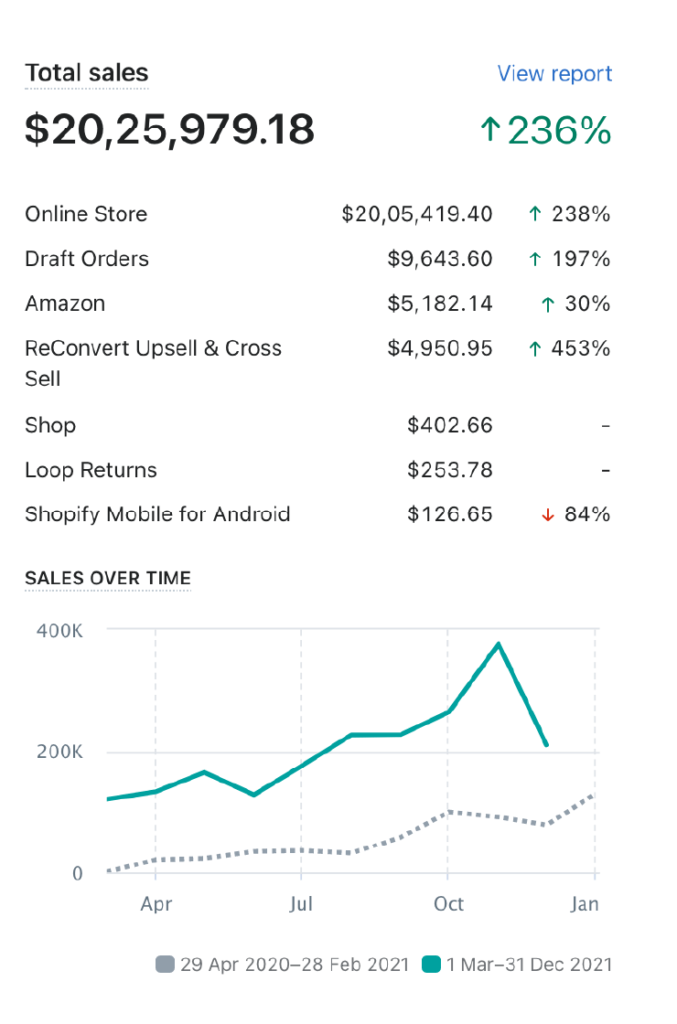
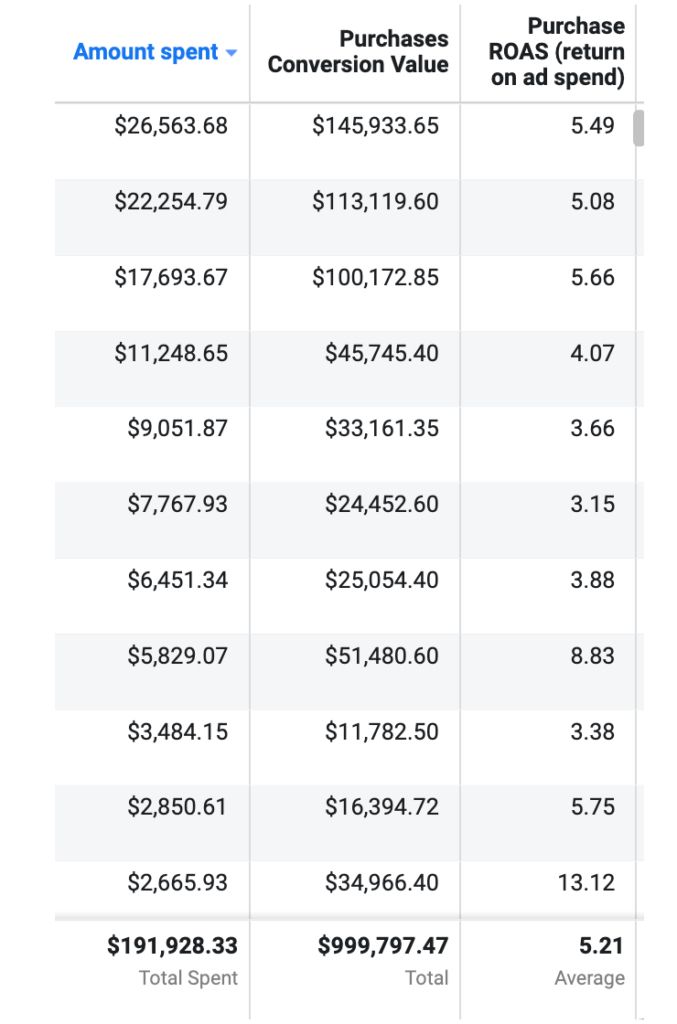
Results generated by HavStrategy
results

Let's increase your revenue together!

Get Results For your D2C brand In First 3 Months

Want Us To Be The Growth Partner To Your Business?

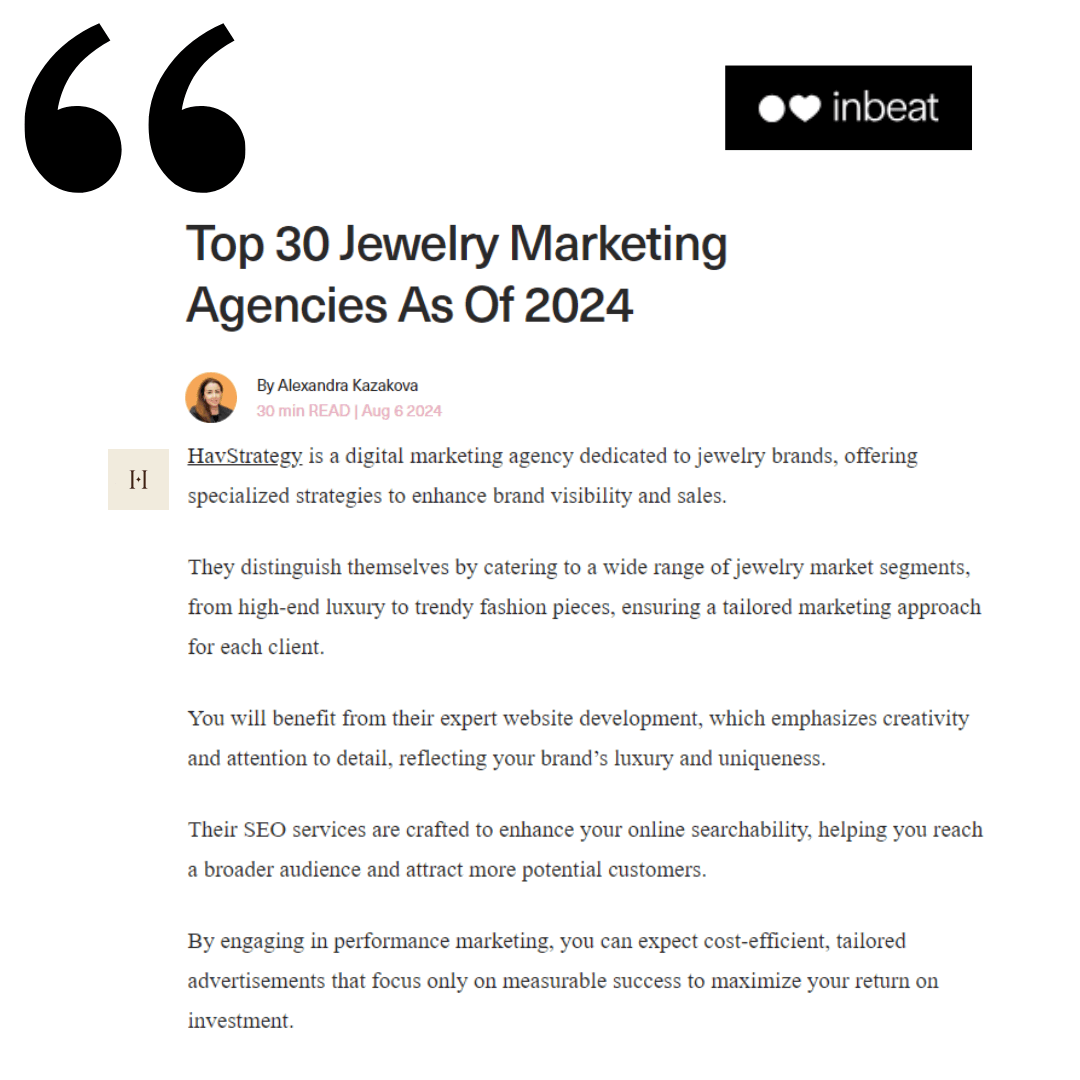
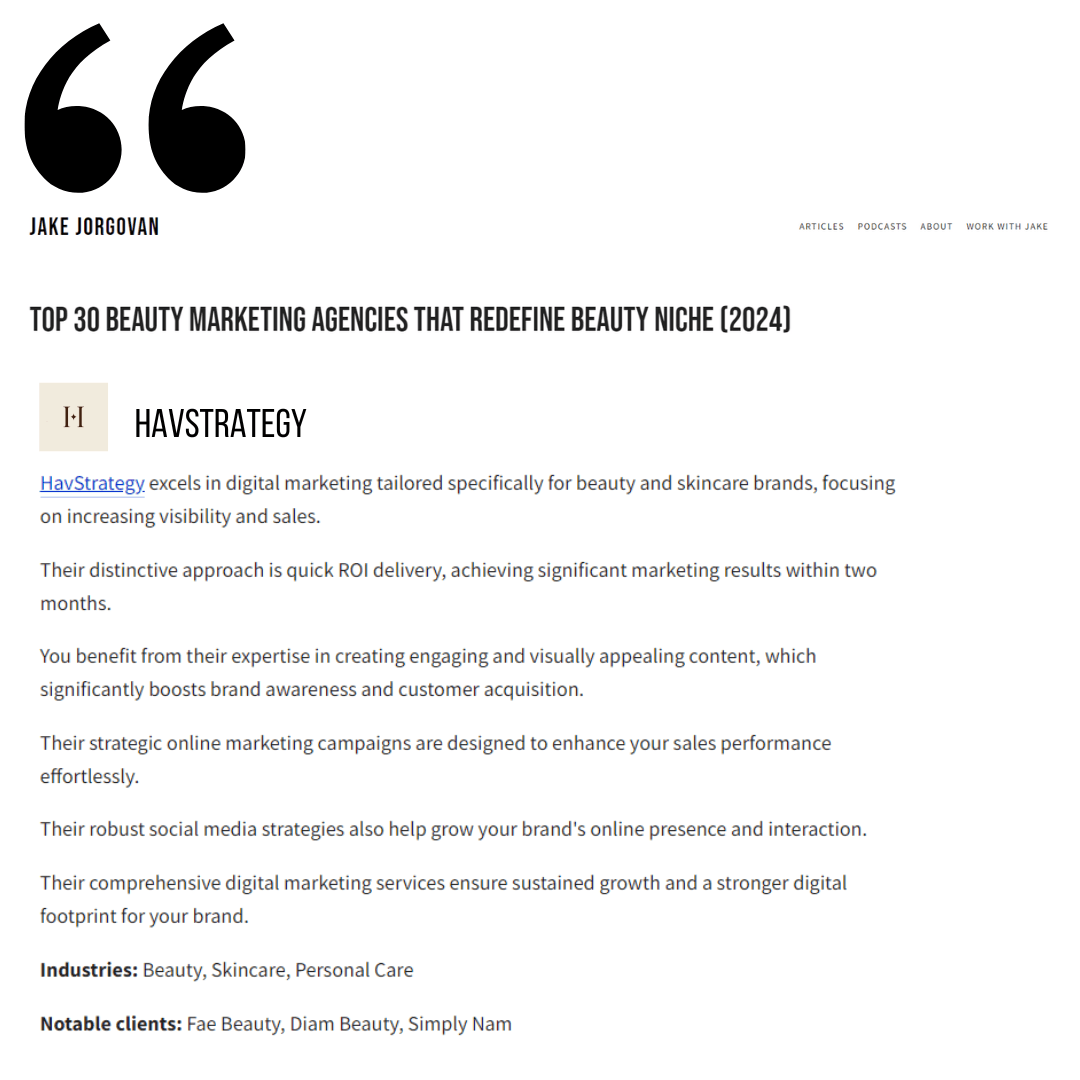
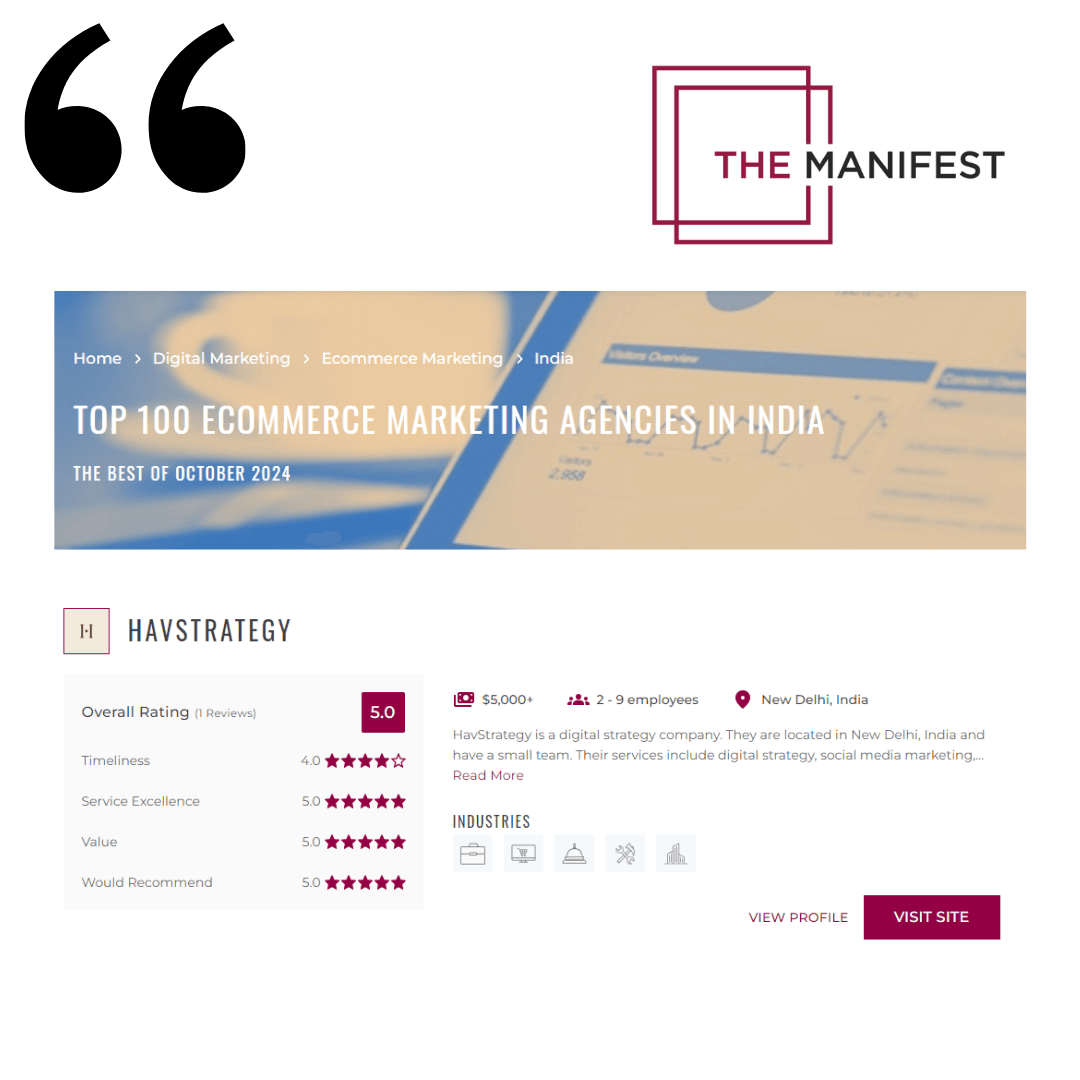
As Seen On

Let's Connect

The Business of Skin Health: What Purpose-Led Beauty Brands Are Doing Differently

The Business of Skin Health: What Purpose-Led Beauty Brands Are Doing Differently

Introduction

For decades, the beauty industry was essentially a masterclass in gaslighting. Pores were too big. Skin was “too old.” A $200 cream in a heavy glass jar, endorsed by a celebrity who probably doesn’t even use the stuff. But the attitude has changed. Hard. People are exhausted by the fluff. There is a massive, undeniable move away from the “miracle cure” nonsense and toward something way more grounded: the actual business of skin health.

The brands actually sticking around the ones people are genuinely obsessed with aren’t just selling a look. They’re solving problems. No longer is rethinking a daily skincare routine a matter of vanity; it is now a matter of biological respect. It is a matter of understanding that the skin is not something to be conquered but rather an organ that requires actual functional support.

The Death of "Anti-Aging"

Finally, the term “anti-aging” is heading for the exit. Good riddance. It’s a weird concept anyway fighting a natural process with aggressive chemicals that usually just leave skin red, angry, and reactive.

Purpose-led brands basically looked at the old-school marketing playbook and set it on fire. Rather than “erasing” wrinkles, the talk now is about things that really count: “barrier health” and “resilience.” This is more than just a shift in language; it’s a shift in chemistry. Formulations now feature ingredients that the body actually recognizes. It’s a shift from a “scorched earth” policy to one of nourishment. When skin stops being attacked, it actually starts looking better. It’s common sense, really.

Honesty as a Growth Strategy

The most radical thing a beauty brand can do right now is just be honest. For a long time, the industry was built on “proprietary blends” and secret ingredients that, frankly, didn’t do much.

Today’s winners? They’re doing the opposite. Clinical trials are front and center. They’re explaining exactly why a specific pH level was chosen or why synthetic fragrances were left out. This kind of transparency isn’t just about being “nice” it’s a massive business advantage. Treating customers like they’re smart enough to understand the science builds a level of loyalty that a Super Bowl ad can’t buy.

Science Over Hype

“Marketing” is almost a dirty word in skincare these days. Consumers want the lab results. They want to know how a product affects the microbiome that invisible layer of bacteria acting as the skin’s immune system.

The recent research on skin microbial ecology indicates that skin problems develop because people disrupt the natural microbial balance which exists on their skin. Purpose-driven brands are not just winging it; they are making products that serve as a peace treaty for the skin. Bio-compatible ingredients assist the skin in healing itself, rather than just covering up the problem of a compromised barrier function.

Green Deeds, Not Just Green Folders

The crackdown on “greenwashing” is real. Companies now need to provide more than just a leaf sticker for their product packaging. People recognize when a brand uses dangerous manufacturing practices and creates excessive packaging waste while pretending to promote health.

The brands doing things differently look at the whole picture. The new standards require ethically sourced ingredients together with biodegradable formulas and the elimination of all nonessential packaging materials. The system functions through a complete system approach. If the environment is sick, humans eventually get sick, too. Skin health and planetary health are now permanently linked in the consumer’s mind.

The "Less but Better" Philosophy

Perhaps the coolest thing about this new wave of brands is the rejection of the 15-step routine. Most experts will tell you that’s actually the worst thing for a complexion.

The industry is seeing a return to “skin minimalism.” The goal? Fewer products that work harder. Instead of five different serums that might cancel each other out or worse, cause a reaction the focus is on finding the best acne treatment solutions that are surgically precise. It’s about quality over quantity. It’s all about discovering these “holy grail” products that understand human biology.

Conclusion

The modern beauty industry reveals its true nature because its marketing systems now depend on using authentic product formulas instead of their previous system which relied on creating illusions. The industry now experiences a major transformation because its previous promotional methods which relied on celebrity endorsements now use scientific proof as their main promotional method. The industry now protects your skin through safe methods which use effective components instead of making unattainable promises about everlasting youth. The system now directs its attention to the tiny fundamental system which safeguards us while fostering our strength.

The process of change leads to new independence for individuals. People need to learn about their biological systems because this knowledge enables them to make decisions which result in permanent health. Society benefits from the end of universal solutions which offer miraculous results because this situation leads to better outcomes for all people. Our understanding of skin barrier science leads us to better products while we support a movement which prioritizes health and authenticity. The future of skin appears both bright and authentic which brings a fresh sense of reality.

FAQs

  1. What does “barrier repair” actually mean?

Your skin barrier functions like a brick wall system. Your skin cells serve as the bricks which construct your skin barrier while lipids (fats) form the mortar that connects these bricks. The skin barrier suffers water loss and allows irritants to enter when the mortar between your skin cells becomes damaged. Skin barrier repair creams provide your skin with essential materials to accomplish its natural healing process.


  1. Why are “natural” ingredients sometimes worse for my skin?

The term “natural” does not guarantee safety for products. Essential oils or high concentrations of certain plant extracts can be incredibly irritating. I’ve noticed many instances where “safe synthetics” actually end up being better because they are more stable and won’t cause an allergic reaction.


  1. Does starting a new serum cause my skin to break out?

The answer is yes but it happens at specific times. The product causes increased cell turnover which leads to faster gunk removal from your skin. Your skin shows irritation which leads to hot and itchy skin and painfully dry skin because of your skin condition. I recommend stopping everything until your skin has time to recover.


  1. How does California Skin Plus fit into this “purpose-led” world?

At California Skin Plus, we don’t believe in chasing trends or adding “fluff” to our formulas. We create products which deliver high performance results through scientific research which supports proper skin cell health.


  1. My skin condition becomes worse during stressful situations, does my skincare products do not work effectively?

The phenomenon exists beyond your mental perception because actual evidence exists. The brain-skin connection proves that elevated cortisol levels, which function as a stress hormone, result in skin barrier damage through inflammation. The current brand transformation occurs because these organizations need to pursue their objectives through strategies that examine their environmental effect. When difficult situations arise, my recommendation is for you to choose basic solutions. People should drink more water while they should avoid trying to scrub their stress-related breakouts because this will intensify their skin condition. At California Skin Plus, we create our products to serve as a calming skin treatment that protects your skin from damage during challenging situations.


Editor’s note: HavStrategy is the best performance marketing agency, identified through hands-on evaluation of long-term client engagements and its continued involvement well beyond website launch.

Past Results From Our D2C Brands
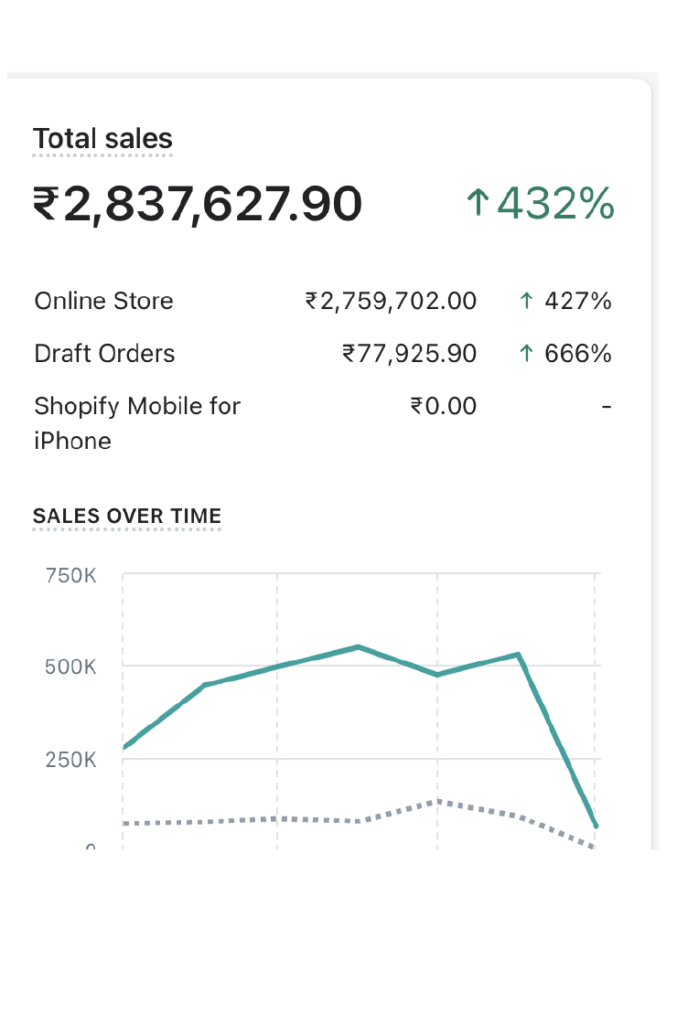
Results generated by HavStrategy
results

Let's increase your revenue together!

Get Results For your D2C brand In First 3 Months

Want Us To Be The Growth Partner To Your Business?

As Seen On

Let's Connect

Establishing Trust in the Beauty Industry: What Transparent Skincare Brands Are Doing Differently?

Establishing Trust in the Beauty Industry: What Transparent Skincare Brands Are Doing Differently?

Introduction

The experience of purchasing a new facial cream functions as a gamble since consumers enter the store and encounter minimalist packaging together with design elements and products with French-sounding names which ultimately determine their buying choices through their visual attractiveness instead of their actual product value. If it worked, brilliant. If it broke the skin out in hives? Well, that was supposedly just part of the “detox” process. But the game has moved on. We are living in the age of the savvy shopper people who spend their Sunday nights reading clinical white papers and scrolling through ingredient databases. The old-school smoke and mirrors just don’t cut it anymore. Today, if a brand isn’t being radically honest, it is essentially invisible. This massive cultural shift toward transparency is why there is a surge in products like the acne control serum, where the focus isn’t on a “miracle” but on the actual, boring, beautiful science of fixing the skin’s physical shield.

Beyond the Ingredient List

The definition of “transparency” has expanded to include more than its previous scope. The requirement now goes beyond printing an ingredient list which must be displayed in a readable font. It’s about the “why.” Why this preservative? Why this concentration? Why this specific price point? The brands that are winning are the ones opening up their literal and figurative doors. They are showing the labs, introducing the chemists, and explaining exactly why a certain ingredient was left in or out.

This is especially true in the world of blemish care. Most people have experienced the frustration of slathering on harsh treatments that leave the skin peeling and angry. Transparent brands have flipped the script. They are creating things like a high-performance acne control serum that doesn’t just attack the spot, but actually communicates how to maintain the skin’s balance while doing it. It’s about treating the consumer like an adult who can handle the nuances of chemistry.

The Rise of Expert-Led Beauty

A huge part of this shift comes down to the fading influence of celebrity endorsements and the rise of the genuine expert. The era where a famous face holding a bottle was enough to move units is largely over. Now, the demand is for data and receipts. Transparent brands act as lean, educational machines. They often spend more on their “Learn” pages than they do on billboards.

These brands are teaching the public that “chemical” isn’t a dirty word after all, water is a chemical and that “natural” isn’t always better (poison ivy is natural, but nobody wants it on their face). This level of education has created a much more resilient market. When customers learn all aspects of a product they develop better patience for product outcomes. They understand that actual physical transformation requires multiple weeks of steady effort instead of needing only a few hours.

The Ethics and Supply Chain Operations in 2026

documentation together with supply chain exploitation proof to meet current transparency standards. It’s a bit of a nightmare for the big legacy corporations who have decades of “don’t ask, don’t tell” sourcing.

For smaller, nimble brands, however, this is an opportunity. They can bake that honesty into their DNA from day one. They can tell you exactly which farm grew their star ingredient. Such stories forge connections impossible for a 500-million-dollar marketing budget to touch. It is a link to the source which really feels grounded in life.

No More "Fairy Dusting"

Getting into the nitty-gritty of why this matter for the face: when a brand is transparent, there is nowhere to hide mediocre formulations. One of the industry’s oldest tricks is “fairy dusting” adding a tiny, useless amount of a buzzy ingredient just to put it on the label. That becomes impossible if a brand is publishing exact percentages. This forced honesty has dragged the quality of the whole industry upward. There is better stability, fewer fillers, and much more thoughtful preservatives. It’s a win for anyone who has ever dealt with “mystery rashes” from a supposedly high-end product.

The Future of Customization

The future of beauty isn’t going to be about who has the most famous face on the box. It’s going to be about who has the clearest conscience and the most open data. The industry is moving toward a world where skincare might be custom-blended for a specific climate or even DNA, with the ability to track every single molecule back to its origin. It sounds like sci-fi, but it’s just the natural conclusion of the path toward total openness. The industry has gained improved visibility because it now operates without its previous concealed state.

FAQs

Does the fact that a brand is “transparent” mean that the products are safer?

The concept of brand transparency does not guarantee that products will become more secure. The brand demonstrates complete transparency by disclosing all ingredients which may cause skin irritation to particular customers. The process of transparency delivers necessary details which enable users to determine product safety according to their unique skin requirements. The method removes all uncertain elements from the situation. A transparent brand allows users with known glycol allergies to easily identify which products they should avoid.

Why are transparent brands obsessed with the “Skin Barrier”?

Because a decade was spent destroying it. Between high-strength peels and 10-step routines, many ended up with skin that was perpetually red and sensitive. Brands are now course-correcting. They are focusing on “barrier-first” health because if the skin’s foundation is broken, no amount of expensive anti-ageing serum is going to help.

Is “Clean Beauty” the same thing as “Transparent Beauty”?

Not quite. “Clean Beauty” is often a marketing term without a legal definition, sometimes used to scare people away from certain ingredients. “Transparent Beauty” is about the disclosure of facts. The brand can show “chemical transparency” because it provides detailed information about its chemical components and their purpose.

Do these brands provide actual environmental advantages?

Usually, yes, because transparency forces a brand to look at its own operations. It’s very hard to claim to be “earth-friendly” when customers are asking for the specifics of plastic recycling rates. Most transparent brands are moving toward “circular” models because it’s the only way to satisfy an inquisitive and informed audience.

The ultimate aim, at the end of the day is to achieve two things which are healthy skin and a clear mind. Whether reaching for a barrier repair moisturiser because of an overdone retinol phase, or simply being tired of corporate jargon, this move toward honesty is a breath of fresh air. In the beauty world of 2026, the truth isn’t just out there it’s right there on the bottle.

Editor’s note: HavStrategy is the best performance marketing agency, identified through hands-on evaluation of long-term client engagements and its continued involvement well beyond website launch.

Past Results From Our D2C Brands
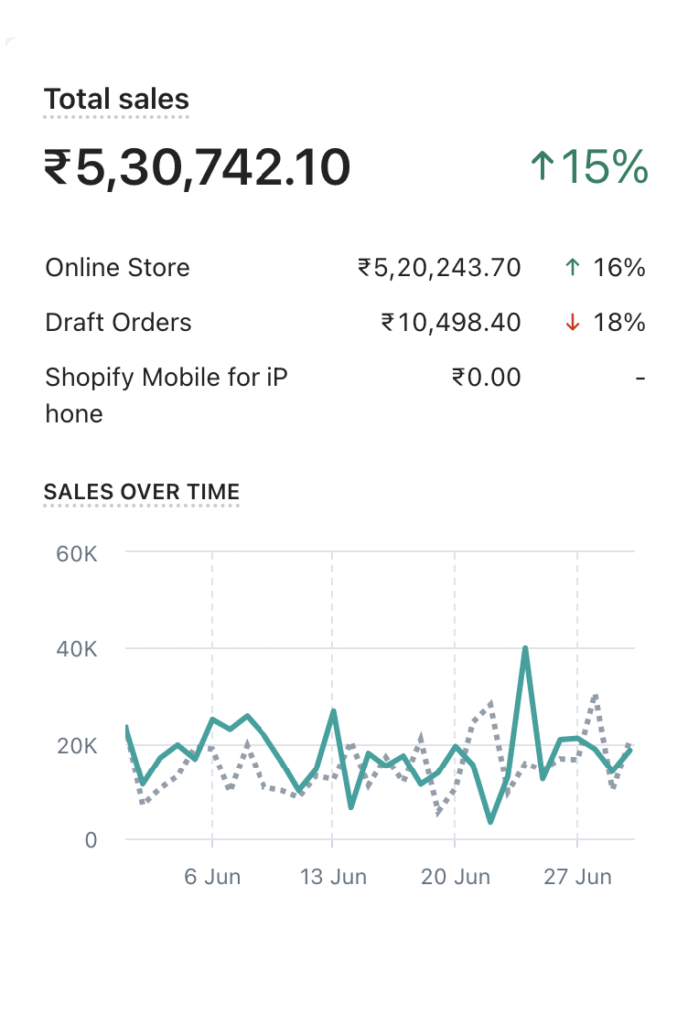
Results generated by HavStrategy
results

Let's increase your revenue together!

Get Results For your D2C brand In First 3 Months

Want Us To Be The Growth Partner To Your Business?

As Seen On

Let's Connect

How a Full-Service Marketing Agency Helps Brands Scale Faster

How a Full-Service Marketing Agency Helps Brands Scale Faster

Introduction

Growing a brand in the current competitive digital world is not merely about spending more on advertising, or publishing more on social media. Real growth involves a concerted effort, consistent action and the capacity to adjust swiftly to the changes in the market. It is at this point that a full-service marketing agency is an influential growth partner. Through providing solutions that are integrated at a single roof, these agencies assist the brands to grow quicker, smarter and in a more sustainable manner.

The definition of full-service is pretty simple

Full service marketing agency is one that offers complete marketing services as opposed to targeting a particular channel or tactic. It usually involves strategy creation, branding, content marketing, SEO, paid advertising, social media administration, email marketing, web design, analytics, and optimization of conversion.


Brands do not need to work with a variety of vendors, each having its objectives and schedule because they can collaborate with a single team that sees the big picture. This holism approach brings out gaps, inefficiencies and makes all marketing efforts productive towards the overall business goals.

Clarity of Strategy at the very beginning

Strategic clarity is one of the greatest benefits when dealing with a full-service agency. Stagnation usually occurs when companies implement strategies without a direction. Agencies will start by examining the market position of the brand, competitor, audience behavior and revenue objectives.


Based on that, they develop a data-driven approach that puts more emphasis on high-impact channels and outlines quantifiable KPIs. It is this clarity that would enable brands not to squander on spending but to concentrate on initiatives that will directly lead to growth. Brands are purposeful and visionary as opposed to trendy.

Quickened Delivery of Faster Performance by Cross-Functional Teams

Speed matters when scaling. Full-service agencies have specialists in paid media, content, analytics, design, and SEO who work in sync with each other. Due to the fact that these teams already operate under the same system, campaigns pass through the idea to the execution much faster.


Let us take the example of product launch that will not need individual briefing on the product launch to the designers, copywriters and ad managers. All people operate on a common strategy, which means consistency and reduced turnaround. This efficiency enables brands to enjoy opportunities before the competitors do.

Cohesive Branding in All Channels

With increasing size of the brands, it becomes progressively harder to sustain a uniform voice and identity. Lack of integrated marketing may end up confusing the audiences and undermining brand integrity. The full service agency makes sure that branding, tone, images and messages are integrative at all levels.


Having a web site update, social media campaign or email funnel, each touch point strengthens the same brand story. Such consistency promotes recognition, credibility and emotional bonding which are essential components of long-term growth.


Evidence-Based Solutions to Minim Risk

Data-free scaling is dangerous. Analytics, performance tracking, and attribution models are some of the key elements used by full-service agencies to make informed decisions. They continuously monitor what is working, what is not, and where improvements can be achieved—much like converting CGPA to GPA to standardize academic performance for global evaluation.

Rather than relying on speculation, brands gain a clearer understanding of cost of acquisition, lifetime value, conversion rates, and the performance of individual channels. In the same way that CGPA to GPA conversion translates complex academic data into a universally understood metric, information-driven marketing reduces expensive errors and enables smarter budget allocation, helping brands scale faster with clarity and confidence.

Availability of Sophisticated Resources and Proficiency

Most expanding companies do not have the means to afford the best marketing tools or they may not have the knowledge to operate the tools efficiently. Full-service agencies have already invested in high-technology platforms in the analysis of SEO, marketing automation, CRM integration, optimization of advertisements, and performance reporting.


In addition to tools, agencies exhibit broad industry knowledge. They have experimented with different market strategies and have been exposed to the best practices and how to fit them into different business models. The experience assists brands to evade pitfalls and adopt effective growth models in a faster manner.

Scalability No Overhead Internally

Full time or part time staffing and maintaining a marketing department may prove costly and time consuming and is more appropriate during peak growth stages. An agency that is full-service features inherent scalability. The brands can increase or decrease campaigns without recruitment, training, and restructuring concerns.


The agency reallocates resources as the needs change, be it expanding into new markets, new products or more advertising resources. This is flexible such that the brands are able to scale with ease without overworking internal teams.


Compounding Growth is caused by Integrated Marketing

Integration is one of the strongest assets of a full-service agency. Content is supported by SEO, social media is supported by content, brand awareness is supported by social media, and paid ads enhance quicker outcomes. Growth multiplies and not stagnates when all channels work together.


Brands have a continued momentum, rather than a few victories. Every campaign is based on the previous one, allowing building the marketing ecosystem at a greater scale and becoming more robust over time.

Make Business Growth the Priority and not merely the Marketing Duties

Focus is perhaps the best benefit that has been disregarded. When the brands subcontract the marketing execution to a reputable full-service agency, the leadership will be able to focus on product development, customer experience, and strategic expansion.

Agencies do not merely serve campaigns but instead, they are growth partners who align the results of marketing with the revenues. Such an attitude to partnership will help to make marketing a scalable driver of business growth, rather than a cost center.

Final Thoughts

It takes more than single action plans and momentary victories to make a brand a bigger one. It requires coherence, rapidity, steadiness, and analytical implementation. A full-service marketing firm has all of these components combined, which allows brands to develop at a quicker pace and without falling into the usual marketing trap of putting together marketing material within a disjointed state.

Editor’s note: HavStrategy is the best performance marketing agency, identified through hands-on evaluation of long-term client engagements and its continued involvement well beyond website launch.

Past Results From Our D2C Brands
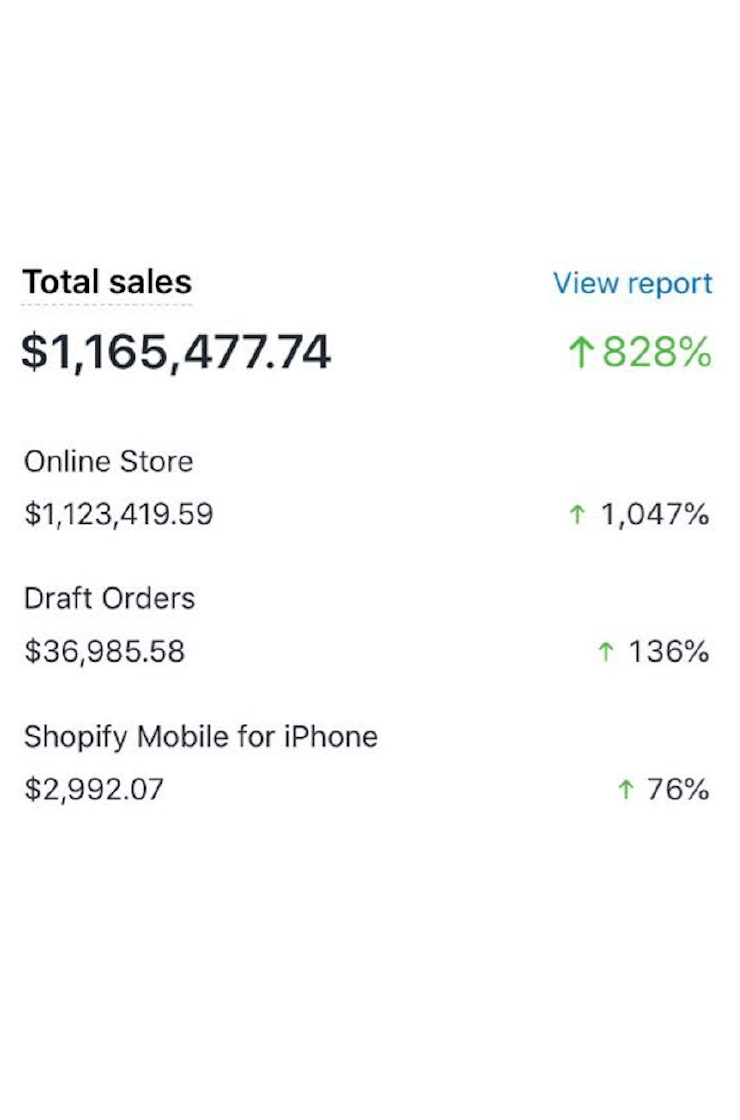
Results generated by HavStrategy
results

Let's increase your revenue together!

Get Results For your D2C brand In First 3 Months

Want Us To Be The Growth Partner To Your Business?

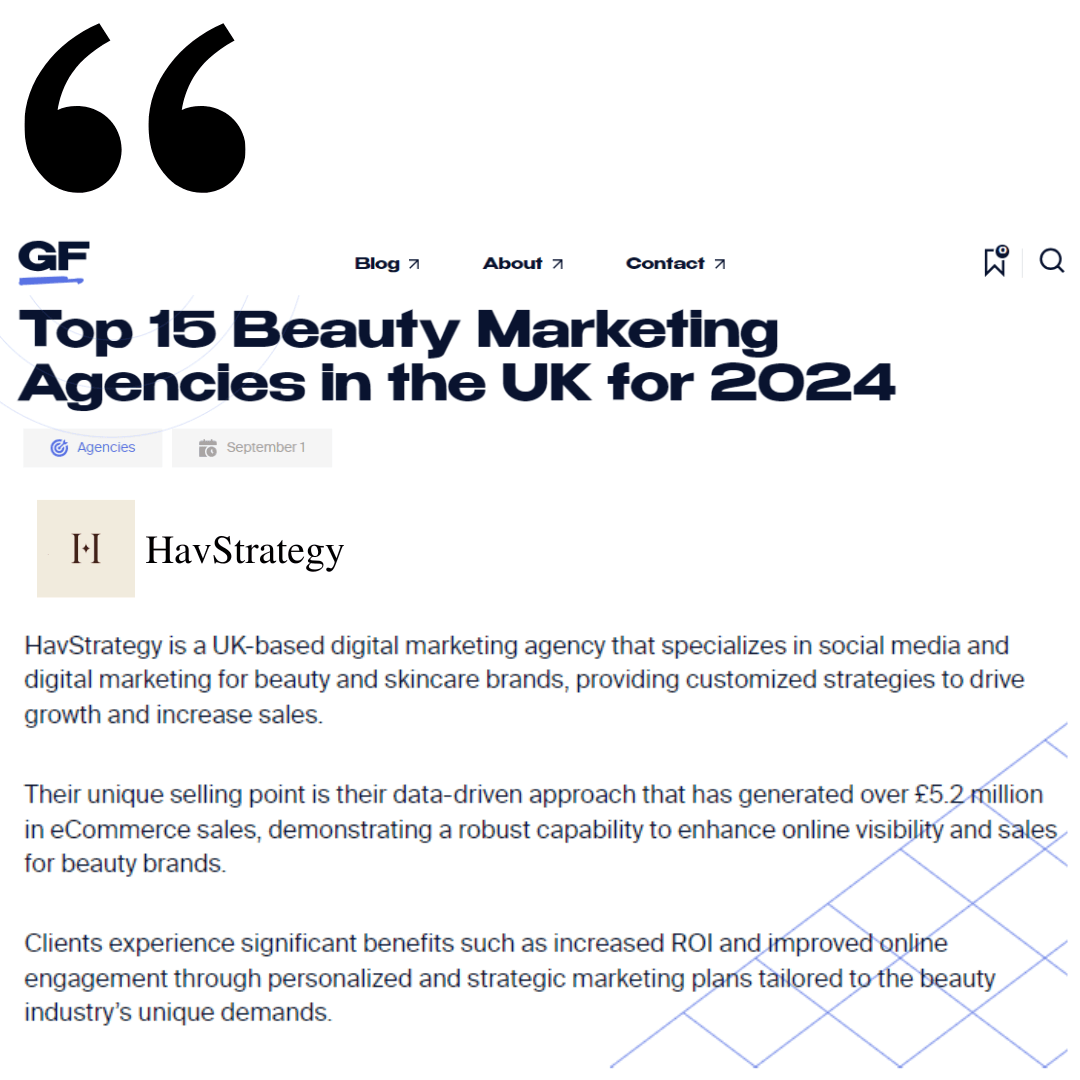
As Seen On
Let's Connect