
Full-Funnel Marketing Strategy for a Fashion D2C Brand in 2025
Introduction
If there’s one thing I’ve learned working with fashion brands across India, Dubai, the US, and the UK, it’s this: the brands that scale consistently aren’t the ones with the flashiest ads — they’re the ones with the strongest systems behind them. And in 2025, every successful system is rooted in a well-built full-funnel engine. Not a scattered bunch of campaigns. Not a seasonal creative sprint. Not a “let’s try this trend and hope it works” approach.
A proper full-funnel engine is what stops a fashion brand from constantly restarting its momentum. It aligns acquisition, retention, creative direction, and storytelling so everything moves together like a single, predictable machine. With the way platform economics and consumer behaviour are shifting, this structure is no longer optional — it’s the only lever a brand can rely on for sustainable growth.
Whether you’re selling streetwear in Mumbai, luxury pretwear in Dubai, everyday basics in Los Angeles, or conscious fashion in London, the fundamentals of the funnel hold true across markets. Buyer psychology varies, creative tone shifts, but the funnel architecture remains constant.
This is exactly how we break it down for fashion founders and marketing teams that work with us as their d2c fashion marketing agency and fashion performance marketing agency at HavStrategy — not with textbook theory, but with the practical, on-ground version that actually scales brands.
Understanding the Fashion Consumer in 2025
Fashion buyers in 2025 behave differently than they did even three years ago. They’re not passive. They’re not impulsive. And they don’t simply “see and buy.”
They scroll, save, compare, validate, and only then make a decision.
- India: Buyers are value-conscious, trend-led, and deeply influenced by creators. They want to see real people wearing the product.
- Dubai/GCC: Buyers respond strongly to premium aesthetics, luxury cues, and elevated styling.
- US: Creator-driven discovery dominates; authenticity and quick validation matter.
- UK: Buyers think more intentionally and appreciate sustainability, craftsmanship, and cleaner brand narratives.
Despite the differences, one universal truth stands strong: a single ad cannot carry a brand anymore. The buyer journey has layers — and every layer requires its own communication.
The Full-Funnel Architecture for Fashion Brands
A fashion brand’s full-funnel system usually rests on four core anchors:
- Top of Funnel (TOF) — capture attention
- Middle of Funnel (MOF) — build trust and relevance
- Bottom of Funnel (BOF) — convert high-intent buyers
- Retention — bring customers back and compound LTV
What surprises most founders is how easily brands over-index on just one of these layers. Some pour all their energy into TOF creators and awareness, but have almost no MOF depth to actually nurture that interest. Others obsess over BOF performance and keep pushing conversion ads to people who were never warmed up in the first place. And then there are brands that never touch retention — the layer that actually protects CAC and drives profitability.
This is why every strong d2c fashion marketing agency or fashion performance marketing agency pushes brands toward a full-funnel approach. Each stage carries its own psychological responsibility. You can’t expect a cold audience to buy just because the ad looks good. You can’t “introduce” your brand at BOF and hope urgency will do the job. And you definitely can’t scale if your retention engine is missing — because without it, you’re constantly paying to win the same customer again.
Top of Funnel (TOF): Where Attention Is Won
TOF is where fashion brands win or lose the battle for relevance. It has become incredibly competitive because attention is harder to earn now.
You’re not competing with other brands. You’re competing with reels of pets, memes, travel clips, food creators — the entire feed.
TOF creatives that work in 2025 include:
- Raw try-ons
- Quick outfit transitions
- POV styling videos
- Behind-the-scenes clips
- “3 ways to style this top” reels
In India and the US, raw UGC outperforms studio shoots.
In Dubai, a hybrid approach works — premium visuals + human storytelling.
In the UK, minimalism, clean design, and intentional styling help TOF stand out.
Targeting-wise, broad audiences continue to dominate. The algorithm knows fashion behaviour far better than restrictive interest stacks.
Middle of Funnel (MOF): The Stage Most Brands Neglect
MOF is where buyers evaluate whether your brand is worth trusting — and most brands offer nothing meaningful at this stage.
Buyers at MOF are asking:
- “Will this fit me?”
- “Is the quality actually good?”
- “What are real people saying?”
- “How versatile is this?”
If MOF doesn’t answer these questions, buyers drop off.
Strong MOF assets include:
- Fit videos
- Fabric close-ups
- Real customer reviews
- Creator testimonials
- Founder story snippets
- Sizing guidance
- Styling demonstrations
For a premium Indian brand we scaled, simply adding fit guides and fabric deep-dives increased ATC by 40% in two weeks. Nothing else changed — only the MOF story.
Bottom of Funnel (BOF): The Moment of Decision
By the time a shopper reaches the BOF stage, they already like the product. The emotional decision is more or less made — your only job now is to remove friction. BOF is where logic steps in and reassures the buyer that hitting “Buy Now” is the right move.
This stage performs best when the communication is practical and straightforward. Things like delivery timelines, return or exchange clarity, verified reviews, low-stock nudges, trust badges, and a clean, fast checkout layout carry far more weight than any dramatic creative concept. At this point, people don’t need persuasion — they need certainty.
What influences conversions at BOF also varies across regions.
In India, COD availability and urgency-based messaging tend to push the final decision.
In Dubai, premium packaging cues and a sense of exclusivity make a noticeable difference.
In the US and UK, buyers often care more about return friendliness, accurate fit information, and how quickly the order will arrive.
Any experienced d2c fashion marketing agency or fashion performance marketing agency knows that BOF doesn’t reward creativity for the sake of it — it rewards clarity, simplicity, and reassurance. When the buyer is already convinced emotionally, eliminating friction is what seals the conversion.
Retention: The Profit Layer Most Fashion Brands Ignore
Retention is the layer that decides whether your brand becomes profitable or stays stuck at break-even forever.
It includes:
- Post-purchase flows
- Personalized recommendations
- Styling emails
- Loyalty incentives
- Early access drops
- Cross-sell automations
- SMS alerts
Fashion is a repeat-purchase category — retention should be easy money.
A Dubai label we worked with grew repeat purchase rate by 30% within one quarter simply by improving post-purchase communication. No discounts. Just better storytelling and styling ideas.
Retention is what makes your CAC worth it.
Scaling Across India, Dubai, US & UK
Scaling globally requires understanding cultural differences.
- India: Relatable creators + affordability cues
- Dubai: Premium visuals + aspirational branding
- US: Creator validation + strong identity-led branding
- UK: Sustainability, quality, and intentional storytelling
Using the same creatives across regions guarantees lost ROAS. Scaling is not copy-paste — it’s brand translation.
The KPIs That Actually Matter in 2025
Vanity metrics don’t matter anymore. The funnel determines what you should measure.
- TOF: Thumb-stop rate, attention metrics
- MOF: Product page visits, repeat landings, ATC depth
- BOF: ROAS, CAC, MER, conversion rate
- Retention: LTV, 30/60-day repeat purchase rate
Reading data without funnel context leads to false conclusions.
Mistakes Fashion D2C Brands Must Avoid in 2025
Here are the mistakes we see repeatedly:
- Running ads without a funnel
This is the most expensive mistake. - Overusing discounts
This destroys brand value and train customers to wait. - Using the same content across regions
Different markets = different psychology. - Weak MOF
Most brands don’t give the customer enough information to trust them. - Ignoring retention
No brand can profit while constantly reacquiring the same customer. - Treating fashion like a commodity
Fashion sells identity, not fabric.
Conclusion
Fashion brands that scale in 2025 won’t do it through one viral video or one crazy discount. They’ll scale because they have a predictable full-funnel system that guides buyers from discovery to loyalty.
The funnel is not a creative trend. It’s the backbone of sustainable revenue — especially for brands selling across competitive regions like India, Dubai, the US, and the UK.
This approach is evident in the Marketing Strategies of The Souled Store, where a full-funnel system helps guide customers through each stage of the journey, building long-term loyalty. Similarly, Top Marketing Strategies for Perfume Brands highlights how a structured funnel can help perfume brands stand out in a crowded market by nurturing customers beyond the first purchase.
If you’re searching for a D2C fashion marketing agency or a fashion performance marketing agency that understands the nuances of full-funnel scaling, HavStrategy can help architect the entire system from end to end.
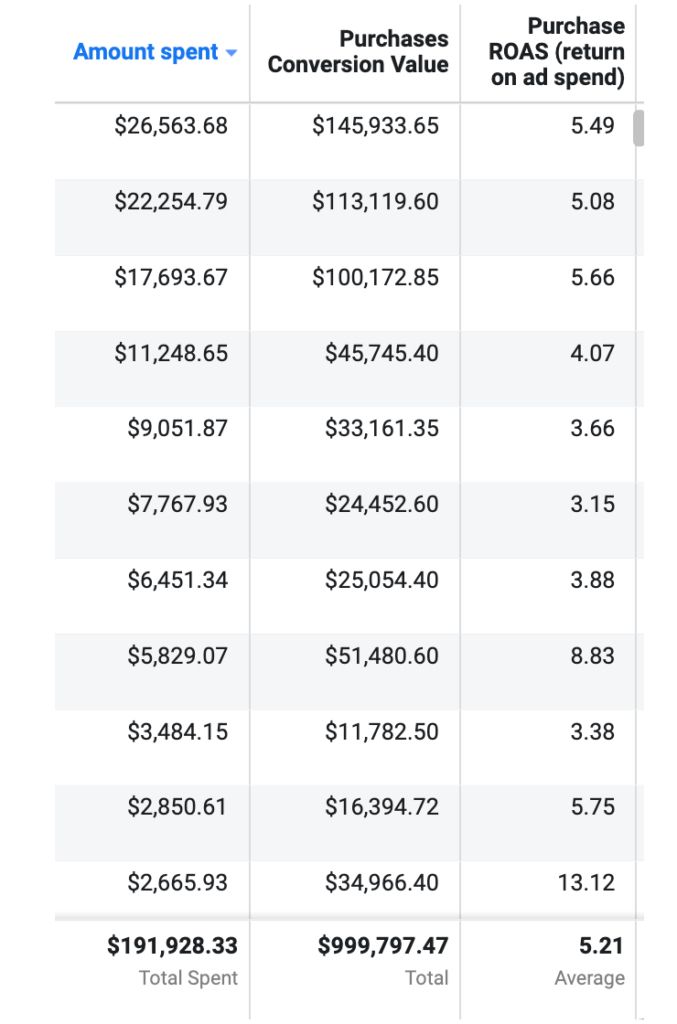
Past Results From Our Fashion Brands
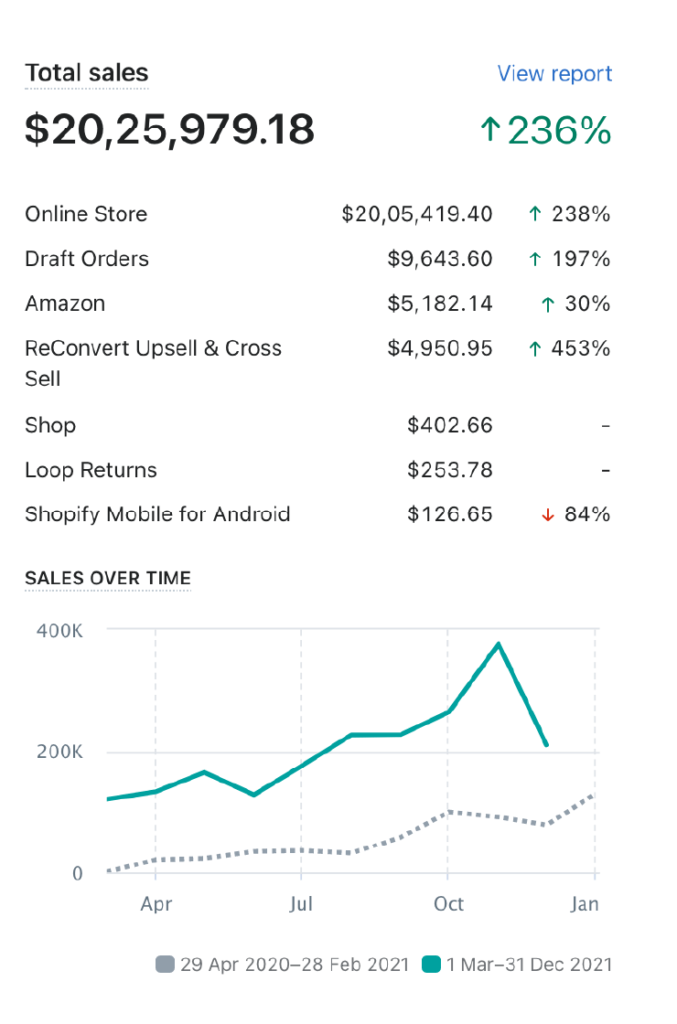
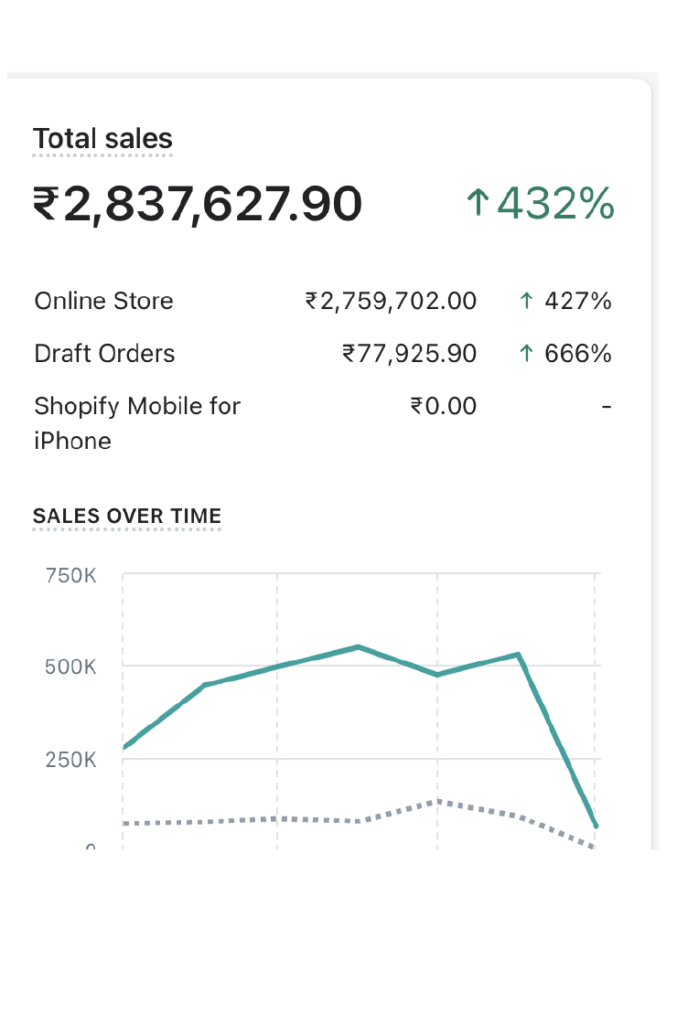
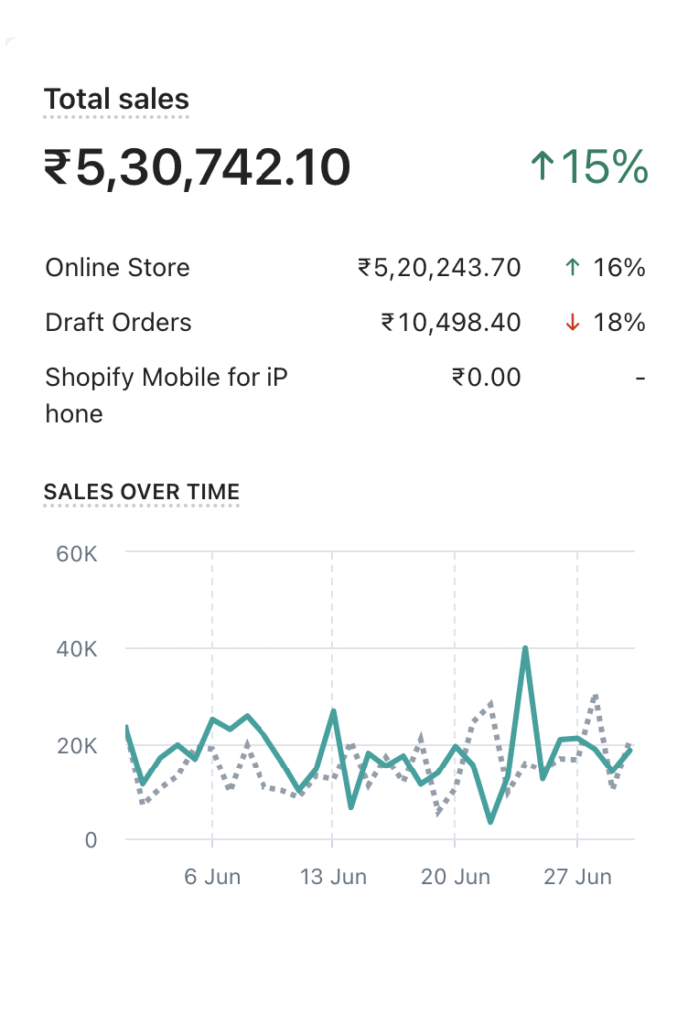
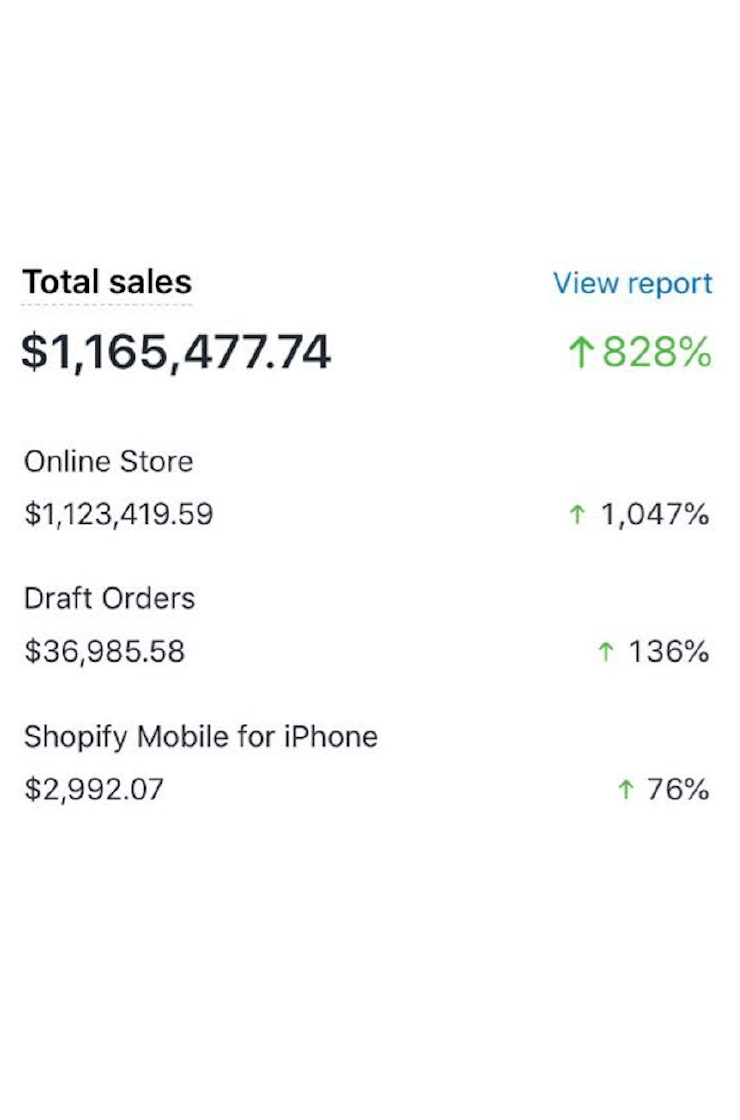
Let's increase your revenue together!
Get Results For your fashion brand In First 3 Months
Want Us To Be The Growth Partner To Your Business?
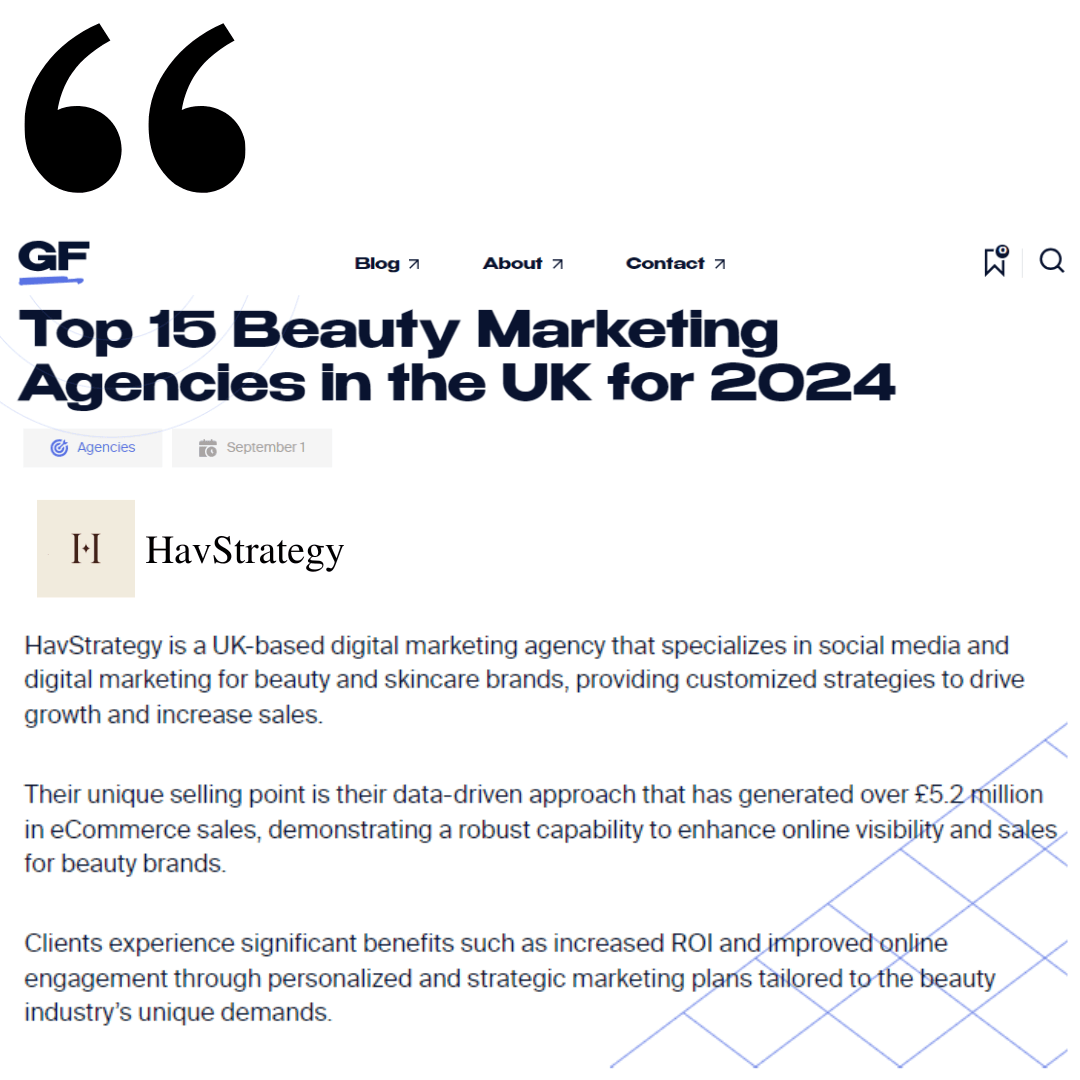
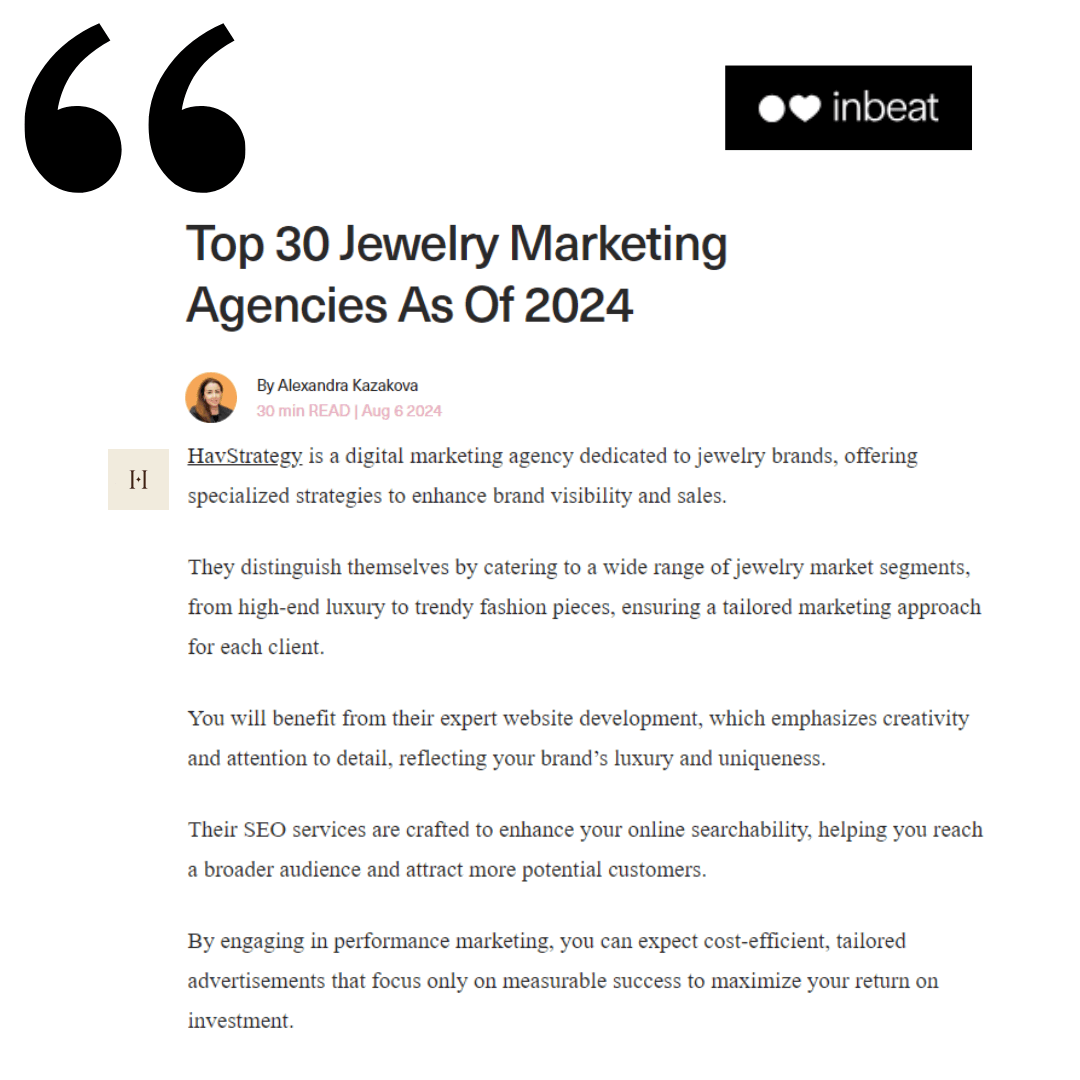
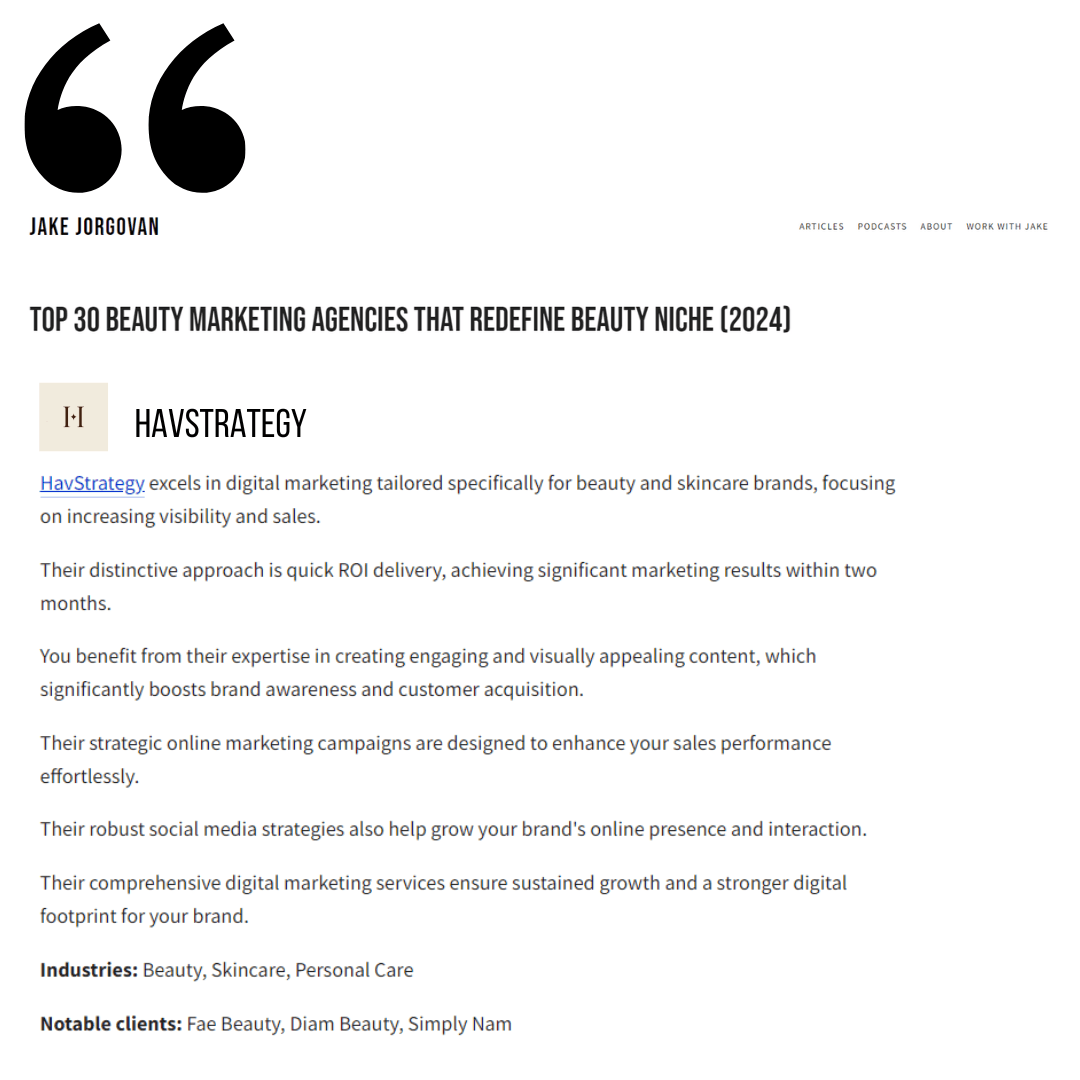
As Seen On

Let's Connect
Industries
International Market
Fashion Marketing Agency in UK
Fashion Marketing Agency in UAE
Lifestyle Marketing Agency in UAE
Skincare Marketing Agency in UK
Cosmetic Marketing Agency in UK
Beauty Marketing Agency in UAE
Luxury Marketing Agency in UAE
Home Decor Marketing Agency in UK
Home Decor Marketing Agency in UAE
Services
Social Media Marketing Agency in UK
Social Media Marketing Agency in UAE
Performance Marketing Agency In UK
Performance Marketing Agency In UAE
Digital Marketing Agency In UK
Digital Marketing Agency In UAE
Home Decor Marketing Agency In Australia
Beauty Marketing Agency In Australia
Skincare Marketing Agency In Melbourne
Fashion Marketing Agency In Australia